


Listen to the article
Philippine Government Launches Multi-Agency Campaign Against Online Disinformation
The Philippine government has launched a formal inter-agency initiative to combat online disinformation and AI-generated deepfakes, raising significant questions about the balance between enforcement actions and constitutional free speech protections.
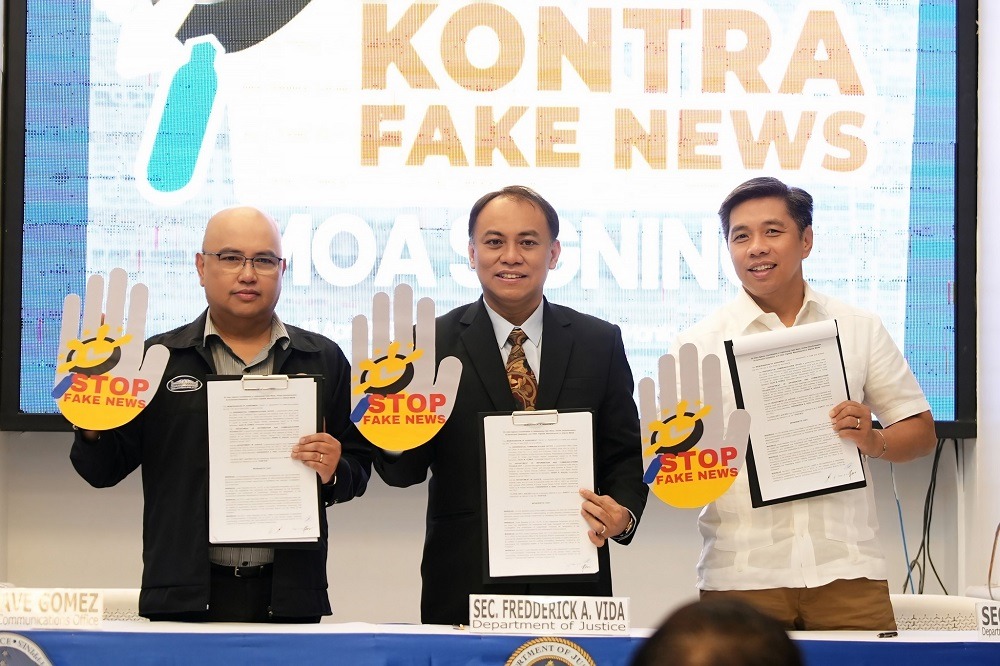
Officials from the Department of Information and Communications Technology (DICT), Presidential Communications Office (PCO), and Department of Justice (DOJ) formalized the effort by signing a memorandum of agreement establishing a unified framework called “Oplan Kontra Fake News.” The program represents the government’s most coordinated effort to date to address the proliferation of false and misleading content across digital platforms.
The initiative comes amid growing concern that disinformation campaigns, increasingly powered by sophisticated artificial intelligence tools, are affecting public perception, hampering emergency response efforts, and eroding trust in Philippine institutions. Government officials point to recent crises—including natural disasters and public health emergencies—where misleading information complicated official response efforts and created unnecessary public panic.
“In the age of artificial intelligence and hyper-speed information, truth must move faster than deception,” said DICT Secretary Henry Aguda during the signing ceremony. “This partnership ensures that government, technology, and law enforcement work as one to protect every Filipino from digital manipulation.”
Under the agreement, each agency will manage different aspects of the anti-disinformation campaign. The DICT will handle technical components, developing digital reporting systems and providing cybersecurity infrastructure. The PCO will lead public communications efforts and coordinate counter-disinformation messaging across government channels. Meanwhile, the DOJ will evaluate potential cases and pursue legal action under existing Philippine laws.
Central to the initiative is an inter-agency steering committee that will coordinate responses to disinformation threats. The committee will establish protocols for evidence collection and implement actions against viral content deemed to threaten public safety or national security.
The Philippines has experienced a surge in sophisticated disinformation campaigns in recent years. During the 2022 presidential election, fact-checking organizations documented widespread circulation of misleading content across social media platforms, while more recent incidents have involved deepfakes of government officials announcing false policies.
Digital rights advocates have expressed caution about the program. While acknowledging the genuine threat posed by disinformation, some worry about potential government overreach.
“While combating harmful disinformation is crucial, the government must establish clear, transparent guidelines on what constitutes disinformation versus protected speech,” said Maria Santos, director of the Digital Rights Coalition, an advocacy group based in Manila. “The constitutional right to free expression must remain paramount.”
The memorandum cites safeguards designed to protect legitimate journalism, political dissent, and academic discourse, but offers few specific details on implementation. Media organizations have noted that the absence of clear operational guidelines raises questions about how officials will distinguish between harmful disinformation and protected speech, particularly regarding criticism of government policies or officials.
The initiative comes as other Southeast Asian nations implement similar measures with varying degrees of restriction. Singapore’s Protection from Online Falsehoods and Manipulation Act has faced international criticism for its broad powers, while Indonesia has established a digital literacy program focused more on public education than enforcement.
Philippine authorities insist the program is not designed to limit legitimate expression or silence government critics. Rather, they say it targets demonstrably false information that threatens public welfare, particularly content amplified by AI tools that can rapidly spread across digital platforms before fact-checking efforts can respond.
As implementation begins, legal observers note that the program’s success will largely depend on transparent execution and adherence to existing constitutional frameworks protecting free speech—a delicate balance that will likely face ongoing scrutiny from media, civil society organizations, and the legal community.
Fact Checker
Verify the accuracy of this article using The Disinformation Commission analysis and real-time sources.

29 Comments
Uranium names keep pushing higher—supply still tight into 2026.
Good point. Watching costs and grades closely.
Good point. Watching costs and grades closely.
The cost guidance is better than expected. If they deliver, the stock could rerate.
Uranium names keep pushing higher—supply still tight into 2026.
Good point. Watching costs and grades closely.
Good point. Watching costs and grades closely.
Production mix shifting toward Disinformation might help margins if metals stay firm.
Good point. Watching costs and grades closely.
Good point. Watching costs and grades closely.
The cost guidance is better than expected. If they deliver, the stock could rerate.
Uranium names keep pushing higher—supply still tight into 2026.
Good point. Watching costs and grades closely.
Interesting update on DICT, PCO, and DOJ Launch ‘Operation Against Fake News’ to Combat Deepfake Threats. Curious how the grades will trend next quarter.
Exploration results look promising, but permitting will be the key risk.
Good point. Watching costs and grades closely.
Good point. Watching costs and grades closely.
Silver leverage is strong here; beta cuts both ways though.
Good point. Watching costs and grades closely.
I like the balance sheet here—less leverage than peers.
I like the balance sheet here—less leverage than peers.
Uranium names keep pushing higher—supply still tight into 2026.
Good point. Watching costs and grades closely.
Interesting update on DICT, PCO, and DOJ Launch ‘Operation Against Fake News’ to Combat Deepfake Threats. Curious how the grades will trend next quarter.
If AISC keeps dropping, this becomes investable for me.
Good point. Watching costs and grades closely.
The cost guidance is better than expected. If they deliver, the stock could rerate.
Good point. Watching costs and grades closely.
Good point. Watching costs and grades closely.