


Listen to the article
Education Crisis Deepens in Occupied Crimea as Teacher Shortage Reaches Critical Levels
A severe personnel crisis is rapidly intensifying across the educational system in Russian-occupied Crimea, according to a recent report from the Center for Countering Disinformation (CCD) of Ukraine’s National Security and Defense Council.
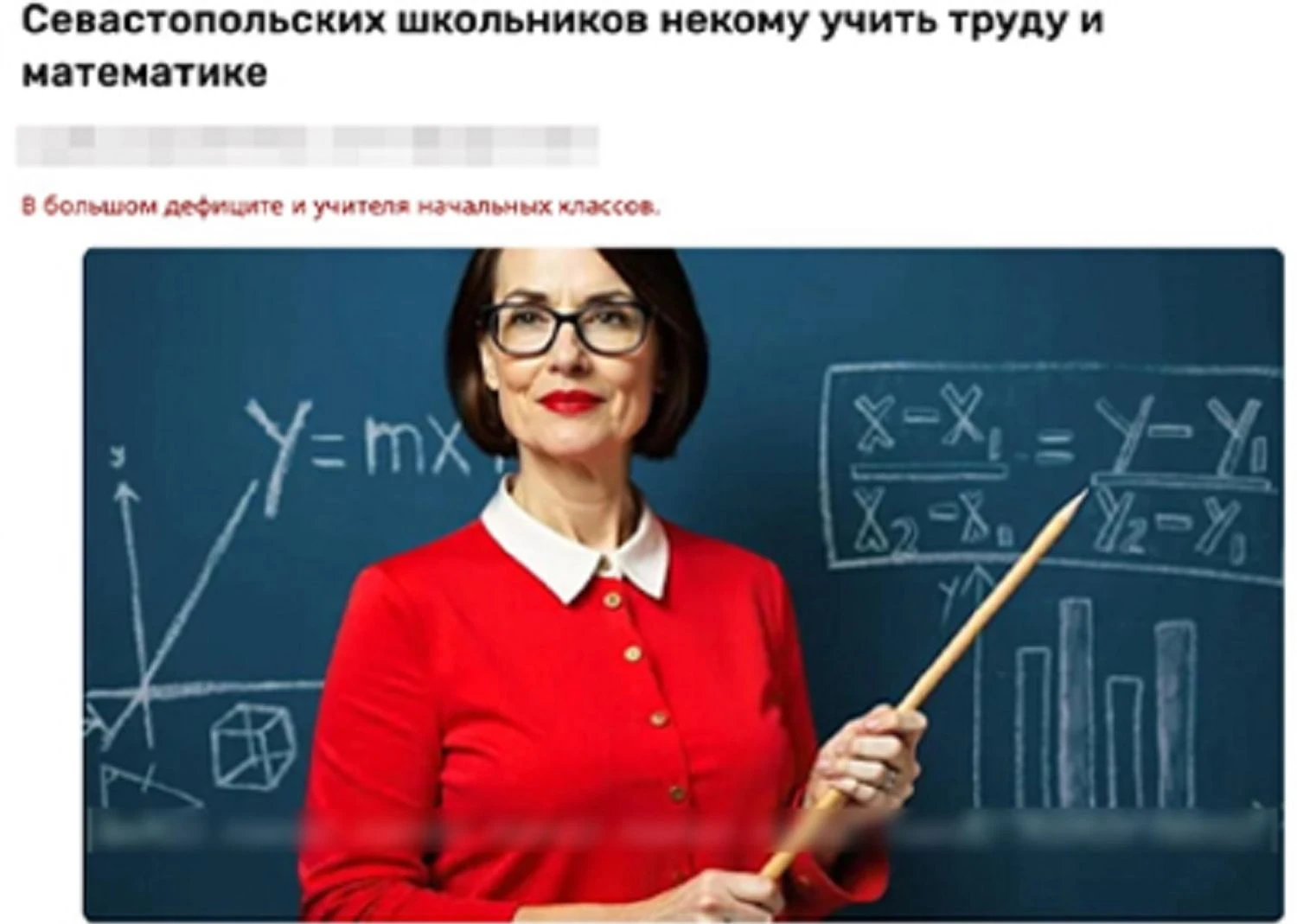
In Sevastopol, the peninsula’s largest city, schools are struggling with chronic teacher shortages that have left more than a hundred teaching positions unfilled. Every educational institution in the city reportedly lacks staff for multiple teaching roles, with the most critical shortages affecting core subjects including mathematics, physics, and primary education, as well as vocational training instructors.
The occupation administration has been forced to acknowledge the gravity of the situation. Teachers who remain in the system are shouldering extraordinary workloads, with many handling approximately 1.6 full-time positions while receiving what the CCD describes as “meager” compensation. This combination of overwork and underpayment has created a vicious cycle that makes recruiting and retaining qualified educators increasingly difficult.
Attempts by Russian authorities to address the staffing crisis have fallen short. Initiatives to attract university students into teaching roles have reportedly failed, further highlighting the systemic nature of the problem.
“This situation clearly indicates a comprehensive breakdown of the entire educational sector across the temporarily occupied peninsula,” the CCD stated in their assessment. The center attributes these failures to Russia’s wartime priorities, noting that occupying authorities have focused resources on military objectives while neglecting basic social services.
The education crisis represents just one facet of broader infrastructure challenges facing Crimeans under occupation. Transportation systems are reportedly operating in “survival mode,” with bus services experiencing frequent delays and route cancellations. School transportation routes have been particularly affected, creating additional barriers to education access. Meanwhile, trolleybus services are regularly interrupted during power outages, which have become increasingly common.
Energy conservation measures have also impacted heating systems throughout public facilities, with many buildings experiencing reduced or eliminated heating service as authorities attempt to conserve fuel.
The deteriorating conditions stand in stark contrast to promises made by Russian authorities following the 2014 annexation of Crimea, when residents were assured of economic prosperity and improved public services under Russian administration.
“Instead of the promised prosperity, the Russian occupation brings people only decline and lack of prospects,” the CCD concluded in its assessment.
Education specialists note that these conditions may have long-term consequences for the region’s development. Without adequate educational infrastructure and qualified teachers, students receive lower-quality education, potentially limiting their future opportunities. According to a separate report referenced by the CCD, education in occupied territories risks becoming “a conveyor belt for cheap labor” rather than a pathway to professional development and economic advancement.
The education crisis in Crimea mirrors similar situations in other Russian-occupied Ukrainian territories, where reports indicate that social services have deteriorated significantly under occupation authorities.
International education monitoring organizations have expressed concern about declining educational standards in occupied regions, noting that the combination of teacher shortages, resource limitations, and curriculum changes has severely impacted the quality and continuity of education available to students.
As the occupation continues into its tenth year, these systemic failures in basic public services underscore the broader humanitarian challenges facing civilians in Crimea, where everyday life continues to be disrupted by the geopolitical conflict and resource prioritization decisions made by occupying authorities.
Fact Checker
Verify the accuracy of this article using The Disinformation Commission analysis and real-time sources.

14 Comments
The shortage of qualified teachers, especially in core subjects, is alarming. Overworked and underpaid educators are a recipe for a deteriorating education system. Russia must prioritize restoring normalcy and investing in Crimea’s children.
Absolutely. The education crisis is just one facet of the broader societal issues stemming from the Russian occupation. Crimean residents deserve access to quality public services, not a collapsing system.
This is deeply concerning. The education crisis in Russian-occupied Crimea highlights the human toll of the occupation. Depriving children of quality education is a grave injustice that will have lasting consequences.
Agreed. The teacher shortage and poor working conditions are symptomatic of the broader challenges faced by the local population under Russian control. This crisis deserves greater attention and action to support Crimean students.
The education crisis in Crimea is a clear example of the consequences of Russian occupation. Depriving children of quality education is unacceptable and will have lasting impacts on the region’s future.
Absolutely. This crisis highlights the broader human rights issues stemming from the occupation. Urgent steps are needed to support Crimean educators and ensure access to education for all students.
It’s disheartening to see the education system in Crimea deteriorating under Russian occupation. The teacher shortage and lack of resources must be addressed to provide Crimean children with the education they deserve.
I agree. The occupation authorities need to prioritize education and invest in attracting and retaining qualified teachers. Crimean students should not be denied their right to a proper education.
This report highlights the harsh realities faced by Crimean schools under Russian control. The teacher shortage and poor working conditions are deeply troubling. The impacts on students’ education and futures are concerning.
You’re right, this crisis will have long-term consequences for Crimea’s youth. Urgent action is needed to address the systemic problems and ensure access to quality education for all.
The deepening education crisis in Crimea is a grave injustice. Depriving children of quality education is unacceptable and will have lasting consequences for the region. Urgent action is needed to support Crimean educators and students.
Absolutely. This crisis highlights the broader human rights violations stemming from the Russian occupation. Crimean residents deserve access to essential public services, not a deteriorating system. International pressure is needed to address this issue.
This report paints a troubling picture of the education system in Crimea under Russian control. The teacher shortage and poor working conditions are deeply concerning and will have far-reaching impacts on Crimean students.
I agree. The occupation authorities must take immediate action to address this crisis and invest in Crimea’s education system. Crimean children deserve access to quality education, not a collapsing system.