


Listen to the article
The Trump administration has imposed sanctions on former Congolese President Joseph Kabila, accusing him of funding and providing political support to rebel groups that threaten stability in the eastern Democratic Republic of Congo.
The Treasury and State departments announced Thursday that Kabila, who led Congo from 2001 to 2019, will face a freeze on all assets he may have in the United States or that move through U.S. financial institutions.
Treasury Secretary Scott Bessent said Kabila has been supporting the Rwanda-backed M23 rebels and Congo River Alliance insurgent groups, both of which are actively working to overthrow the current Congolese government.
“President Trump is paving the way for peace in the Democratic Republic of the Congo, and he has been clear that those who continue to sow instability will be held accountable,” Bessent said in a statement. “Treasury will continue to use its full range of tools to support the integrity of the Washington Accords.”
The sanctions come at a critical moment for peace efforts in the mineral-rich Central African nation. Last year, Congo and Rwanda agreed to a U.S.-mediated peace agreement aimed at ending decades of conflict in Congo’s eastern provinces. President Trump has frequently highlighted his administration’s role in brokering this deal, but the agreement has been severely strained by repeated violations from multiple parties.
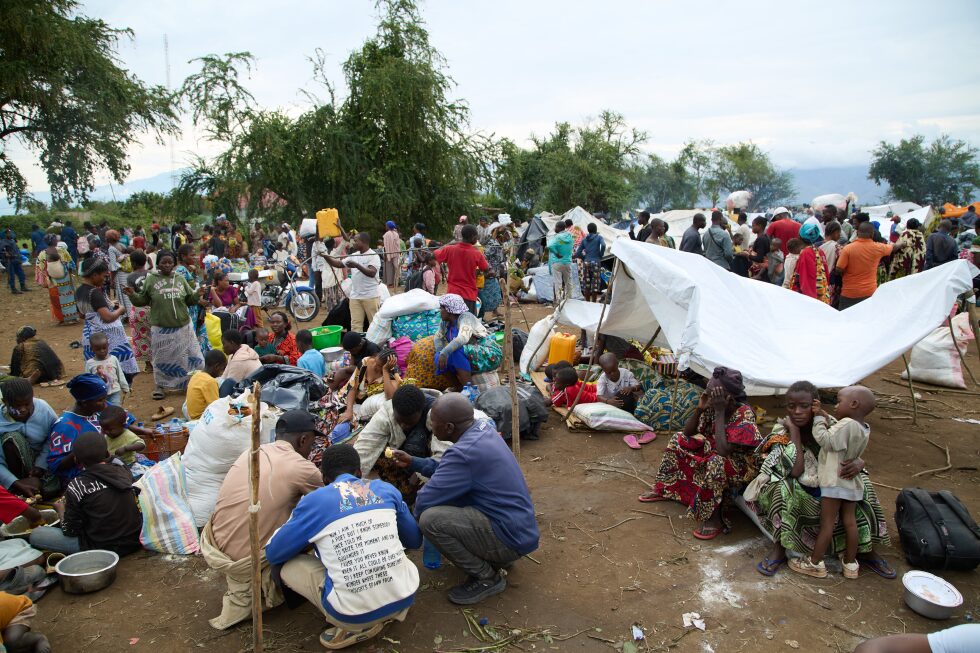
Eastern Congo has long been plagued by violence involving dozens of armed groups fighting for control of valuable natural resources, including gold, cobalt, and coltan – minerals essential for electronics manufacturing and renewable energy technologies. The region’s instability has created one of Africa’s most enduring humanitarian crises, displacing millions of civilians and contributing to widespread poverty despite Congo’s vast natural wealth.
The M23 rebel group, in particular, has been a significant destabilizing force. First emerging in 2012, the group has been widely reported to receive support from neighboring Rwanda, though Rwanda’s government has consistently denied these allegations. M23 launched a new offensive in late 2021 that has captured substantial territory in North Kivu province.
The State Department reinforced its commitment to peace in the region, stating, “The United States stands with the Congolese people and calls on all regional leaders to reject those who perpetuate violence and instability. Today’s action sends a clear message: we will hold accountable anyone who obstructs peace efforts in the DRC.”
Kabila’s tenure as president was marked by controversy. He initially took office after the assassination of his father, Laurent Kabila, in 2001. Though initially viewed as a potential reformer, his administration became increasingly associated with corruption and human rights abuses. He reluctantly stepped down in 2019 after delaying elections, allowing Félix Tshisekedi to become president in Congo’s first peaceful transfer of power since independence from Belgium in 1960.
Despite leaving office, Kabila has maintained significant influence through a vast network of business interests and political allies. Analysts suggest he has worked behind the scenes to undermine Tshisekedi’s administration while positioning himself for a potential return to power.
These sanctions represent the first major action against Kabila by the United States and could signal increased attention to addressing the root causes of instability in the Great Lakes region of Africa. The move may also pressure other regional leaders who have been implicated in supporting armed groups across borders.
The effectiveness of these sanctions will depend largely on international cooperation, particularly from countries in the region and those with significant economic ties to Congo’s mining sector, where much of the conflict is centered around resource extraction and control.
Fact Checker
Verify the accuracy of this article using The Disinformation Commission analysis and real-time sources.

9 Comments
This is a complex geopolitical situation in the DRC. It’s good to see the US taking steps to hold former leaders accountable for fueling conflict and instability. Sanctions can be an effective tool, but long-term stability will require addressing the underlying drivers of violence and fragility.
Agreed. The DRC has faced decades of conflict and instability, so a comprehensive approach focused on governance, security sector reform, and economic development will be crucial.
This sanctions move by the US is an interesting development, but it remains to be seen how effective it will be in curbing the influence of former President Kabila and the rebel groups he has supported. Addressing the complex web of regional alliances and power dynamics in the DRC is no easy task.
You make a good point. Sanctions alone are unlikely to be a silver bullet. A more holistic, regional diplomatic approach may be needed to make real progress on peace and stability in the DRC.
The DRC has immense mineral wealth, which has both fueled and prolonged the conflicts in the country. Cutting off financial support to rebel groups is important, but long-term solutions must also address the governance and development challenges that have allowed these conflicts to persist.
Absolutely. The DRC’s mineral resources have been both a blessing and a curse. Tackling the complex political economy of the conflicts will be crucial for achieving lasting peace and stability.
Sanctions can be a blunt instrument, but if used strategically, they may help disrupt the financial flows sustaining rebel groups in the DRC. However, the underlying drivers of conflict – such as weak governance, competition over resources, and regional power struggles – will require more comprehensive and long-term solutions.
It’s good to see the US taking action, but I’m curious to know more about the specific rebel groups being targeted and how the sanctions are expected to impact their operations. The DRC’s conflicts have regional dimensions, so a coordinated international response may be needed.
That’s a good point. The regional dynamics and cross-border alliances make this a complex challenge. Transparency around the specific groups and evidence supporting the sanctions would be helpful to understand the strategy and potential impact.