


Listen to the article
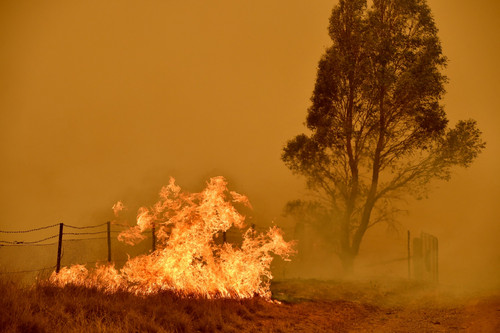
In the wake of Australia’s devastating “Black Summer” bushfires of 2019-2020, a misleading narrative spread rapidly across social media. The viral hashtag #ArsonEmergency falsely claimed that nearly 200 arsonists—not climate change—were responsible for the catastrophic blazes that captured global attention.
The reality was far different. While legal action had been taken against 183 people for fire-related offenses, most cases involved minor infractions like improper cigarette disposal or inadequate machinery precautions, as clarified by New South Wales Police. Only about 24 individuals had actually been charged with arson. By the time this misinformation was debunked, however, the damage to public discourse was already done.
This orchestrated counter-narrative exemplifies a troubling trend of climate misinformation that Australian journalists report is intensifying. “I definitely think it has ramped up, particularly with the political situation we see in the US,” said Bianca Hall, environment and climate reporter for The Age and media vice president of Australia’s Media, Entertainment & Arts Alliance.
Australia has emerged as a significant hub for climate misinformation due to a perfect storm of factors: a powerful fossil fuel industry, concentrated media ownership, and a political landscape that historically uses climate action as a wedge issue.
The problem has reached alarming proportions. According to the 2024 Digital News Report from the University of Canberra, exposure to misinformation among Australians “skyrocketed” to 75%, an 11-point increase from 2022, with climate change among the top three issues affected. The Australian Security Leaders Climate Group warned in March 2026 that climate disinformation has evolved beyond a communications problem into a “national security challenge” with implications for economic and energy resilience.
Global data paints an equally concerning picture. False or misleading content related to the COP30 climate summit increased by 267% between July and September 2025, with approximately 14,000 examples found online, according to research from Climate Action Against Disinformation.
The nature of climate misinformation has evolved significantly. While the 2019-2020 bushfires saw organically emerging misinformation, the 2022 floods marked a shift toward calculated campaigns, with international denialist narratives being adapted specifically for Australian audiences.
“The challenge in Australia is not simply that false information is inserted into the media,” explained Martin Zavan, former journalist and current head of Sydney-based Campaign Republic. “It’s that the system tends to reward simple, confident claims, particularly when they come from powerful and influential voices.”
Today’s climate misinformation takes sophisticated forms: fabricated science, doctored images, astroturfing, inflated cost modeling, and strategic omission of key information.
For journalists working under the pressure of a 24/7 news cycle, combating this trend presents significant challenges. Hall, a veteran journalist of over two decades, described the relentless pace: “We are trying to pitch stories towards different online editions to figure out how to sit within the news cycle… We’re constantly trying to figure out how to get environment and climate news in front of the largest audience possible.”
The resource constraints are palpable. “Fact checking breaking news has always been challenging, but when you’re trying to fact check science on the spot, it’s extremely challenging,” Hall noted. “We need more resources.”
Leanne Minshull, co-CEO of The Australia Institute, which examined government sources of climate misinformation in its “Lies of Emission” report, recalled a telling incident: “Good journalists who people trust are so busy they don’t have the time to be critical of what information is being fed to them.”
Artificial intelligence has emerged as a powerful accelerant of climate misinformation. In one alarming case, a social media post claimed that a University of Tasmania study published in Marine Policy had modeled that 400 whales per year would be killed by offshore wind turbines. The paper didn’t exist—it was entirely AI-generated.
Ketan Joshi, an Australian climate communications consultant based in Oslo, had anticipated such developments. “My theory a few years ago was that there would be a huge proliferation of fake science papers created using AI,” he said. “It’s going a little bit more in the direction of emotionally arresting content.”
Freelance journalists face additional hurdles in convincing editors to prioritize climate coverage. Lyndal Rowlands, who reports for Al Jazeera and specializes in climate reporting, explained that the topic is persistently framed as a distant future problem. “Those [Black Summer] fires were such a massive moment in Australia,” she noted. “And yet it didn’t lead to a substantial increase in climate change journalism.”
Despite these challenges, there are promising approaches emerging. Hall’s team at The Age noticed that consistently negative environmental reporting was alienating readers. In response, they’ve adopted “solutions-based journalism,” highlighting practical actions and technological advances alongside necessary coverage of climate threats.
Bright spots in Australia’s media landscape include the ABC’s dedicated Climate Team, while international outlets like Carbon Brief and Heated are building loyal audiences by approaching climate as a corruption and accountability story rather than merely an environmental issue.
A silver lining may be found in Australians’ heightened awareness of the problem. According to the Digital News Report: Australia 2025, nearly three-quarters (74%) of Australians express concern about fake news and misinformation—the highest percentage globally across 48 surveyed countries.
Yet awareness alone is insufficient, particularly in a nation that ranks as the world’s third-largest fossil fuel exporter with per capita CO₂ emissions approximately triple the global average.
As Rowlands aptly noted: “In Australia, we have this tradition where people say ‘oh it’s not the time to talk about it.’ ‘Don’t politicize it.’ But it’s so politicized already.”
Fact Checker
Verify the accuracy of this article using The Disinformation Commission analysis and real-time sources.

8 Comments
This article raises some concerning points about the growing misinformation crisis in Australia. I’m curious to learn more about the specific tactics and sources behind these misleading narratives around the bushfires. Understanding the roots of the problem is key to addressing it.
Misinformation can have real and damaging consequences, as we’ve seen with the distorted narrative around the Australian bushfires. It’s a sobering reminder that we need to be vigilant consumers of information, especially on complex and high-stakes issues.
The article does a good job of unpacking the complex dynamics at play with misinformation around the Australian bushfires. It’s a helpful case study on the challenges of combating coordinated disinformation campaigns in the digital age.
The spread of misleading narratives around the bushfires is really troubling. It’s a good reminder that we need to be vigilant about checking the facts, especially on social media where misinformation can quickly gain traction.
Absolutely. Fact-checking and media literacy are so important in the digital age. We have to be careful not to let disinformation campaigns shape the public narrative, even on high-stakes issues like climate change.
Misinformation and disinformation are major challenges for public discourse, especially when it comes to complex issues like climate change. It’s critical that we rely on authoritative, fact-based sources to understand the realities behind events like the Australian bushfires.
I appreciate the reporter highlighting the role of organized misinformation campaigns in this situation. It speaks to the need for greater media literacy education and efforts to counter coordinated disinformation tactics.
Interesting to see the connection drawn between the rise in climate misinformation in Australia and the political situation in the US. It speaks to the global nature of this problem and the need for international collaboration to address it.