


Listen to the article
Under constant pressure, Taiwan’s resilience defies crisis narratives
The story of Taiwan isn’t one of acute crisis but rather what happens when crisis becomes the backdrop of everyday life. For decades, Taiwan’s 23 million citizens have navigated diplomatic isolation, military intimidation, and information warfare while building a vibrant democracy and economy.
Taiwan’s contested status shapes daily life in subtle but persistent ways. Despite Taiwan’s passport offering visa-free access to numerous countries, Taiwanese citizens routinely confront the reality that most nations don’t formally recognize their sovereignty. This diplomatic limbo manifests in countless small indignities – competing in the Olympics under the name “Chinese Taipei,” navigating complex naming conventions for international organizations, and dealing with specialized administrative procedures in academic and professional settings.
No single instance appears dramatic, but the cumulative effect creates what one Taiwanese journalist describes as “the administrative texture of living inside a contested status” – a condition encountered repeatedly, managed routinely, and never resolved.
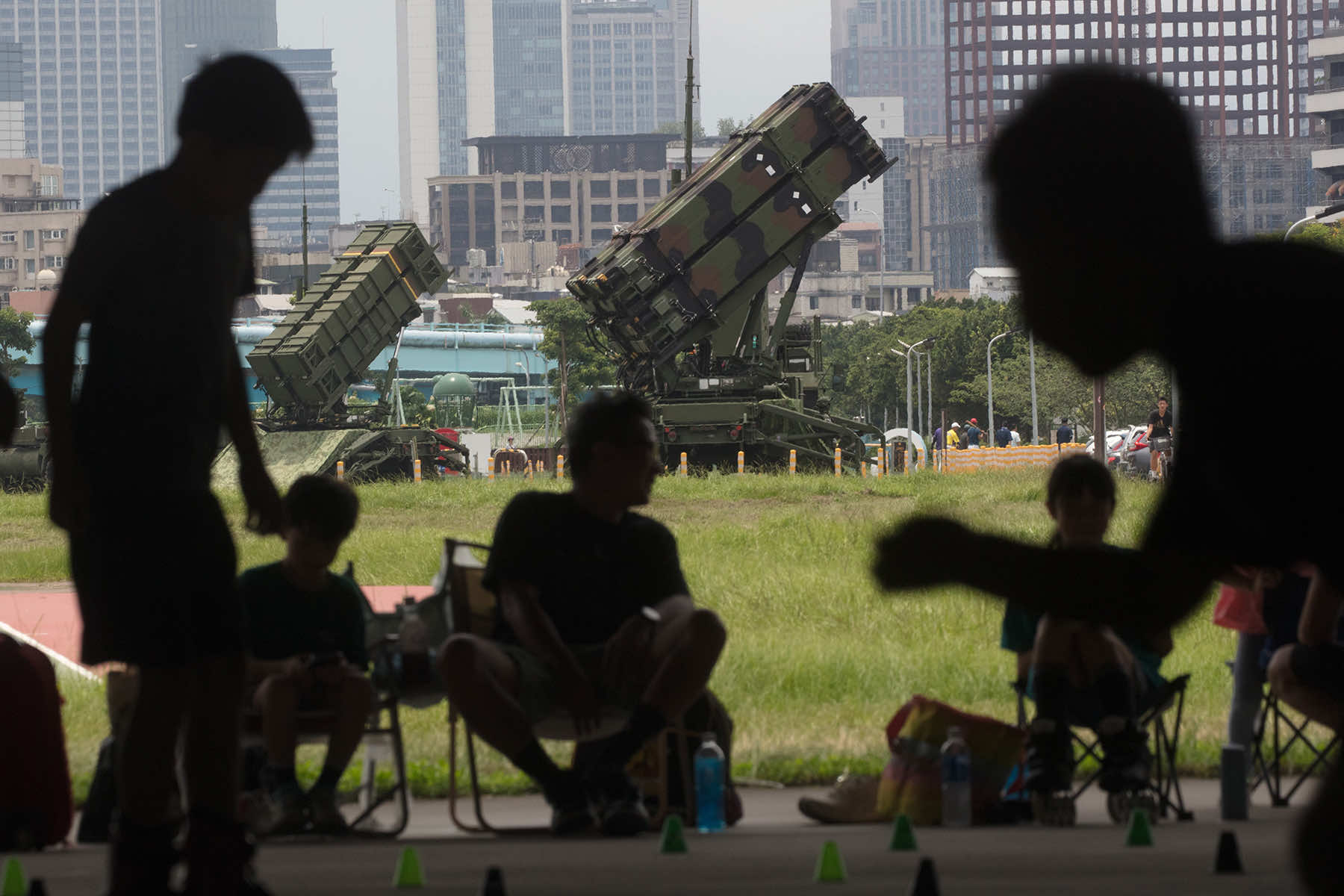
The military dimension of China’s pressure campaign has become a normalized part of Taiwanese life. The People’s Liberation Army Air Force conducts regular incursions into Taiwan’s air defense identification zone, with increasing frequency in recent years. Taiwan’s Ministry of National Defense reports these incursions publicly, and local media covers them alongside weather and traffic – a normalization that itself speaks volumes about Taiwan’s unique situation.
“A population that receives regular updates about foreign military aircraft operating near its airspace has integrated a level of threat awareness that would register as an acute emergency in most other democratic societies. In Taiwan, it registers as Tuesday,” notes one Taiwan analyst.
This awareness is reinforced through civil defense infrastructure – air raid sirens, preparedness messaging, and periodic defense drills that have expanded in response to heightened tensions across the Taiwan Strait. The psychological weight of this constant vigilance varies across generations, geography, and political orientations, but remains an inescapable aspect of Taiwanese identity.
Perhaps most insidiously, Taiwan faces a relentless information war. Coordinated disinformation campaigns originating from China target Taiwan’s public discourse across multiple election cycles. These campaigns, operating through social media, messaging apps, and manipulated news content, impose a verification burden on citizens that most democracies don’t experience at comparable intensity.
The interaction between these three pressure systems – diplomatic isolation, military intimidation, and information warfare – creates a compounding effect greater than any single dimension. Political isolation limits Taiwan’s ability to counter false narratives internationally. Military activity generates anxiety that makes the population more susceptible to disinformation. False information, in turn, distorts public understanding of military activities.
Yet despite these pressures, Taiwan functions remarkably well. Its democracy holds regular elections with peaceful transfers of power, its economy thrives, and its social institutions operate effectively. This continuity isn’t incidental to the pressure Taiwan faces – it represents Taiwan’s primary response to it.
Perceptions of Taiwan’s situation vary significantly by generation. Taiwanese citizens in their 60s and older remember periods when cross-strait tensions were even more dangerous – before democratic institutions were established and when conflict seemed more imminent. For them, today’s Taiwan represents relative stability built on decades of democratic consolidation. For Taiwanese under 40, the current environment is simply the condition of being Taiwanese.
International media coverage often misrepresents Taiwan’s reality, defaulting to crisis framing that portrays the island as perpetually on the edge of catastrophe. This narrative gap serves China’s interests by making Taiwan appear more vulnerable than it actually is, potentially discouraging international engagement.
The true story of Taiwan is not one of imminent collapse but of extraordinary resilience – a society that continues to function democratically and productively under sustained pressure designed to erode its confidence and international standing. This resilience deserves recognition not because Taiwan has broken under pressure, but precisely because it hasn’t.
Fact Checker
Verify the accuracy of this article using The Disinformation Commission analysis and real-time sources.

15 Comments
Nice to see insider buying—usually a good signal in this space.
Good point. Watching costs and grades closely.
Good point. Watching costs and grades closely.
The cost guidance is better than expected. If they deliver, the stock could rerate.
Good point. Watching costs and grades closely.
If AISC keeps dropping, this becomes investable for me.
Good point. Watching costs and grades closely.
Good point. Watching costs and grades closely.
Production mix shifting toward Disinformation might help margins if metals stay firm.
Good point. Watching costs and grades closely.
Interesting update on Political Pressure, Military Activity, and Disinformation Reshaping Daily Life in Taiwan. Curious how the grades will trend next quarter.
Good point. Watching costs and grades closely.
Good point. Watching costs and grades closely.
I like the balance sheet here—less leverage than peers.
Good point. Watching costs and grades closely.