


Listen to the article
FIFA Confirms Iran to Play World Cup Matches in U.S. Despite Diplomatic Tensions
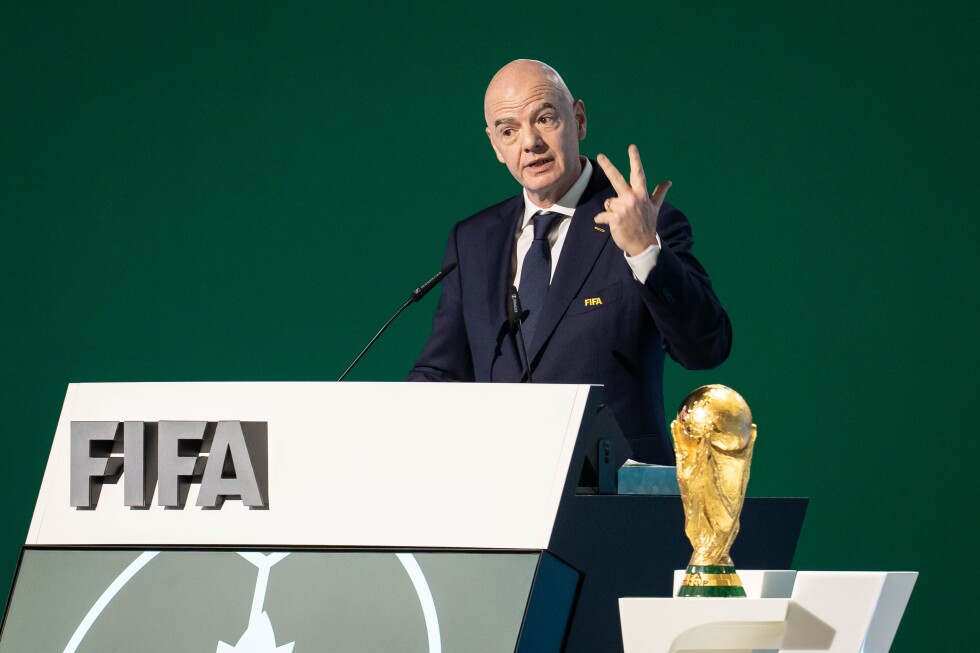
FIFA President Gianni Infantino reaffirmed on Thursday that Iran will participate in the upcoming World Cup and will play its matches in the United States, despite ongoing tensions between the two nations.
“The reason for that is very simple, dear friends, is because we have to unite. We have to bring people together,” Infantino said during his address at the FIFA Congress in Vancouver. “Football unites the world. FIFA unites the world. You unite the world. We unite the world.”
The statement comes amid diplomatic complications that highlight the fraught nature of Iran’s participation. Iranian soccer federation officials, including president Mehdi Taj and two others, were reportedly denied entry into Canada this week for the FIFA Congress. Canadian Foreign Affairs Minister Anita Anand confirmed that the Iranian officials were turned away at Toronto’s airport.
At the roll call for the FIFA Congress, Iran was notably announced as absent. A small group of protesters holding Iranian flags gathered outside the Vancouver Convention Center where the event was held.
The controversy surrounding Iran’s participation has been building for months. At one point, Iran requested to have its matches moved to Mexico, but FIFA rejected this proposal. Infantino has remained steadfast that Iran will play its scheduled matches on U.S. soil.
The 2024 World Cup, scheduled to run from June 11 to July 19, will be hosted across the United States, Canada, and Mexico—the first tournament to span three countries.
In contrast to concerns about U.S. immigration policies ahead of the tournament, Canadian officials at the FIFA Congress emphasized their nation’s multicultural identity. Peter Augruso, president of the Canadian Soccer Association, highlighted Canada’s diversity, saying, “Canada has always been more than just a country on a map. It is a meeting place of cultures, languages, ideas and dreams.”
Ticket pricing has emerged as another controversial issue for the tournament. Infantino briefly addressed complaints about high costs, though his comments were directed at member associations rather than fans.
“We sold 100% of the inventory that we put on the market, which is more or less 90% of the global inventory so far,” Infantino explained. “There are expensive tickets, yes, and there are also affordable tickets. And what is important is that all the revenues that we generate from the world go back to you.”
Financial concerns have been a recurring theme in the lead-up to the tournament. Earlier this week, FIFA announced an additional $100 million payout to participating nations to help cover higher-than-expected costs. The FIFA Council agreed to increase basic payments to each federation by $2 million, bringing the minimum to $12.5 million per team.
The move responds to appeals from member associations facing rising expenses. FIFA had previously announced that the tournament winner will receive $50 million from a $655 million prize pool—notably less than half of what Chelsea earned for winning the Club World Cup last year, which had a total prize fund of $1 billion.
Outside the Congress, approximately 100 Vancouver Whitecaps supporters held a rally protesting the possible relocation of their Major League Soccer team. MLS has stated it will explore all options for the Whitecaps’ future, including leaving Vancouver. The uncertainty stems from limited revenue opportunities and a short-term lease at BC Place, which will host seven World Cup matches, including Canada’s games against Qatar and Switzerland.
The 76th FIFA Congress brought approximately 1,600 top soccer officials to Vancouver, generating an estimated $4.9 million in local economic impact.
As preparations continue, the tournament organizers face the delicate balance of navigating political tensions while delivering on their promise that football can transcend international conflicts and bring nations together on the world stage.
Fact Checker
Verify the accuracy of this article using The Disinformation Commission analysis and real-time sources.

19 Comments
I like the balance sheet here—less leverage than peers.
Good point. Watching costs and grades closely.
Good point. Watching costs and grades closely.
Nice to see insider buying—usually a good signal in this space.
If AISC keeps dropping, this becomes investable for me.
Good point. Watching costs and grades closely.
I like the balance sheet here—less leverage than peers.
Good point. Watching costs and grades closely.
If AISC keeps dropping, this becomes investable for me.
The cost guidance is better than expected. If they deliver, the stock could rerate.
Good point. Watching costs and grades closely.
Good point. Watching costs and grades closely.
Production mix shifting toward World might help margins if metals stay firm.
Good point. Watching costs and grades closely.
Good point. Watching costs and grades closely.
I like the balance sheet here—less leverage than peers.
Exploration results look promising, but permitting will be the key risk.
Good point. Watching costs and grades closely.
Good point. Watching costs and grades closely.