


Listen to the article
US Intensifies “Economic Fury” Campaign Against Iran Amid Questions Over Effectiveness
As the Trump administration ratchets up its economic pressure campaign against Iran through sanctions, naval blockades and aggressive financial enforcement, a fundamental question emerges: Can unprecedented economic strain truly weaken the Iranian regime, or will its rulers once again absorb the pain, suppress domestic unrest and ultimately survive?
Treasury Secretary Scott Bessent claimed Tuesday that the “Economic Fury” campaign has already disrupted “tens of billions of dollars in revenue” that would otherwise support terrorism. In a post on social media platform X, Bessent highlighted that Iran’s inflation has doubled while its currency has sharply depreciated under the current maximum pressure strategy.
Bessent further warned that Kharg Island, Iran’s primary oil export terminal, is nearing storage capacity and could soon force production cuts—potentially costing the regime an additional $170 million per day in lost revenue.
A senior administration official told Fox News Digital that Treasury is expanding the campaign beyond traditional sanctions by targeting Iran’s ability to generate, move and repatriate funds across multiple sectors including oil, banking, cryptocurrency and covert trade networks. The official reported that Treasury has disrupted billions in projected Iranian oil revenue in recent days alone, including freezing $344 million in regime-linked cryptocurrency.
The campaign has also targeted Chinese “teapot” refineries, foreign banks, and sanctions-evasion networks facilitating Tehran’s trade. Financial institutions in China, Hong Kong, the United Arab Emirates and Oman have received warnings that continued facilitation of Iranian illicit commerce could trigger secondary sanctions.
Independent shipping intelligence from Kpler suggests Iran’s oil bottleneck is already intensifying. Before the conflict, Iran exported approximately 2 million barrels of oil per day, but current exports appear closer to 1 million barrels daily, leaving an estimated 1 million barrels per day accumulating in storage.
“Iran may have roughly 30 days before shoreside storage faces severe capacity constraints under current conditions,” said Court Smith, Kpler’s head of engagements and partnerships, while noting that older fields or marginal wells could already be facing early production pressures.
To buy time, Iran has reportedly begun pulling decades-old tankers out of storage for temporary floating capacity, indicating mounting logistical strain.
However, analysts remain deeply divided over whether these measures will achieve their strategic objectives.
“I don’t see this economic blockade leading to some sort of breaking point for the regime,” said Alireza Nader, an Iranian independent analyst based in Washington. “The regime cares about staying in power,” he added, warning that public hardship does not necessarily translate into vulnerability.
Nader believes Iran’s leadership has repeatedly shown it is willing to let ordinary citizens bear extraordinary suffering to preserve power. “It looks like a game of chicken and I think the regime thinks that it can win this game of chicken with President Trump,” he said.
This skepticism contrasts sharply with Miad Maleki, a former Treasury sanctions analyst, who argues Washington now holds its greatest leverage over Iran since the 1979 revolution. “We’ve never had the level of leverage that we have today with Iran in the history of our conflict since 1979,” Maleki asserted.
For Maleki, what makes this moment different is not sanctions alone, but the convergence of sanctions, naval blockade and aggressive secondary enforcement. He noted that Iran’s already fragile economy—marked by 104% food inflation and a roughly 90% collapse in purchasing power—could face approximately $435 million in daily economic losses if maritime restrictions hold.
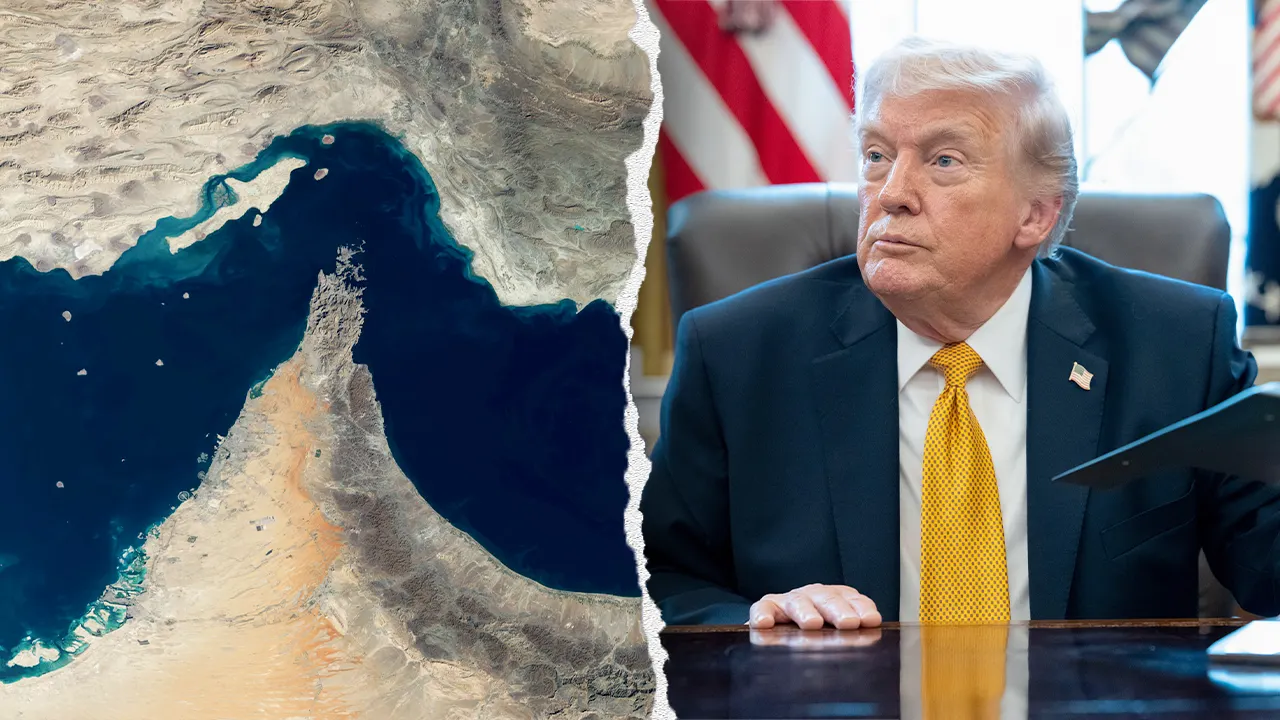
“Iran’s economy relies on the Strait of Hormuz more than any other economy,” Maleki said, arguing that disruption around the strait may ultimately hurt Iran faster than its adversaries.
Former Israeli national security adviser Yaakov Amidror suggests the blockade should not be judged by whether it forces immediate capitulation, but by whether Washington has the patience to let time erode Iran’s strength.
“Blockade is one of the oldest forms of warfare,” Amidror said. “Blockade equals time.” In his view, the strategy’s advantage is precisely that it imposes relatively low costs on the United States while gradually exhausting Iran’s economy.
Danny Citrinowicz, a nonresident fellow with the Atlantic Council’s Middle East Programs, offers a more skeptical assessment. “The blockade won’t force Iran to capitulate,” he said. “This country is under sanctions since 1979… they know how to make adjustments.”
Citrinowicz warned that Iran may escalate regionally or exploit global energy vulnerabilities long before economic collapse forces surrender, potentially driving oil prices sharply upward and creating international political pressure before Tehran truly breaks.
“In the pain game… the world will feel that before,” he cautioned, suggesting that Iran’s regime may still calculate that it can outlast U.S. patience through repression and strategic resource management.
The administration now faces a strategic endurance contest: Can economic warfare degrade Iran faster than the regime can adapt, repress and weaponize global pain? As the campaign continues, the answer will depend on both Washington’s commitment to sustaining pressure and Tehran’s capacity to withstand unprecedented economic isolation.
Fact Checker
Verify the accuracy of this article using The Disinformation Commission analysis and real-time sources.

14 Comments
The sanctions certainly seem to be taking a toll on Iran’s economy, but will it be enough to force real change from the regime? Past experience suggests Tehran may be willing to absorb a lot of pain to maintain its defiance. Curious to see how this high-stakes standoff evolves.
That’s a good observation. The regime’s resilience in the face of economic pressure could make it challenging for the US to achieve its desired outcomes through sanctions alone. It will be interesting to see if the administration can find a more effective strategy.
The administration seems determined to ratchet up the economic pain on Iran, but it’s not clear if that will be enough to force real concessions from Tehran. Curious to see if the regime can adapt and find ways to offset the impact.
You raise a fair point. Iran has proven resilient in the face of sanctions before, so the administration may need to pursue a more comprehensive strategy to achieve its goals.
Interesting to see how the sanctions are impacting Iran’s economy. Seems like the pressure is really mounting, but will Tehran’s resilience prevail? Curious to see how this plays out long-term.
Yes, Iran has proven adept at weathering economic pressure in the past. It will be important to monitor whether they can maintain stability domestically despite the strains.
The economic toll on Iran seems significant, but will it ultimately force the regime to change course? Past experience suggests Tehran may be willing to absorb a lot of pain to maintain its defiance. Curious to see how this high-stakes standoff evolves.
That’s a good observation. The regime’s survival instinct and past resilience in the face of sanctions could make it difficult for the US to achieve its desired outcomes through economic pressure alone.
Impressive that the US is able to disrupt so much of Iran’s revenue through these sanctions. But will it be enough to bring Tehran to the negotiating table? Curious to see how this high-stakes game of economic pressure plays out.
That’s a fair point. Iran has proven adept at finding workarounds to sanctions in the past. It will be critical for the US to maintain a coordinated, multilateral approach to maximize the pressure on Tehran.
The sanctions appear to be taking a real toll on Iran’s economy, but will that translate to meaningful political change? Curious to see how Tehran adapts and responds to the mounting pressure.
That’s a good question. Past experience suggests the regime may be able to withstand significant economic pain, but the long-term impacts remain to be seen.
Fascinating to see the administration ramp up its economic warfare against Iran. But will it be enough to compel real concessions from Tehran, or will the regime find ways to weather the storm? Curious to see how this high-stakes game of economic attrition unfolds.
That’s a fair point. Iran has proven adept at adapting to sanctions in the past, so the administration may need a more comprehensive strategy to achieve its goals. It will be interesting to see how this plays out.