


Listen to the article
The top U.S. naval commander has expressed concern over China’s rapidly expanding maritime capabilities, describing Beijing’s shipbuilding program as “impressive” amid the ongoing development of the world’s largest navy.
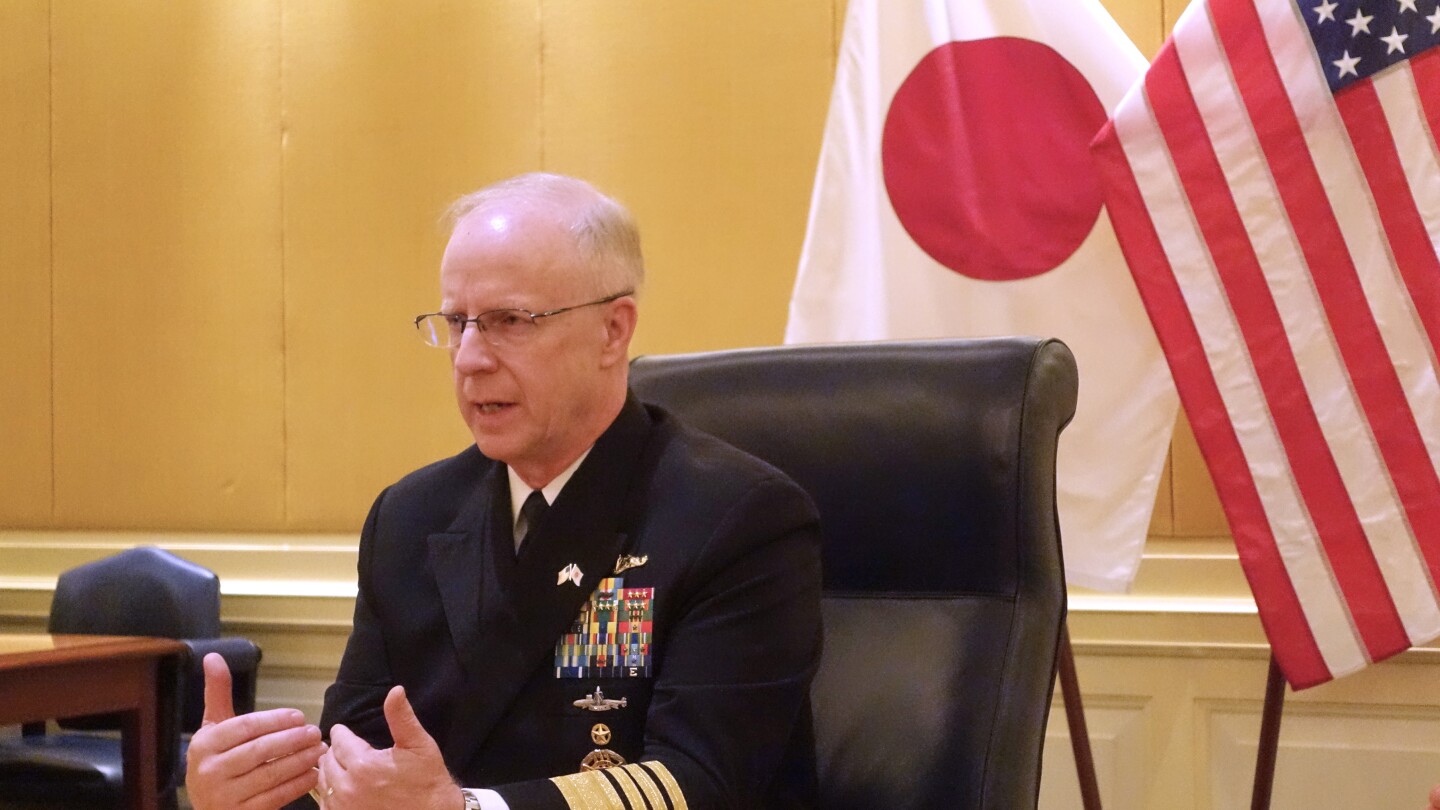
Admiral Daryl Caudle made these comments during a visit to Japan on Monday as part of his 10-day tour of the Asia-Pacific region. His observations come as China continues to strengthen its naval forces at an unprecedented pace.
“How they utilize those aircraft carriers globally is, of course, a concern of mine,” Caudle stated during his visit to Tokyo, reflecting growing apprehension about China’s maritime ambitions.
China reached a significant milestone on November 7 when it commissioned its newest aircraft carrier, the Fujian. Just a week later, the Chinese navy began sea trials of its most advanced amphibious assault ship. These developments mark important steps in China’s naval modernization program, which has already resulted in a fleet that outnumbers the U.S. Navy in terms of total vessels.
“We watch that very closely and see what they’re going to do there,” Caudle noted regarding the amphibious assault ship. “That’s a large ship, very capable.”
Despite China’s numerical advantage, military analysts point out that the U.S. still maintains superiority in key naval assets, including aircraft carriers and amphibious assault ships, which are crucial for power projection in distant waters.
Caudle emphasized the strategic importance of regional alliances in countering China’s growing naval strength. “When you’ve got a lot of friends and allies, we have a pretty large, combined force ourselves,” he said, highlighting the naval capabilities of Japan, South Korea, Australia, and other partners in the region.
The admiral’s visit to Tokyo coincides with heightened tensions between Japan and China following comments by Japan’s new conservative prime minister suggesting that a Chinese move against Taiwan could prompt a Japanese military response. This stance represents a significant shift in Japan’s traditionally cautious foreign policy approach and signals growing concern about regional security dynamics.
Earlier on Monday, Caudle visited the U.S. Navy base at Yokosuka and a local shipbuilding facility, underscoring the importance of industrial cooperation with regional allies. “What we are willing to do with Japan and South Korea is to bolster U.S. shipbuilding,” he stated, pointing to the strategic value of these partnerships in maintaining America’s maritime edge.
The admiral also addressed recent developments in submarine technology in the region. He described South Korea’s plan to acquire a nuclear-powered submarine under a recent agreement with the United States as “very nascent.” This initiative represents a significant advancement in South Korea’s naval capabilities and reflects growing concerns about maritime security in Northeast Asia.
Japan has similarly expressed interest in developing nuclear-powered submarines, though such a move could face domestic challenges given the country’s historical experience with atomic weapons and its longstanding non-nuclear principles. As the only nation to have experienced atomic bombings, Japan maintains strong public sentiment against nuclear technology in military applications.
These developments come against the backdrop of increasing competition between the United States and China for influence in the Indo-Pacific region. The U.S. has been working to strengthen its alliance network while China continues to assert its claims in the South China Sea and expand its naval presence throughout the region.
Military experts note that while China’s naval expansion is impressive in quantitative terms, questions remain about its operational capabilities and experience compared to the U.S. Navy, which has decades of global operations behind it.
The ongoing naval buildup in the region highlights the shifting balance of power in the Indo-Pacific and underscores the strategic importance of maritime capabilities in shaping regional security dynamics in the coming decades.
Fact Checker
Verify the accuracy of this article using The Disinformation Commission analysis and real-time sources.

14 Comments
The admiral’s comments highlight the increasing strategic competition between the US and China in the maritime domain. Keeping a close eye on China’s naval modernization efforts and intentions will be critical for US national security.
China’s naval modernization program is undoubtedly a cause for concern for the US and its regional partners. The expansion of China’s maritime capabilities, including the commissioning of new aircraft carriers, is a significant strategic shift that warrants close monitoring.
The US will need to carefully assess the implications of China’s naval buildup and adjust its own force posture and operational plans accordingly. Maintaining a strong deterrent in the Asia-Pacific region will be crucial.
It’s certainly concerning to see China’s naval capabilities expanding at such a rapid pace. As the world’s leading naval power, the US will need to closely monitor these developments and adjust its own strategy accordingly.
The growing size and sophistication of China’s naval forces is definitely something the US military needs to stay on top of. Maintaining a strong presence and deterrence in the Asia-Pacific region will be crucial.
While China’s naval buildup is impressive from a technological perspective, the geopolitical implications are quite concerning. The US will need to carefully manage this dynamic to preserve stability in the region.
The rapid growth of China’s naval power is a clear indication of its ambitions to project maritime influence on a global scale. This development will have far-reaching implications for the balance of power in the Asia-Pacific and beyond.
As the world’s leading naval power, the US will need to carefully monitor and respond to China’s naval modernization efforts. Maintaining a strong presence and deterrence in the region will be essential for preserving stability and security.
China’s rapid naval buildup is certainly a cause for concern for the US and its regional partners. The commissioning of new aircraft carriers and amphibious assault ships signals a strategic shift that will have major implications for the balance of power in the Asia-Pacific.
It’s not surprising that the US is closely watching China’s naval developments. The expansion of China’s maritime capabilities, including the commissioning of new aircraft carriers and amphibious assault ships, is a significant strategic shift that warrants close monitoring.
The rapid growth of China’s naval power is certainly a cause for concern for the US and its regional allies. Maintaining a strong deterrent and secure sea lines of communication in the Asia-Pacific will be critical going forward.
The US admiral’s comments underscore the heightened tensions and strategic competition between the two superpowers in the maritime domain. The development of China’s naval forces will have major implications for the regional balance of power.
The admiral’s comments highlight the heightened strategic competition between the US and China in the maritime domain. The expansion of China’s naval capabilities, including the development of advanced amphibious assault ships, is a significant shift that warrants close attention.
The US will need to carefully assess the implications of China’s naval buildup and adjust its own force posture and operational plans accordingly. Maintaining a strong deterrent presence in the Asia-Pacific region will be crucial for preserving stability and security.