


Listen to the article
Suicide Bombing in Islamabad Kills 12 as Pakistan Faces Rising Violence
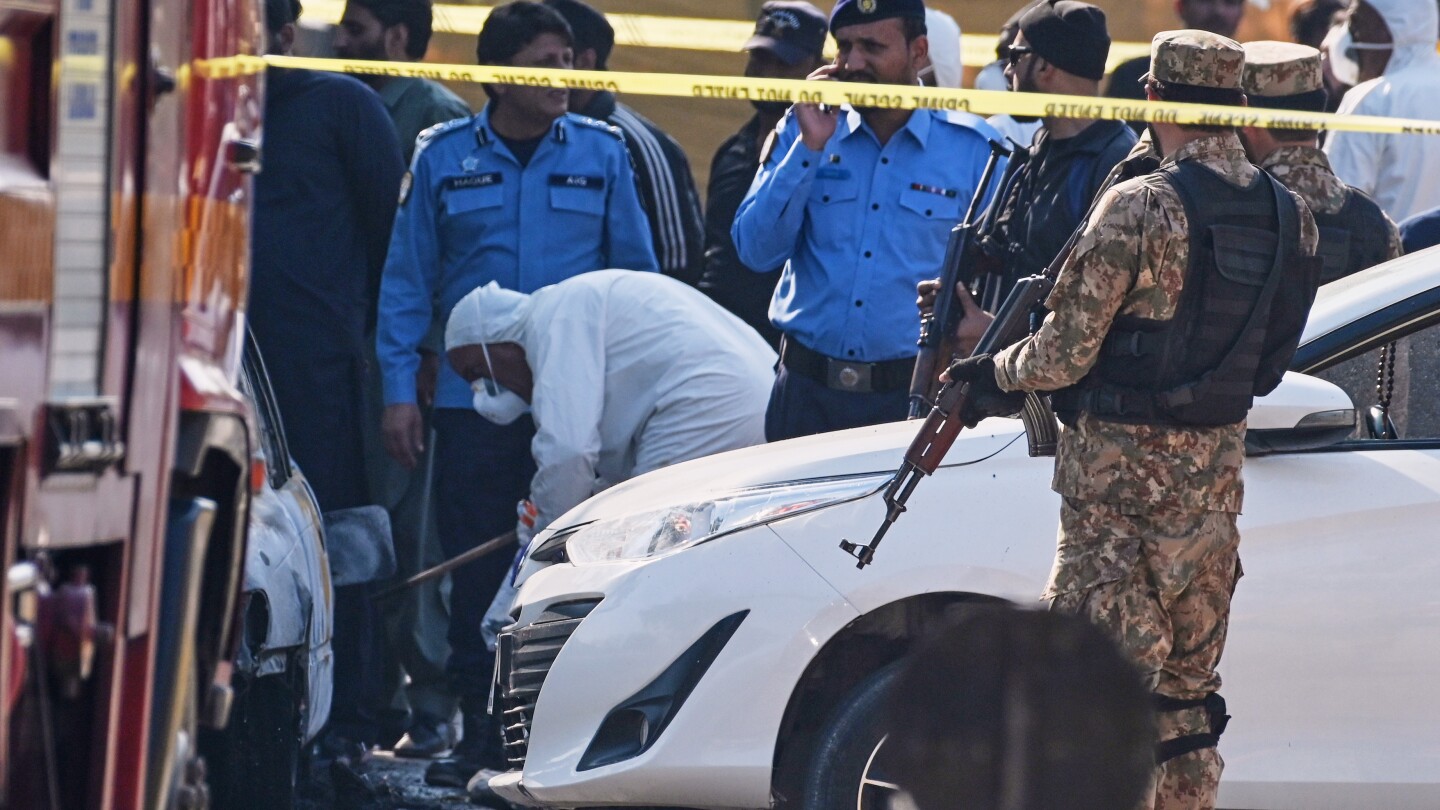
A suicide bomber struck outside a district court in Pakistan’s capital Islamabad on Tuesday, killing 12 people and wounding 27 others in an attack that adds to the country’s growing security challenges. The explosion, which was heard for miles around, targeted a police vehicle after the attacker failed to enter the heavily guarded court premises.
Witnesses described scenes of chaos as the blast ripped through a typically crowded area outside the court, where hundreds of visitors gather daily for legal proceedings. “People started running in all directions,” said Mohammad Afzal, who was at the court when the attack occurred.
The Jamaat-ul-Ahrar group, a breakaway faction of the Pakistani Taliban (TTP), claimed responsibility for the attack in messages sent to reporters from the group’s leader, Omar Mukkaram Khurasani. However, confusion emerged when another influential commander within the same group, Sarbakaf Mohmand, disavowed any connection to the bombing, highlighting fractures within militant organizations operating in the region.
Pakistan’s Interior Minister Mohsin Naqvi alleged the attack was “carried out by Indian-backed elements and Afghan Taliban proxies” linked to the Pakistani Taliban, though he provided no evidence for this claim. “We are looking into all aspects of the explosion,” he added. Police confirmed the attack was a suicide bombing after identifying a severed head at the scene as belonging to the perpetrator, who was also captured on security footage.
India swiftly rejected Pakistan’s accusation as baseless. “The international community is well aware of the reality and will not be misled by Pakistan’s desperate diversionary ploys,” said Randhir Jaswal, spokesperson for India’s Ministry of External Affairs.
The attack in Islamabad came just a day after militants attempted to take hostages at an army-run college in Wana, a city in northwestern Khyber Pakhtunkhwa province near the Afghan border. Security forces reportedly foiled the attack, killing two militants immediately while cornering three others who had managed to enter the compound. Pakistani authorities attributed Monday’s attack to the TTP, though the group denied involvement in both incidents.
Jamaat-ul-Ahrar, which claimed Tuesday’s bombing, split from the main TTP after its head was killed in Afghanistan in 2022. While some members have since rejoined the Pakistani Taliban, others maintain their distance, indicating ongoing divisions among the insurgents. The group’s ability to strike Pakistan’s capital signals a troubling security development for the country’s government.
Prime Minister Shehbaz Sharif condemned the attacks and promised accountability. “We will ensure the perpetrators are apprehended and held accountable,” he said in a statement. “We will not allow the blood of innocent Pakistanis to go to waste.”
Pakistan’s Defense Minister Khawaja Mohammad Asif took to social media platform X to assert that the country is “in a state of war” and blamed Afghanistan’s Taliban government, which Pakistan accuses of harboring TTP fighters. “Afghanistan can act to stop terrorism in Pakistan, but bringing this war to Islamabad is a message from Kabul,” Asif said, warning that Pakistan “has the strength to respond fully.”
The attack occurs against a backdrop of deteriorating relations between Pakistan and Afghanistan. The two countries engaged in cross-border fighting in October that killed dozens before Qatar brokered a ceasefire on October 19, which remains in effect. However, subsequent peace talks in Istanbul have stalled after Kabul refused to provide written assurances that militant groups would not use Afghan territory against Pakistan.
Violence has surged in Pakistan in recent years, particularly since the Taliban takeover in Afghanistan in 2021, which emboldened the TTP. Many TTP leaders and fighters are believed to have found sanctuary in Afghanistan, though Kabul denies protecting the group. The TTP was responsible for Pakistan’s deadliest school attack in 2014, when 154 people, mostly children, were killed at an army-run school in Peshawar.
The latest attack has drawn international condemnation, with the United States, China, Saudi Arabia, Qatar, and Turkey all expressing solidarity with Pakistan. UN Secretary-General Antonio Guterres called for a full investigation, emphasizing that “all perpetrators of terrorism must be held accountable.”
Fact Checker
Verify the accuracy of this article using The Disinformation Commission analysis and real-time sources.

11 Comments
The fractures within militant groups in the region are worrying, as they can lead to further instability and unpredictable behavior. The authorities will need to closely monitor the situation and work to disrupt these organizations.
Absolutely. The infighting and disavowals within the Jamaat-ul-Ahrar group highlight the complex and volatile nature of the security challenges Pakistan faces.
This is a tragic and senseless attack. My condolences go out to the victims and their families. Pakistan has faced far too much violence in recent years, and this only underscores the need for greater security and stability in the region.
I agree, the rise in violence in Pakistan is deeply concerning. The government must take strong action to apprehend those responsible and prevent future attacks.
This is a tragic reminder of the ongoing threat of terrorism in Pakistan. The government must remain vigilant and work closely with security forces to disrupt these extremist networks and prevent future attacks.
I agree, the authorities need to take decisive action to address the root causes of this violence and restore a sense of safety and stability for the Pakistani people.
The rising violence in Pakistan is deeply concerning, and this attack is a stark reminder of the challenges the country faces. My heart goes out to the victims and their families.
It’s disheartening to see such a senseless act of violence take place. I hope the authorities are able to swiftly identify and apprehend those responsible, and take steps to prevent similar attacks in the future.
Agreed. The government must prioritize the safety and security of its citizens and work to address the underlying issues driving this rise in extremism and violence.
This attack is a tragic reminder of the ongoing challenges Pakistan faces in maintaining security and stability. My condolences go out to the victims and their loved ones.
I’m curious to know more about the security measures in place at the Islamabad court and whether there are plans to reevaluate and strengthen them in the wake of this attack. Protecting public spaces is crucial for maintaining law and order.