


Listen to the article
Salvadorans Anxiously Watch Supreme Court Case on Temporary Protected Status
When the U.S. Supreme Court convenes this Wednesday to hear arguments on the Trump administration’s plans to end deportation protections for Haitians and Syrians, communities from over a dozen countries will be watching intently. Perhaps none have more at stake than approximately 200,000 Salvadorans who have built lives in America under Temporary Protected Status (TPS).
Many Salvadorans have lived and worked legally in the United States for more than two decades under TPS, a program that shields immigrants from deportation when conditions in their home countries are deemed unsafe. The program grants work permits in increments of up to 18 months, with extensions contingent on the Homeland Security Secretary’s assessment of conditions abroad. During Donald Trump’s first term, his administration moved to terminate TPS for all 12 countries that came up for renewal.
Wednesday’s Supreme Court arguments will examine whether the administration properly evaluated conditions in Haiti and Syria when ending their TPS designations and whether decisions were influenced by prejudice against non-white immigrants. The rulings affected approximately 350,000 Haitians and 6,000 Syrians.
For Salvadorans, the upcoming September 9 renewal deadline looms large. El Salvador’s President Nayib Bukele holds a unique position among TPS-designated countries as a U.S. ally. While extending TPS would secure vital remittances flowing back to El Salvador, many Salvadorans hold little hope for favorable treatment from the Trump administration.
“It’s not guaranteed, but it’s not impossible either,” said José Urías, who spoke from his home in Boston. Urías represents the typical journey of many Salvadorans with TPS – arriving in 1994, he initially washed dishes and delivered furniture before launching a construction business about 18 years ago. Today, his company has built over 150 homes in the Boston area.
Salvadorans received TPS after devastating earthquakes struck their homeland in 2001. The vast majority have American-born children, creating mixed-status families deeply embedded in American society.
“Our life is based here. I have lived more of my life here than in El Salvador,” said Urías, 47. “It’s like living out your American Dream, and then suddenly — just like that — being told your time is up, as if to say, ‘We don’t need you anymore,’ and having someone try to cut away everything you’ve built.”
Urías and his wife, also a TPS holder, have two American sons – a 19-year-old college sophomore and a 13-year-old. While his entire extended family has secured permanent residency or citizenship, Urías and his wife remain in limbo, potentially facing deportation to a country they barely remember.
TPS was established by Congress in 1990 as a humanitarian measure to prevent deportations to countries suffering from natural disasters or civil conflict. When Trump took office, Venezuelans represented the largest group of beneficiaries, followed by Haitians and Salvadorans. During his first term, Trump ended TPS for approximately 1 million people from various countries including Venezuela, Honduras, Nicaragua, and Afghanistan.
Trump and Bukele share similar approaches to security and crime. Secretary of State Marco Rubio recently visited El Salvador, securing an agreement for the country to accept deportees of any nationality. Shortly thereafter, the U.S. sent hundreds of Venezuelan deportees to a maximum-security prison in El Salvador.
Under Bukele’s leadership, El Salvador has transformed from one of the world’s most violent nations to one of the safest in the Americas following his mass arrest campaign launched in 2022. The State Department recently upgraded El Salvador’s travel advisory, citing significant reductions in violent crime and murders.
During Trump’s first term, Bukele requested TPS extensions, which remained in place primarily due to ongoing litigation. However, the political landscape has shifted.
“We cannot rely solely on friendly relations,” said José Palma, a Salvadoran TPS holder and national coordinator at the National TPS Alliance, which has challenged TPS terminations in federal courts. “Nothing can be guaranteed with this administration in the United States at this moment.”
The economic implications are significant. Salvadorans in the U.S. sent $9.9 billion in remittances to El Salvador last year, representing 24% of the country’s gross domestic product, according to El Salvador’s central bank. Despite this economic dependency, Bukele has not publicly requested a TPS extension.
“I don’t think that the fact that Bukele has really delivered on Trump’s priorities necessarily means that Trump will respond to TPS extension requests,” said Rebecca Bill-Chavez, chief executive officer of the Washington-based think tank Inter-American Dialogue. “I don’t think there is any guarantee.”
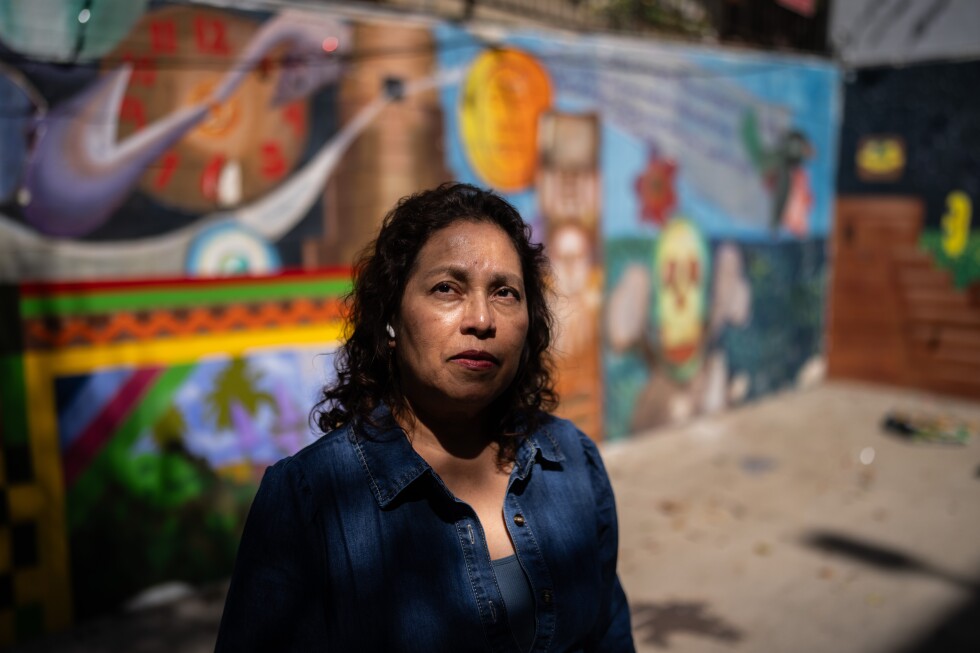
For individuals like Lorena Zepeda, the uncertainty is deeply personal. Arriving in 1991, she has worked various jobs and now serves as an organizer at the Central American Resource Center. Despite her husband recently obtaining permanent residency, Zepeda remains vulnerable due to a deportation order from 1999.
For over three decades, she has sent $200-$400 monthly to sisters in El Salvador. If TPS ends, she would be the only one in her family facing deportation.
“I feel quite sad,” Zepeda said. “Sadly, we know that I am not protected, but I have faith in God.”
Fact Checker
Verify the accuracy of this article using The Disinformation Commission analysis and real-time sources.

9 Comments
The fate of TPS is certainly a high-stakes issue for Salvadoran immigrants. I hope the court’s ruling is guided by a careful, impartial assessment of the facts rather than political agendas.
This is a complex issue with valid arguments on both sides. I’ll be following the Supreme Court proceedings with interest to see how they navigate the legal and humanitarian considerations.
It’s concerning to hear about the potential termination of TPS protections for Salvadorans. This program has provided stability and security for many families over the past two decades.
Absolutely. TPS has been a vital lifeline, and its abrupt cancellation would upend the lives of hundreds of thousands of people.
The Trump administration’s efforts to end TPS seem shortsighted and potentially driven by prejudice, as the article suggests. I hope the court upholds the program’s protections.
Me too. Terminating TPS would cause immense hardship for families who have built lives in the US over many years.
I’m curious to see how the Supreme Court will rule on this case. The court’s decision could have far-reaching implications for immigration policy and the lives of TPS recipients.
Interesting case with high stakes for the Salvadoran TPS community. I hope the Supreme Court carefully weighs the evidence on conditions in El Salvador and avoids any undue bias in their decision.
Agreed, the legal arguments around the administration’s decision-making process will be crucial. This case could set an important precedent.