


Listen to the article
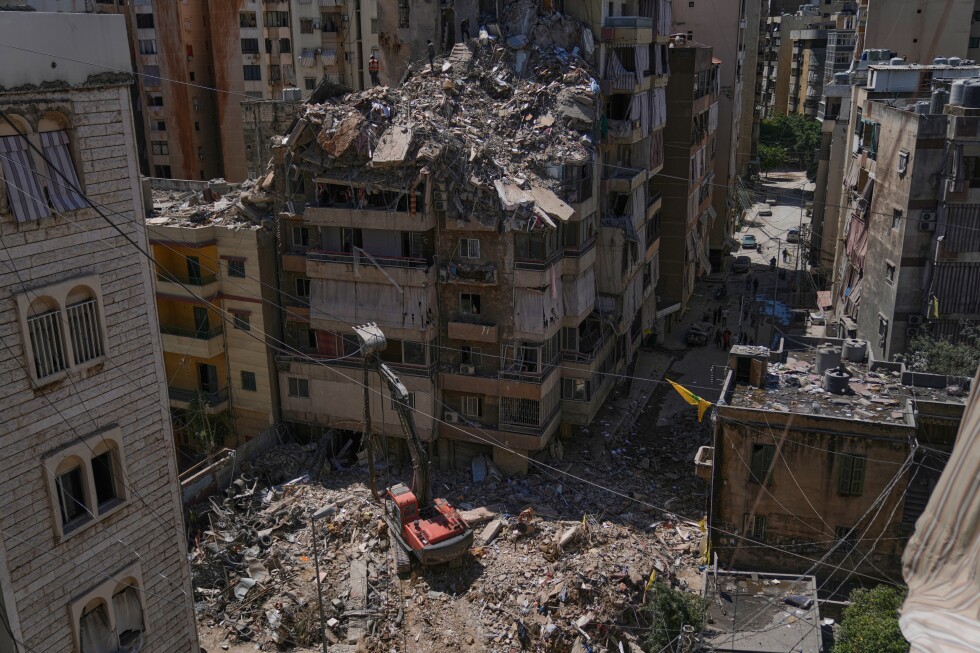
Israeli airstrikes on southern Lebanon killed at least five people on Friday, including a civil defense paramedic, as cross-border violence continues despite a formal ceasefire agreement between Israel and Hezbollah.
Lebanon’s Health Ministry reported that an Israeli airstrike on the southern village of Toura near Tyre killed four people and wounded eight others. The state-run National News Agency confirmed another strike near the southeastern village of Kfar Chouba claimed the life of a Lebanese Civil Defense paramedic.
The deadly strikes followed evacuation warnings issued by the Israeli military to residents of six villages in the Tyre province, including Toura. Such warnings have become a grim routine in the conflict, often preceding military operations.
Hours after the morning strikes, Hezbollah responded by firing multiple rockets toward northern Israel. Israeli military sources said defense systems intercepted one rocket while the others landed in unpopulated areas without causing casualties.
Despite a ceasefire technically being in place since April 17, both sides have continued military operations. On Wednesday, Israel conducted an airstrike on Beirut’s southern suburbs, a Hezbollah stronghold. The Israeli military claimed Thursday it had killed Ahmed Balout, allegedly a commander in Hezbollah’s elite Radwan Force, along with two other militants. Hezbollah has not commented on these claims.
The Israeli military has also stated, without providing evidence, that it has killed more than 85 Hezbollah fighters and struck 180 of the group’s facilities in the past week alone, highlighting the intensity of operations despite the supposed ceasefire.
Lebanese President Joseph Aoun addressed the ongoing conflict during a meeting with a visiting European Union delegation on Friday. Aoun urged European countries to pressure Israel to honor the ceasefire agreement and stop destroying homes in Lebanese villages under Israeli occupation. The president emphasized Lebanon’s commitment to the ceasefire as a pathway to negotiations that could lead to a lasting solution.
Hadja Lahbib, European Commissioner for Equality, expressed concern about the situation after meeting with President Aoun, stating that both Israel and Hezbollah are taking Lebanon “hostage” in their conflict. “Hezbollah should stop its attacks and disarm, and Israel should put limits to its airstrikes that target and have targeted humanitarian centers,” Lahbib told reporters.
The conflict between Israel and Hezbollah escalated dramatically on March 2, when the Iran-backed militant group launched rockets into northern Israel. This attack came just two days after the United States and Israel initiated military action against Iran, Hezbollah’s primary supporter. Since then, Israel has conducted hundreds of airstrikes and launched a ground invasion of southern Lebanon, capturing dozens of border towns and villages.
In a significant diplomatic development, Lebanon and Israel recently held their first direct talks in more than three decades. The two nations have formally been in a state of war since Israel’s founding in 1948, making any direct negotiations noteworthy. President Aoun met with Simon Karam, who leads the Lebanese delegation to talks with Israel scheduled for next Thursday and Friday in Washington.
The current ceasefire, initially declared for 10 days on April 17 in Washington and subsequently extended for three weeks, represents a fragile attempt to de-escalate tensions. However, the continued violence underscores the difficulty of maintaining peace in a region with deep-rooted hostilities.
The conflict has taken a heavy toll on southern Lebanon’s civilian population and infrastructure. Many residents have been displaced multiple times, and essential services in border communities have been severely disrupted. International humanitarian organizations have consistently called for greater protection of civilians and unrestricted access to affected areas.
As diplomatic efforts continue in Washington, the people of southern Lebanon and northern Israel remain caught in a cycle of violence that shows few signs of permanent resolution despite international mediation attempts.
Fact Checker
Verify the accuracy of this article using The Disinformation Commission analysis and real-time sources.

12 Comments
This cycle of violence is heartbreaking. I sincerely hope the international community can apply enough diplomatic pressure to force both sides to the negotiating table and reach a lasting ceasefire agreement.
Agreed. Continued conflict only leads to more suffering. Diplomacy, not military escalation, is the only path to sustainable peace in the region.
This conflict seems increasingly complex and volatile. I hope both sides can find a path to de-escalation and lasting peace, even if it’s difficult. Continued violence only leads to more suffering.
I agree, it’s a very delicate situation. Diplomacy and restraint will be crucial to avoid further escalation and civilian casualties.
Tragic to see civilians caught in the crossfire. Both Israel and Hezbollah need to refocus on protecting innocent lives and finding diplomatic solutions, not military ones.
Well said. Innocent people should never be harmed, regardless of the political disputes. Diplomacy is the only path forward.
Concerning to see the cycle of retaliation continue, with innocent civilians paying the price. Both sides must show restraint and prioritize de-escalation over military action.
Absolutely. Lasting peace can only be achieved through dialogue, not violence. I hope cooler heads prevail in this volatile situation.
This conflict has been going on for far too long. I hope the international community can step in and broker a lasting ceasefire and peace agreement between all parties involved.
Agreed. Prolonged violence and instability in the region benefits no one. A diplomatic solution is desperately needed.
It’s deeply troubling to see this conflict flare up again. I hope all parties involved can find the courage to return to the negotiating table and work towards a sustainable political solution.
Well said. Unilateral military strikes will only breed more animosity. A negotiated settlement that addresses the core grievances of all sides is the only way forward.