


Listen to the article
Amazon’s Recovery Faces New Challenges Despite Deforestation Gains
Brazil’s Amazon rainforest is experiencing a paradox of progress. While President Luiz Inácio Lula da Silva’s administration has made significant strides in reducing deforestation, with rates expected to reach their lowest level since 2012, the world’s largest rainforest faces mounting threats that could undermine these environmental gains.
Forest degradation has emerged as a more insidious threat than outright deforestation. This slower, less visible process now affects approximately 40% of the Amazon and has outpaced clear-cutting in recent years. Climate experts describe degradation as a chronic condition weakening the ecosystem from within.
“Degradation is slower and more silent. It is like a chronic condition,” explains Taciana Stec, a climate policy specialist at Brazilian climate think tank Talanoa.
The situation is particularly concerning because the Amazon remains a crucial carbon sink, absorbing vast amounts of planet-warming carbon dioxide. However, scientists warn that repeated environmental stresses could trigger a tipping point beyond which recovery becomes impossible. A 2024 study published in Nature estimated that by 2050, between 10% and 47% of the Amazon could face conditions capable of triggering such a critical shift.
Brazil’s portion of the Amazon, which constitutes more than 60% of the entire rainforest, plays a pivotal role in determining the fate of this ecosystem. While preliminary data shows both deforestation and degradation have declined significantly since last year, degradation continues to be the more pervasive threat. From August 2025 through April 2026, degradation affected about 4,420 square kilometers (1,706 square miles) of forest, compared to 1,700 square kilometers (656 square miles) lost to deforestation.
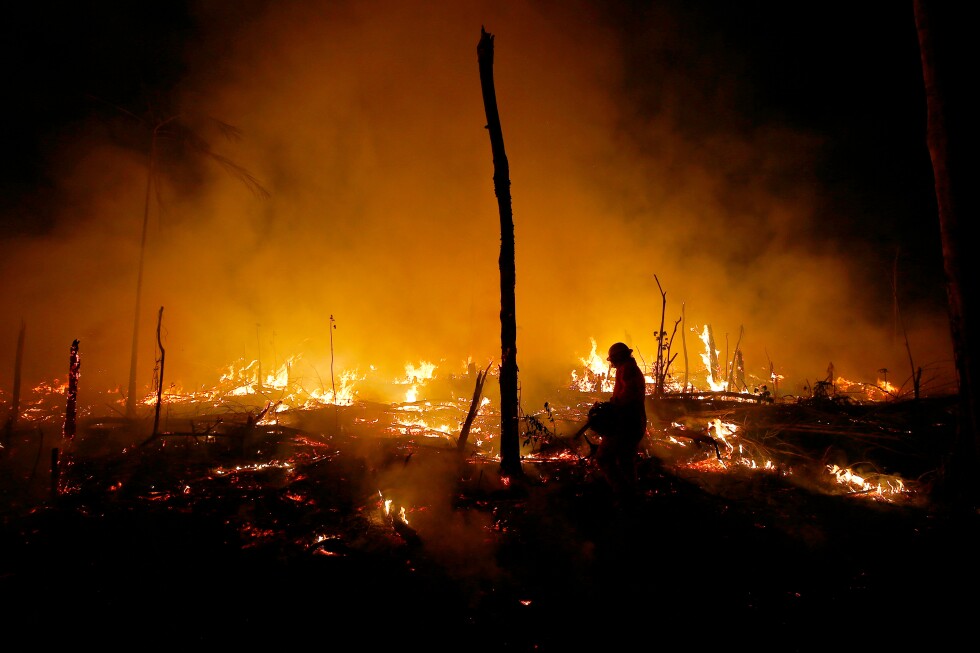
The recent El Niño weather pattern has exacerbated these challenges. During 2023 and 2024, temperatures in the Amazon rose 2 to 4 degrees Celsius (3.5 to 7 Fahrenheit) above historical averages, fueling the worst wildfires in two decades. The combined effect undermined deforestation progress, according to research by Guilherme Mataveli at Brazil’s National Institute for Space Research.
A degraded rainforest, though still standing, can no longer fully support its ecosystem. Scientists compare it to a patient with a chronic illness who faces recurring acute episodes that progressively weaken the system. Each El Niño cycle leaves the forest more vulnerable to the next climate shock.
Brazil has committed to restoring 12 million hectares (29.7 million acres) of native Amazon forest by 2030 as part of its Paris Agreement pledge. The Environment Ministry reports that 3.4 million hectares (8.4 million acres) are already undergoing recovery. However, political challenges threaten to undermine conservation efforts.
A fast-tracked bill in the Brazilian Congress could severely impact environmental enforcement. If approved, the legislation proposed by lawmaker Lucio Mosquini would prohibit IBAMA, Brazil’s environmental enforcement agency, from imposing sanctions on landowners for illegal deforestation based solely on satellite monitoring.
IBAMA’s president, Jair Schmitt, calls the proposal “a major environmental setback” that would “end up encouraging environmental offenders and unfair competition.” Satellite monitoring has been a cornerstone of Brazil’s environmental enforcement since 2016, particularly in remote areas where field inspections are impractical.
The policy was halted under former President Jair Bolsonaro in 2019 as part of broader environmental deregulation, leading to a 15-year high in Amazon deforestation by 2021. The Lula administration reinstated remote monitoring upon taking office in 2023. Given the powerful influence of agribusiness in Brazil’s Congress, political analysts expect the bill to pass, dealing a significant blow to conservation efforts.
Meanwhile, authorities are bracing for a potentially severe wildfire season. The government has hired 4,600 firefighters and launched real-time monitoring of potential fire outbreaks. Officials are identifying high-risk rural properties by combining historical data on heat spots with deforestation records and weather forecasts.
“The situation this year is worrying. We’re still in the rainy season, and we’ve already recorded two fires in April,” said Tainan Kumaruara, a member of the Indigenous volunteer Guardioes Kumaruara fire brigade in Para state. “The forest is different from what it was 10 years ago. It’s much drier. The trees no longer behave as they did.”
Most Amazon wildfires are human-caused rather than natural occurrences. In 2024, severe drought contributed to wildfires affecting more than 17 million hectares (42 million acres) of rainforest, according to nonprofit MapBiomas.
Recent research provides some hope regarding the forest’s resilience. A 20-year study published in April in Proceedings of the National Academy of Sciences found that even after frequent wildfires, the Amazon did not completely transform into savanna as some models had predicted. However, it remained degraded, with more clearings and lacking key species that require specific conditions to thrive.
“The forest is resilient, but our message is that we need to preserve it even more, and urgently,” said study author Leandro Maracahipes. “And it has to be now.”
Fact Checker
Verify the accuracy of this article using The Disinformation Commission analysis and real-time sources.
