


Listen to the article
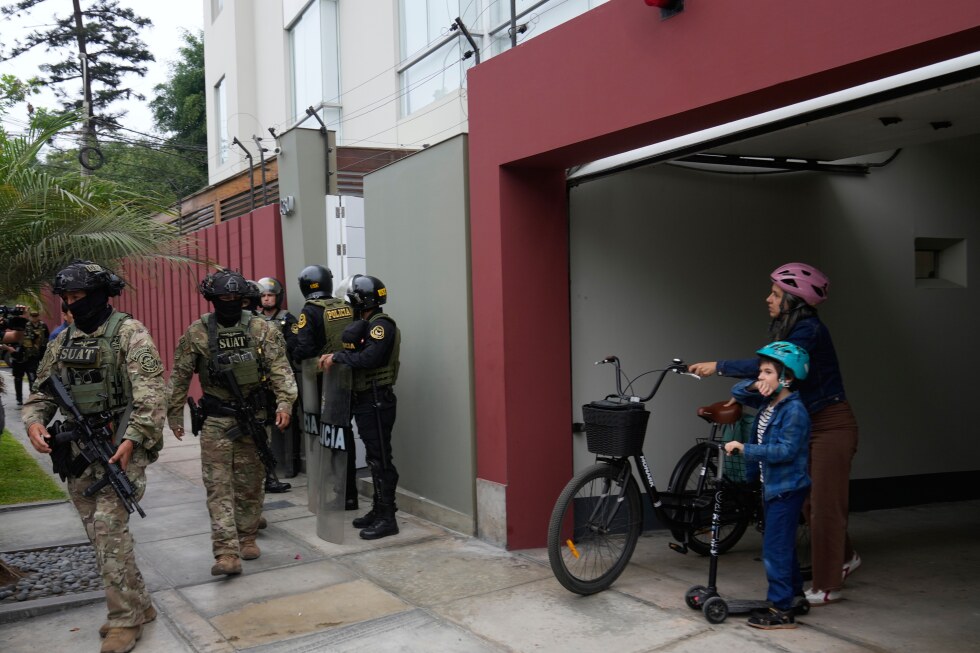
Peruvian authorities conducted a series of coordinated raids Friday on the homes of six former election officials and a corporate executive amid an intensifying investigation into ballot shortages and irregularities that marred the country’s April presidential election.
Police and prosecutors targeted the residence of Piero Corvetto, the recently resigned head of Peru’s elections agency, along with the homes of five other officials and the legal representative of Galaga, the private company contracted to transport ballots to voting centers. Anti-corruption police confirmed on social media that agents confiscated mobile phones, documents, and other potential evidence during the operations.
The raids come just days after Corvetto stepped down from his position as elections chief, citing a need to “generate more confidence” in the upcoming June 7 runoff vote. While accepting responsibility for the logistical failures, Corvetto has steadfastly denied any wrongdoing in connection with the electoral problems.
Ricardo Sánchez, Corvetto’s attorney, told local media that while Judge Manuel Chuyo authorized the search warrants, he rejected prosecutors’ requests to take the former elections chief into custody.
The investigation stems from significant irregularities during the April 12 presidential election, when authorities failed to deliver voting materials to more than a dozen polling centers in Lima, the nation’s capital. The logistical breakdown prevented over 52,000 citizens from casting their ballots on schedule, forcing election officials to extend voting into a second day.
The ballot shortage sparked immediate controversy in Peru’s already fractious political landscape. Ultraconservative candidate Rafael López Aliaga seized on the issues, declaring without evidence that the country had experienced an “electoral fraud unique in the world.” López Aliaga escalated tensions by labeling Corvetto a “criminal” and vowing to pursue him “until he dies” – rhetoric that drew sharp criticism from international observers.
An electoral mission from the European Union specifically urged political figures to refrain from such inflammatory language and confirmed they had found no evidence supporting fraud allegations.
With 95.1% of ballots counted as of Friday, conservative candidate Keiko Fujimori led with 17.05% of the vote. Fujimori, daughter of controversial former President Alberto Fujimori who was pardoned in 2022 after serving part of a 25-year sentence for human rights violations, maintains a narrow lead over nationalist Roberto Sánchez with 12.03% and López Aliaga with 11.90%.
The electoral controversy deepened when the Electoral Tribunal rejected demands for supplementary elections at polling stations affected by the logistical failures. The tribunal deemed such a move “unfeasible” despite López Aliaga’s advocacy and Fujimori’s characterization of the proposal as “reasonable.” In its ruling, the tribunal urged all parties to act “responsibly” and emphasized that the electoral process remains ongoing.
Peru’s Electoral Tribunal has established May 15 as the deadline for officially announcing which two candidates will advance to the presidential runoff scheduled for June 7.
The electoral turbulence comes during a period of exceptional political instability in Peru, which has seen six presidents in the past five years. The country continues to struggle with deep political divisions, corruption scandals, and the lingering economic impacts of the COVID-19 pandemic.
Analysts note that regardless of who advances to the June runoff, Peru’s next president will face significant governance challenges, including a fragmented Congress where no party holds a clear majority. The ongoing investigation into election irregularities threatens to further undermine public confidence in the country’s democratic institutions at a time when political trust is already severely diminished.
Fact Checker
Verify the accuracy of this article using The Disinformation Commission analysis and real-time sources.

8 Comments
Maintaining the integrity of elections is critical for any democracy. I hope the authorities in Peru can get to the bottom of these issues and ensure the upcoming runoff is conducted in a free and fair manner. The Peruvian people deserve nothing less.
This is a concerning development in Peru’s election process. It’s important that any issues with the prior vote are thoroughly investigated, but in a fair and transparent manner that upholds democratic principles. I hope the authorities can get to the bottom of what happened without overstepping their bounds.
Agreed, the integrity of elections is critical for a healthy democracy. I’m glad to see the authorities taking this seriously, but the process must be handled carefully to maintain public trust.
The electoral issues in Peru are worrying, but I’m glad the authorities are taking action to investigate. It’s crucial that they get to the facts and address any problems transparently. Maintaining the integrity of the democratic process should be the paramount concern here.
This is a complex situation that warrants close scrutiny. While the reported irregularities are concerning, it’s important the investigation is conducted fairly and without political bias. The Peruvian people deserve confidence that their votes will be counted accurately in the runoff.
Well said. An independent, thorough investigation is the best way to get to the truth and ensure the integrity of Peru’s elections moving forward. Transparency and accountability will be key.
It’s troubling to hear about these alleged irregularities in Peru’s election. Voters deserve confidence that their voices are being heard. Hopefully this investigation can shed light on what went wrong and ensure the upcoming runoff is conducted fairly.
You raise a good point. Restoring trust in the electoral process should be the top priority here. A thorough, impartial probe is necessary to get to the bottom of this and uphold the democratic will of the Peruvian people.