


Listen to the article
Wyoming Judge Temporarily Blocks Six-Week Abortion Ban, Citing Healthcare Rights
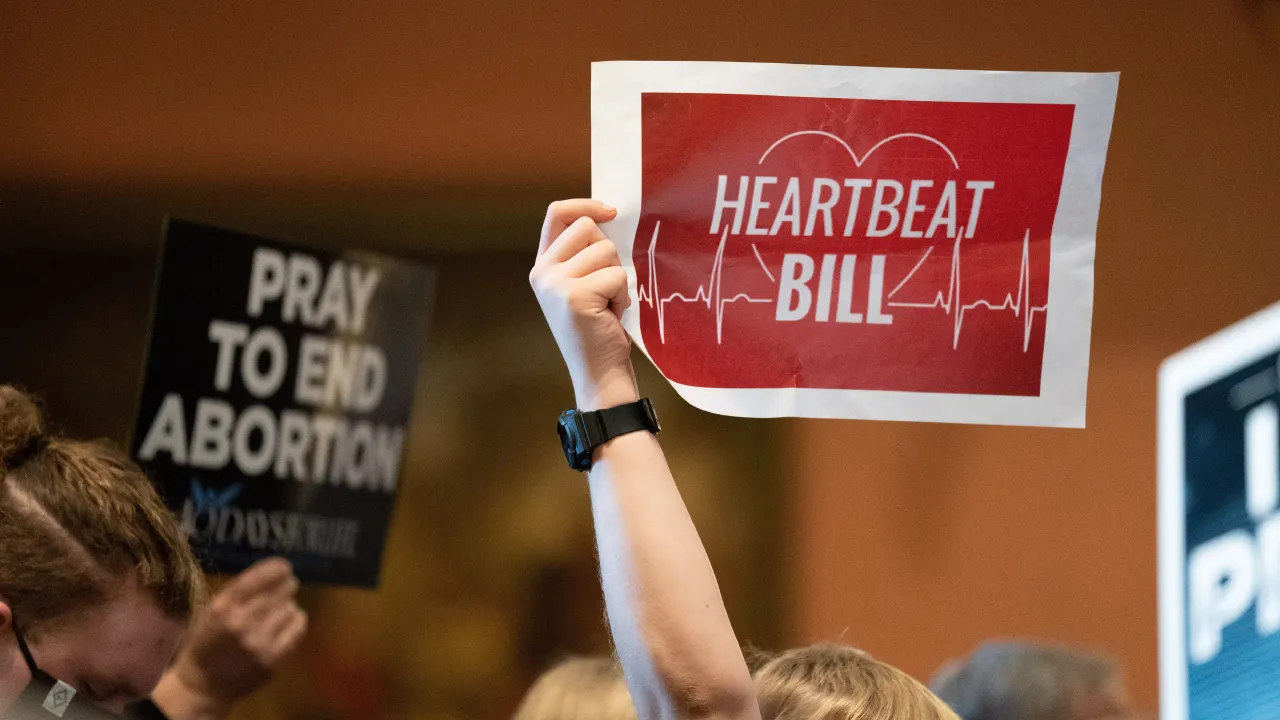
A Wyoming district judge has temporarily halted enforcement of the state’s recently enacted Human Heartbeat Act, which prohibits most abortions once fetal cardiac activity can be detected—typically around six weeks of pregnancy, before many women know they are pregnant.
Natrona County District Judge Dan Forgey granted the temporary injunction on Friday, ruling that the plaintiffs had demonstrated “a sufficient showing of irreparable injury” and “probable success” in their constitutional challenge to the law. The decision means the abortion restriction will remain suspended while the legal challenge proceeds through the courts.
In his ruling, Judge Forgey specifically cited Article 1, Section 38 of the Wyoming Constitution, which protects individuals’ rights to make their own healthcare decisions. This same constitutional provision formed the basis for the Wyoming Supreme Court’s decision in January to strike down two previous abortion restrictions.
The Human Heartbeat Act represents Wyoming’s latest attempt to restrict abortion access following the U.S. Supreme Court’s 2022 Dobbs decision that overturned Roe v. Wade. The law was passed during the state legislature’s 2026 session and signed by Republican Governor Mark Gordon on March 9, taking effect immediately.
The measure includes exceptions only for medical emergencies that threaten a woman’s life or health, but notably lacks exemptions for pregnancies resulting from rape or incest—a point of contention even for the Republican governor.
“Where the act does not align to my pro-life stance is in the concern for specific vulnerable populations,” Gordon acknowledged in a letter to lawmakers earlier this week.
Gordon had expressed reservations about the law’s legal viability even when signing it in March. “I resoundingly share the determination to defend the lives of unborn children and support the intentions behind the Human Heartbeat Act,” he wrote at the time. “Regrettably, this Act represents another well-intentioned but likely fragile legal effort with significant risk of ending in the courts rather than in lasting, durable policy.”
Wyoming’s abortion battle reflects the broader national patchwork of state abortion laws that has emerged since the Dobbs decision. The state now joins others where courts have temporarily blocked similar six-week bans while legal challenges proceed.
Wyoming’s approach mirrored legislation passed in Georgia, Florida, Iowa, and South Carolina—all of which have enacted similar six-week abortion restrictions. Meanwhile, thirteen states have implemented near-total abortion bans with limited exceptions.
Wyoming’s legal battles over abortion rights have particular significance due to the state constitution’s explicit healthcare autonomy protections. Unlike many conservative states, Wyoming’s constitution contains language that has proven to be a substantial hurdle for abortion restrictions.
Abortion rights advocates have celebrated the ruling as a temporary victory in preserving access to reproductive healthcare in the largely rural state, where access to medical services can already be challenging due to geography and limited facilities.
Opponents of abortion rights, meanwhile, express frustration at what they see as judicial interference with the legislative process and the will of Wyoming voters, who typically elect conservative representatives.
The case now proceeds to a full hearing where both sides will present more extensive arguments about whether the Human Heartbeat Act violates the state constitution’s healthcare provisions. Whatever the outcome, legal experts anticipate the case will eventually make its way back to the Wyoming Supreme Court for a final determination.
The ongoing legal battles in Wyoming illustrate the complex and evolving nature of abortion law in post-Roe America, where state constitutions and courts have become the primary battlegrounds for determining the future of reproductive rights.
Fact Checker
Verify the accuracy of this article using The Disinformation Commission analysis and real-time sources.

8 Comments
Interesting to see the Wyoming court block this fetal heartbeat law. It will be important to follow the ongoing legal battle and how the state constitution’s healthcare rights provisions factor into the decision.
The ruling seems to hinge on the right to make personal healthcare decisions. This could set an important precedent for abortion access in the state.
The Wyoming court’s decision to block enforcement of the fetal heartbeat law raises important questions about the balance between state laws and individual constitutional rights. This case bears close watching.
The state’s specific constitutional language around healthcare rights appears to be a key factor in this ruling. That could make the legal outcome in Wyoming different from other states.
The temporary injunction on the fetal heartbeat law is a win for abortion rights advocates in Wyoming, but the legal battle is far from over. The state is likely to continue its efforts to restrict access.
This case highlights the complex legal landscape around abortion access post-Dobbs. It will be crucial to see how the courts balance state laws with individual constitutional rights.
The Wyoming constitution’s healthcare rights provision appears to be playing a key role here. That could make this ruling unique compared to challenges in other states.
It’s encouraging to see the court rule in favor of protecting healthcare rights and access to abortion in Wyoming. However, this is just one battle in the ongoing post-Dobbs legal landscape.