


Listen to the article
The recent shooting outside the White House Correspondents’ Dinner has reignited discussion about President Donald Trump’s controversial proposal to build a secure ballroom at the White House, a project he claims would enhance security at high-profile events.
On Saturday evening, a gunman armed with multiple weapons opened fire near a security checkpoint at the Washington Hilton, where hundreds of journalists, celebrities, and government officials had gathered for the annual dinner. A Secret Service agent was struck but protected by a ballistic vest, and law enforcement quickly apprehended the suspect. President Trump later confirmed he had spoken with the wounded agent, who is expected to recover.
In the aftermath of the incident, Trump cited the shooting as evidence supporting his ballroom project, characterizing the Washington Hilton as “not a particularly secure building.” He suggested that a dedicated White House venue—equipped with bulletproof materials and enhanced security features—would provide a safer environment for such gatherings.
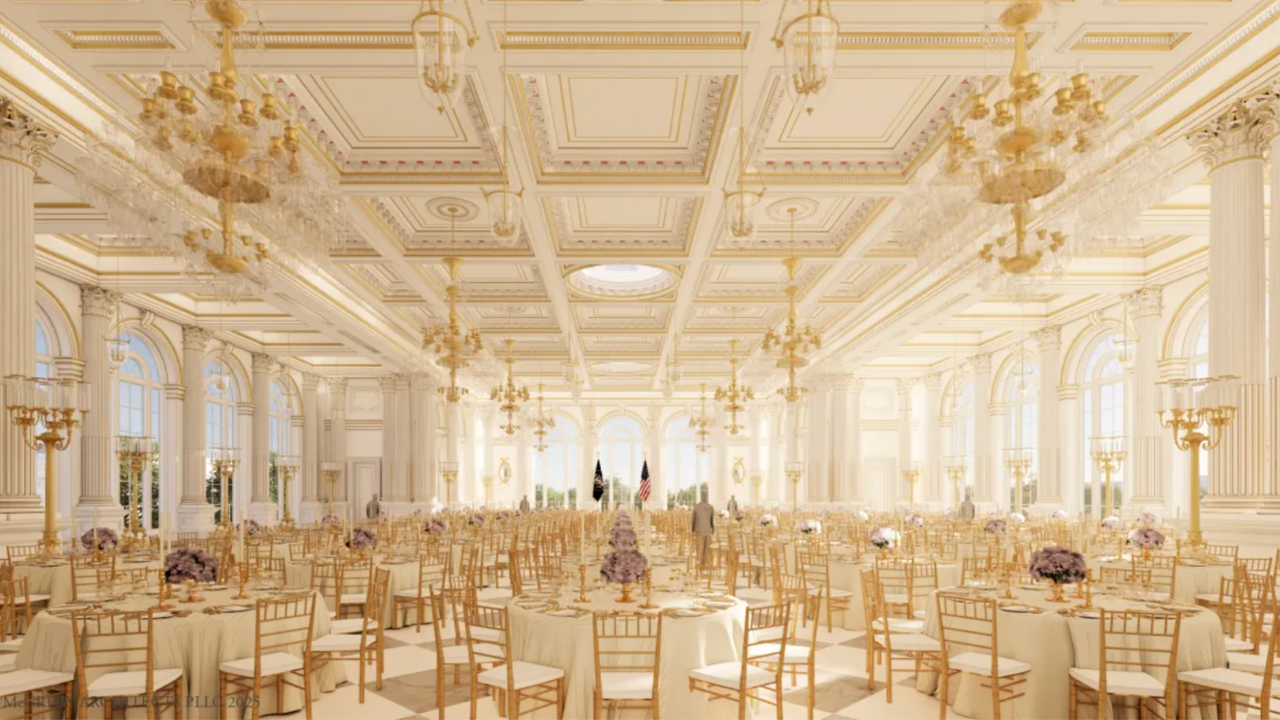
The proposed 90,000-square-foot ballroom has become a focal point of political debate since its announcement. Designed to accommodate approximately 650 guests, the structure would replace the historic East Wing with a facility built specifically for large-scale events, eliminating the need for temporary structures on White House grounds.
“The White House is currently unable to host major functions honoring world leaders without having to install a large and unsightly tent approximately 100 yards away,” White House Press Secretary Karoline Leavitt explained during a July briefing, describing the project as “a much-needed and exquisite addition.”
Despite the administration’s enthusiasm, the ballroom project faces significant hurdles. Legal challenges have questioned whether the White House bypassed required approvals, with courts now weighing the scope of presidential authority in making structural changes to the historic property. Critics have raised concerns about preservation of the historic East Wing and the project’s estimated $250 million cost.
Supporters counter that the ballroom would be funded largely through private donations rather than taxpayer dollars, framing it as a security upgrade rather than merely an aesthetic enhancement. Architectural renderings show a classical design intended to complement the existing White House architecture.
The ballroom initiative fits within a broader pattern of architectural and aesthetic changes Trump has pursued across Washington landmarks since returning to office. As a former real estate developer, Trump has taken personal interest in reshaping iconic government properties.
In February, he announced a two-year closure of the newly renamed Trump Kennedy Center for renovations. In October, Trump unveiled plans for a monument commemorating America’s 250th anniversary—an Arc de Triomphe-inspired structure designed to welcome visitors crossing from Arlington National Cemetery into the capital.
Within the White House itself, Trump has already implemented numerous changes, including golden accents in the Oval Office, a “walk of fame” along the colonnade, renovations to the Lincoln bathroom, modifications to the Rose Garden, and the installation of large American flags on the grounds.
Security experts remain divided on whether a dedicated White House ballroom would meaningfully improve safety at high-profile events. While the controlled environment might offer some advantages, others note that any gathering of political leaders inherently carries risk, regardless of venue.
The shooting at the correspondents’ dinner has added new urgency to these discussions, as officials review security protocols for events involving large gatherings of government officials and public figures. For now, construction on the ballroom continues amid ongoing legal challenges, with the administration moving forward on what would be the most significant structural addition to the White House in decades.
As Washington weighs questions of security, historic preservation, and presidential prerogative, the ballroom project stands as a concrete symbol of Trump’s determination to leave a lasting mark on the nation’s capital and its most famous address.
Fact Checker
Verify the accuracy of this article using The Disinformation Commission analysis and real-time sources.

16 Comments
The shooting incident is certainly concerning, but I’m not convinced a new White House ballroom is the right answer. I’d like to see a comprehensive security review that considers all options, including upgrades to existing venues, before any major construction projects are approved.
Absolutely. Any security enhancements should be based on a thorough risk assessment and cost-benefit analysis, not just political expediency.
The shooting incident is certainly concerning, but I’m not convinced a new White House ballroom is the answer. I’d like to see a more balanced approach that considers both security needs and the public’s right to access and scrutinize their government. Any proposed changes should undergo rigorous, nonpartisan review.
Well said. Striking the right balance between security and democratic principles is crucial in this case.
While I appreciate the President’s focus on security, a ballroom project seems like an extravagant solution. Perhaps the existing venues could be hardened with more targeted security upgrades. I hope this proposal receives thorough, objective analysis before any decisions are made.
Agreed. A measured, cost-effective approach focused on enhancing existing infrastructure may be a wiser investment than a lavish new construction project.
As a supporter of press freedom, I’m worried this ballroom proposal could be used to restrict media access and limit scrutiny of the presidency. Any changes should prioritize journalist safety without compromising the open exchange of information that is crucial to democracy.
I share your concerns. The White House must balance security needs with the public’s right to information and hold their leaders accountable.
The White House Correspondents’ Dinner shooting is certainly concerning, but I’m not convinced a lavish new ballroom is the answer. Enhancing security at existing venues may be a more cost-effective and practical approach. I hope this proposal receives thorough, impartial review.
Good point. Upgrading existing infrastructure could be a more prudent and fiscally responsible option compared to a costly new construction project.
Interesting development. While security is paramount, any new White House construction should be scrutinized to ensure it’s not an overreaction or an abuse of power. Let’s hope this proposal is carefully evaluated based on actual needs and risks, not just political posturing.
Agreed. The security of high-profile events is critical, but the solution should balance safety with transparency and democratic values.
As someone who values a free and independent press, I’m worried this ballroom proposal could be used to limit media access and public scrutiny of the presidency. While security is important, any changes should be carefully evaluated to ensure they don’t compromise democratic principles.
I agree. Maintaining a balance between security and transparency is crucial for preserving the integrity of our democratic institutions.
While the security concerns raised are understandable, a new White House ballroom seems like an excessive and expensive solution. I’d encourage a thorough, impartial review of all options, including more targeted upgrades to existing venues, before committing to a major construction project.
Absolutely. Any security enhancements should be based on a comprehensive assessment of risks and costs, not just political motivations.