


Listen to the article
Four Australian Families Leave Syrian Camp With Alleged IS Ties, Future Uncertain
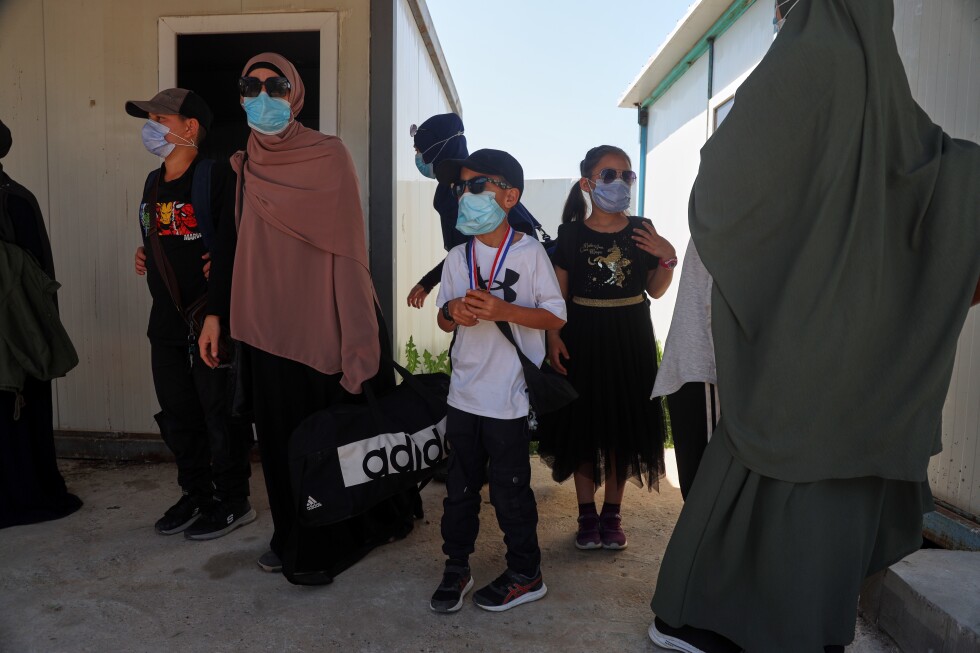
Four Australian families comprising 13 women and children departed Syria’s Roj camp on Friday, in a renewed attempt to return to their homeland after a previous failed repatriation effort earlier this year.
Associated Press journalists observed the group leaving the remote facility in a bus escorted by Syrian government officials. Roj camp, situated near the Iraqi border, houses family members of suspected Islamic State militants who were captured or killed following the territorial defeat of the extremist group in 2019.
Lana Hussein, an official with the Women’s Protection Units of the Kurdish-led Syrian Democratic Forces (SDF), which manages security at the camp, confirmed that the departure was coordinated with Damascus authorities. According to Hussein, the families are expected to remain in the Syrian capital for approximately 72 hours before being “deported under security procedures.”
The Australian government has maintained its distance from the operation. Deputy Prime Minister Richard Marles told Australian Broadcasting Corporation on Saturday that “this government is not participating in the repatriation of people in this circumstance.” This stance echoes the government’s position during a similar attempt in February, which was ultimately blocked by Syrian authorities.
Australian security agencies will continue monitoring developments in Syria, with officials prepared for any citizens attempting to return. The government emphasized that individuals who committed crimes would face legal consequences upon arrival in Australia, noting that traveling to former IS-controlled territories like Raqqa between 2014 and 2017 without legitimate reason was an offense punishable by up to 10 years’ imprisonment.
“The safety of Australians and the protection of Australia’s national interests remain the overriding priority,” the government statement asserted.
Camp officials indicated that, similar to the February attempt, these repatriations were organized by the families’ relatives rather than through direct Australian government involvement. The previous effort sought to return 34 women and children but was halted when they were turned back by Syrian authorities. Following that incident, Australia issued a temporary exclusion order against one of the women.
This development occurs against the backdrop of a complex and evolving security situation in northeast Syria. Though Roj camp sits in territory controlled by the Kurdish-led SDF, the Australians had planned to depart from Damascus, necessitating coordination with the central Syrian government.
The once-sprawling network of detention facilities that held former IS fighters and their families across northeast Syria has undergone significant changes in recent months. The larger al-Hol camp has now been closed, while thousands of suspected IS militants previously detained in Syria have been transferred to Iraq by U.S. military forces to face trial.
These transfers gained urgency after fighting erupted between Syrian government forces and the SDF in January. Government forces subsequently seized much territory formerly held by the Kurdish-led coalition. During the resulting chaos, many detainees fled al-Hol camp, and some prisoners escaped from detention centers, raising regional security concerns.
Despite its reluctance to directly facilitate returns, Australian governments have previously repatriated Australian women and children from Syrian detention camps on two occasions. Other Australian nationals have also managed to return without government assistance.
The fate of these families remains uncertain as they await processing in Damascus. Their situation highlights the ongoing challenge facing many countries regarding citizens with alleged ties to extremist groups – balancing security concerns with humanitarian considerations and legal obligations toward their nationals stranded in conflict zones.
As regional instability continues in Syria, the disposition of foreign nationals with ties to extremist groups remains a complex diplomatic and security challenge for governments worldwide.
Fact Checker
Verify the accuracy of this article using The Disinformation Commission analysis and real-time sources.

12 Comments
It’s good to see the Australian government taking steps to address this challenging situation, even if they are not directly involved in the repatriation process. Maintaining security while upholding humanitarian principles is crucial.
Absolutely. Balancing national security and human rights is always a delicate dance in these types of scenarios.
The uncertainty around the families’ future after their deportation from Syria is concerning. I hope they receive the necessary support and rehabilitation upon their return to Australia.
Yes, the long-term reintegration and support for these individuals will be crucial moving forward.
This is a complex and sensitive situation. I hope the Australian families can return home safely and get the support they need, while ensuring proper security measures are in place.
Agreed, the welfare of the women and children is paramount. A balanced, humanitarian approach is important here.
This situation highlights the complex challenges faced by governments in dealing with the aftermath of the defeat of ISIS. Thoughtful, nuanced approaches are needed to address the humanitarian aspects while maintaining security.
Well said. There are no easy solutions, but a measured, empathetic response is essential in these types of cases.
The linkage to ISIS militants raises serious concerns, but these families may have been victims as well. Repatriation efforts require careful consideration of all factors.
You make a fair point. Each case should be evaluated individually to determine the appropriate course of action.
The departure of the Australian families from the Roj camp is an important step, but their future remains uncertain. I hope the Australian government can work with international partners to ensure their safe return and reintegration.
Agreed. Continued international cooperation and a holistic approach will be key to resolving this delicate situation.