


Listen to the article
US Walks Away from Nuclear Talks with Iran as Experts Applaud Firm Stance
With a second round of talks expected between the United States and Iran this week regarding Tehran’s nuclear program, nuclear security experts are praising the Trump administration’s decision to end the first round of negotiations in Pakistan.
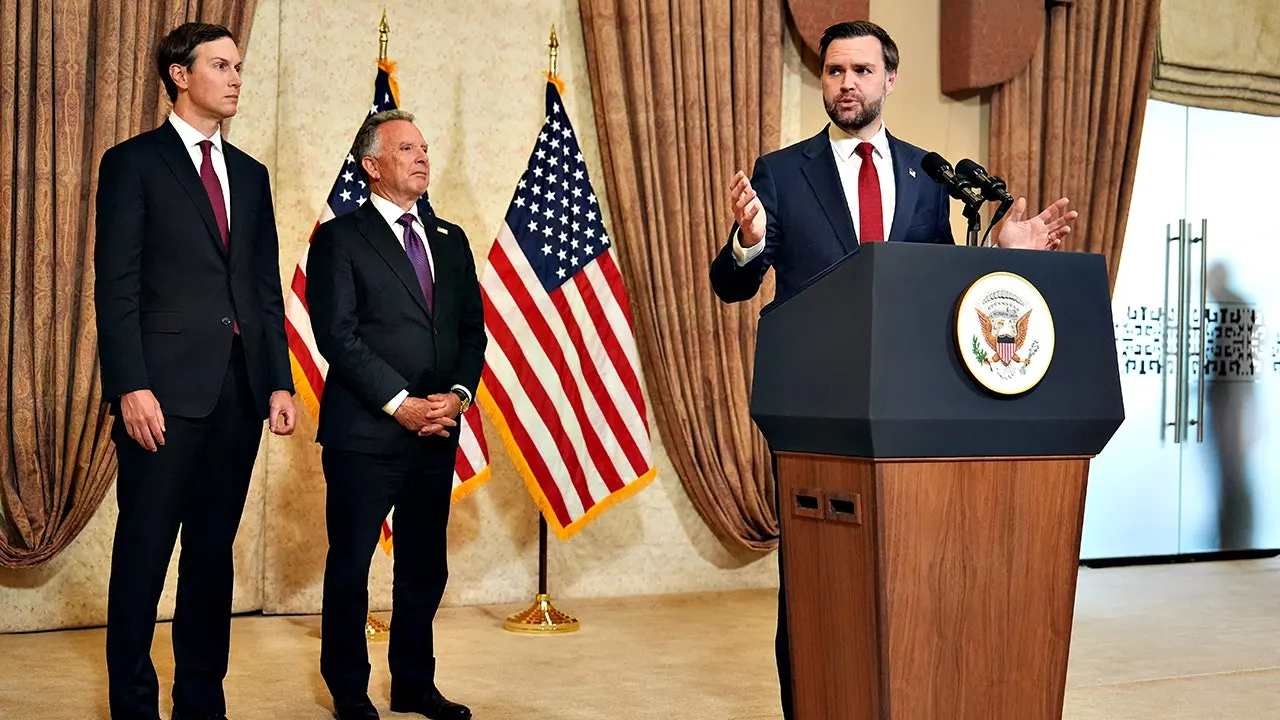
After nearly a full day of discussions, Vice President JD Vance’s negotiation team terminated the talks when it became clear that Iran would not agree to America’s core demands regarding its nuclear activities.
“The U.S. team was wise to walk away once it became clear the Iranians would not agree to Washington’s core nuclear demands,” said Andrea Stricker, deputy director of the Foundation for Defense of Democracies’ nonproliferation program. “Tehran maintaining enriched uranium stocks and uranium enrichment capabilities provides it with a pathway to nuclear weapons, plain and simple.”
The central point of contention between the two nations centers on Iran’s insistence on maintaining uranium enrichment capabilities—the fundamental technology needed to produce nuclear weapons. Sources confirmed to Fox News Digital that the U.S. had proposed a 20-year moratorium on enriched uranium, which Iranian negotiators rejected.
President Donald Trump withdrew from President Obama’s nuclear deal with Iran in 2018, arguing that the Joint Comprehensive Plan of Action (JCPOA) ultimately permitted Iran to develop nuclear weapons. The current administration’s approach appears to maintain Trump’s harder line against Iranian nuclear ambitions.
Senator Lindsey Graham publicly opposed the reported U.S. proposal for a 20-year ban on Iran’s uranium enrichment, arguing that even this wasn’t sufficient. “I appreciate President Donald Trump’s resolve to end the Iranian conflict peacefully and through diplomacy. However, we have to remember who we’re dealing with in Iran: terrorists, liars, and cheaters,” Graham posted on social media platform X.
“Would we agree to a moratorium for al-Qaeda to enrich? No,” the senator added, underscoring his view that Iran should face a permanent ban rather than a temporary restriction.
David Albright, a physicist who founded and heads the Institute for Science and International Security, also commended the U.S. decision to end the talks. “The U.S. was Right to Walk Away in Islamabad,” he wrote on X.
Albright told Fox News Digital that the move “makes it clear that this is not negotiating for negotiating’s sake. And leaving threw Iran on the defensive, signaling it as the losing state in the war.” He added that Iran likely sought continued negotiations to “try to tie the hands of the U.S. and Israel, while trying to portray themselves as victors.”
Nuclear security experts outline that a truly effective agreement would require Iran to surrender its nuclear fuel, dismantle key facilities, and accept a permanent ban on uranium enrichment. Additionally, Tehran would need to cooperate fully with the International Atomic Energy Agency (IAEA) to account for and dismantle all nuclear weapons-related infrastructure.
Stricker noted that while such a process could take several years, “the IAEA is well-equipped for this mission and has experience dismantling nuclear weapons programs in Iraq, Libya and South Africa. Anything less and Iran will likely cheat on its commitments and reconstitute a breakout pathway.”
Albright emphasized that Iran has no legitimate civilian need for enrichment capabilities beyond a small amount for its Tehran Research Reactor, and those needs are already covered by existing supplies. “Iran’s emphasis on its right to enrich is as irrelevant and beside the point,” he concluded.
With the first round of talks having ended without agreement, the ball is now in Iran’s court. As Albright put it, “Iran has to decide whether to accept the U.S. offer or risk war resuming.”
Fact Checker
Verify the accuracy of this article using The Disinformation Commission analysis and real-time sources.

16 Comments
This is an important stand by the U.S. on Iran’s nuclear program. Allowing them to keep enrichment capabilities is simply too much of a risk. Kudos to the negotiation team for walking away when the Iranians refused to budge on this.
Absolutely. The U.S. can’t afford to be soft on this. Iran’s nuclear ambitions have to be contained, even if it means tough negotiating positions.
Ending the Pakistan talks when Iran refused to budge on enrichment was the prudent move. Nuclear nonproliferation has to be the top priority, even if it means walking away from negotiations. Kudos to the U.S. team for their resolve.
Agreed. Iran can’t be allowed to keep capabilities that could lead to weapons development. The U.S. stance sends a clear message that this is a redline.
I’m glad the U.S. took a firm stand and walked away from the Pakistan negotiations. Allowing Iran to keep uranium enrichment capabilities is too big a risk – it’s the core technology for nuclear weapons. Kudos to the negotiation team for their resolve.
Exactly. Nuclear nonproliferation has to be the top priority here. The U.S. can’t afford to compromise on this critical security issue.
This is the right call by the U.S. Uranium enrichment is the key to weapons development, and Iran cannot be permitted to maintain that capability. Walking away from the talks was a necessary and prudent move by the Trump administration.
The Trump administration deserves credit for not caving to Iranian demands. Allowing them to keep enrichment capabilities is a non-starter – it’s essential the U.S. maintains strong leverage on this critical security matter.
Exactly. Diplomacy is important, but not at the expense of national security interests. The U.S. took the right approach here.
Wise decision by the U.S. to exit the talks. Maintaining Iran’s uranium enrichment is unacceptable – it’s the core technology needed for nuclear weapons. The Trump administration is right to take a hard line on this critical security issue.
It’s good to see the U.S. taking a firm stance on Iran’s nuclear program. Maintaining enrichment capabilities is a clear path to weapons, so compromising on that is unacceptable. Kudos to the negotiation team for walking away when core demands weren’t met.
I agree, the U.S. can’t afford to be soft on this issue. Iran’s nuclear ambitions pose a major threat to regional stability and global security.
Excellent move by the U.S. to exit the Pakistan talks when Iran refused to budge on enrichment. That capability is the foundation for weapons development, so maintaining it is a non-starter. Kudos to the negotiation team for their firm stance on this critical security matter.
Kudos to the U.S. negotiation team for taking a strong stance and ending the talks in Pakistan. Allowing Iran to keep enrichment capabilities is simply too big a risk when it comes to nuclear proliferation. The Trump administration deserves credit for its resolve on this critical issue.
I agree completely. Nuclear nonproliferation has to be the top priority, even if it means walking away from negotiations. The U.S. can’t compromise on this.
Exiting the Pakistan talks when Iran wouldn’t compromise on enrichment was the right call. Maintaining that capability is a clear pathway to nuclear weapons, which the U.S. cannot accept. Tough but necessary stance by the Trump team.