


Listen to the article
Russia and North Korea Forge Media Alliance to Control Narratives
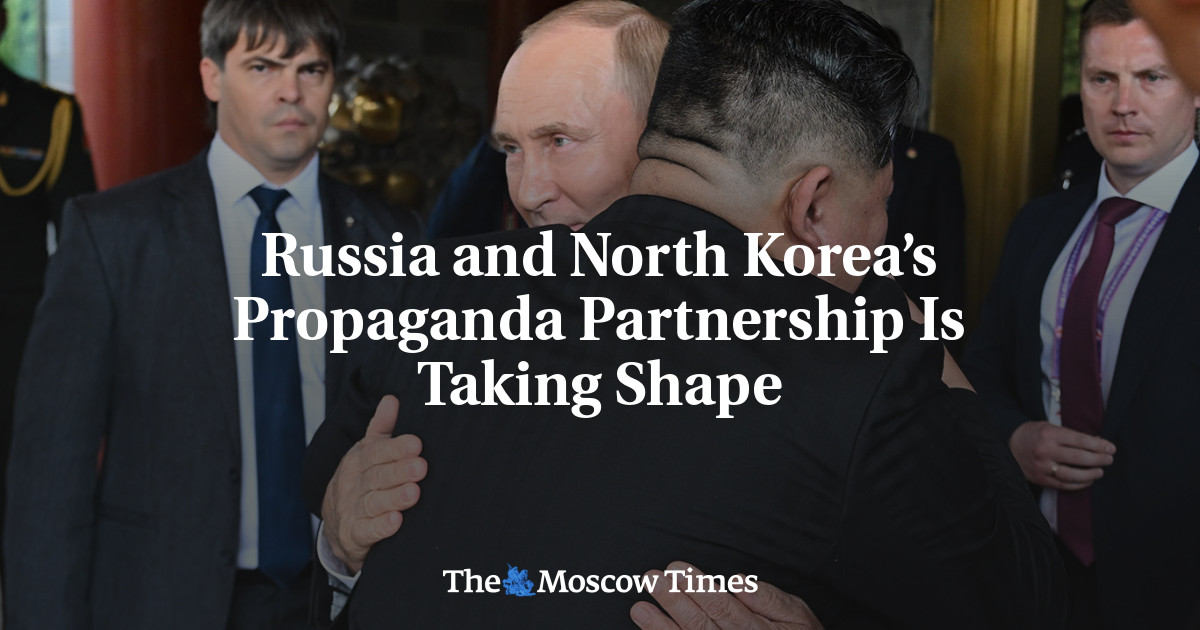
In a strategic move designed to reshape public perception, Russia and North Korea have entered a formal media partnership that experts say aims to control the narrative of their increasingly close relationship both domestically and internationally.
On March 28, Russian state-run news agency TASS signed an agreement with North Korea’s Korean Central News Agency (KCNA) to coordinate information exchanges and jointly combat what both countries term “fake news.” The arrangement follows a broader ministerial-level framework for media cooperation established as part of the comprehensive partnership treaty between the two nations.
Analysts view this media alliance as particularly significant given both countries’ heavy reliance on narrative control to maintain public legitimacy. Russian President Vladimir Putin and North Korean Supreme Leader Kim Jong Un both operate regimes where state media plays a central role in shaping public opinion.
“This is fundamentally about turning inter-governmental ties into warmer relations between their publics,” said one regional expert who monitors state media in both countries. “Neither population has historically held particularly positive views of the other.”
For North Korea, the partnership addresses a specific challenge: lingering public mistrust of Russia stemming from Moscow’s abandonment of Pyongyang during the economic collapse of the 1990s. North Korean authorities appear eager to portray their renewed alignment with Russia as a deliberate strategic choice rather than a desperate pivot by an isolated regime.
Meanwhile, the Kremlin faces its own narrative challenges. Following North Korea’s Hwasong-14 missile launch in 2017, Russian-language media across Russia and Ukraine promoted competing narratives about each country’s alleged involvement in North Korea’s missile program. Russian outlets blamed Ukraine for lax control over Soviet-era nuclear facilities, while Ukrainian sources highlighted accusations that Moscow had supplied missile technology to Pyongyang.
Western governments have long suspected Russia of assisting North Korea’s missile program while publicly claiming to support sanctions against the regime. Such perceptions damaged Russia’s attempts to position itself as a responsible actor on the Korean Peninsula, even before its full-scale invasion of Ukraine.
The latest media agreement expands on a 2019 bilateral pact signed following the Kim-Putin summit that same year, which also aimed to counter what both countries labeled as “fake news.” Back then, Russian officials warned against using incidents like the arrest of Russian fishermen in North Korean waters to undermine Moscow-Pyongyang relations.
Today, with North Korea providing crucial military support for Russia’s war in Ukraine, Moscow’s priorities have shifted. The Kremlin now seeks to foster a more positive image of North Korea among Russians themselves, recognizing the DPRK’s increased strategic value to Russia’s geopolitical position.
This media partnership comes amid increasing restrictions on information within Russia itself. However, as noted by Russian opposition figure Maxim Katz, controlling information access remains more challenging in Russia than in North Korea, as generations of Russians have experienced a relatively free internet—a freedom North Koreans have never known.
“Given these limitations, borrowing tactics from North Korean state media may offer the Kremlin its best chance to improve perceptions of the DPRK in a way that supports Russia’s great power ambitions,” said a media analyst familiar with both countries’ information landscapes.
The benefits flow both ways. North Korea gains access to Russia’s global media network, with TASS publishing in several of the world’s most widely spoken languages. This gives Pyongyang a powerful new channel to distribute flattering narratives internationally.
KCNA president Kim Pyong-ho described the March agreement as contributing not only to the development of the DPRK-Russia comprehensive strategic partnership but also to “deepening the friendship between the peoples” of both nations—a telling indication of the partnership’s true purpose.
The need for improved public perception is particularly acute in North Korea, where families of soldiers deployed to support Russia’s war effort have reportedly begun questioning their loved ones’ assignments, despite the considerable risks of challenging government decisions.
Beyond addressing immediate concerns, both countries have ample historical material to construct a new narrative about their relationship. North Korea’s participation in the Ukraine conflict has been leveraged to present Moscow and Pyongyang as steadfast allies during Russia’s time of need.
As this media partnership develops, observers expect it to significantly influence Russian public opinion regarding North Korea, potentially transforming what many international analysts currently view as a purely transactional relationship into something with greater public support and perceived legitimacy.
Fact Checker
Verify the accuracy of this article using The Disinformation Commission analysis and real-time sources.

9 Comments
I’m not surprised to see these two authoritarian regimes teaming up to control the narrative. Their goal is clearly to shape global opinion in their favor through coordinated disinformation. We must remain skeptical and fact-based in the face of this threat.
Agreed. This alliance represents a concerning escalation in their efforts to undermine truth and transparency. Holding them accountable through robust journalism and public awareness campaigns will be key.
While this new media partnership is worrying, I don’t think we should overstate its likely impact. These regimes already have extensive propaganda machinery in place. The real test will be whether their narratives gain any meaningful traction outside their own borders.
While cooperation between these two countries is worrying, I’m curious to learn more about the specific goals and methods of this new media alliance. What narratives are they trying to push, and how will they combat ‘fake news’?
Good questions. It will be important to closely monitor the content and framing of stories coming out of this partnership. Maintaining transparency and fact-checking will be vital.
This is a troubling development. Russia and North Korea have long histories of repressing free press and manipulating information to serve their interests. I hope the international community responds firmly to counter their propaganda efforts.
Absolutely. Strengthening independent media and public media literacy will be crucial to mitigating the impact of this alliance. Vigilance is required to uphold democratic values.
This is concerning news. State media propaganda from authoritarian regimes like Russia and North Korea is a real threat to global information integrity. We must remain vigilant and fact-check claims from these sources.
Agreed. Coordinated disinformation campaigns are a serious challenge to democracy and free speech. Independent, ethical journalism is crucial to countering this.