


Listen to the article
Malta’s opposition has launched a scathing critique of the country’s national broadcaster, accusing it of abandoning its mandate of impartiality in favor of promoting government messaging.
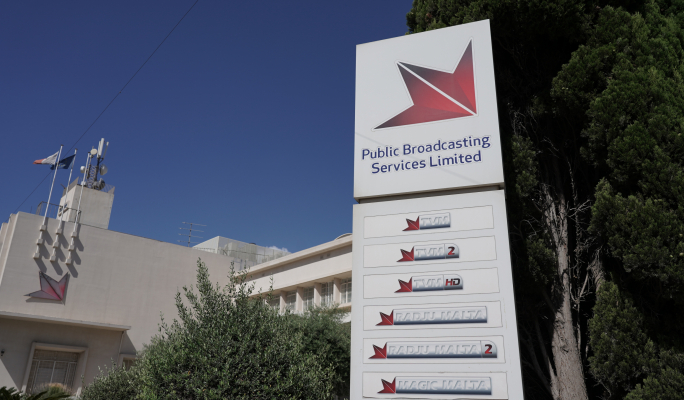
The Nationalist Party (PN) issued a formal statement this week claiming that Public Broadcasting Services (PBS), which receives public funding and is legally required to maintain balanced and neutral coverage, has increasingly become a mouthpiece for the ruling Labour Party administration.
At the heart of the opposition’s concern is what they describe as “hidden propaganda” infiltrating not only news programs but entertainment content and quiz shows as well. The PN specifically highlighted references to “government benefits” in broadcasts, which they argue constitute indirect promotion of government initiatives to viewers.
“When public funds are used to promote a single narrative, citizens are being deprived of their fundamental right to balanced information,” the Nationalist Party stated, pointing to what they see as a troubling pattern of biased coverage.
The accusations come amid growing tensions in Malta’s media landscape, where concerns about press freedom and political influence over public broadcasting have been recurring themes. The PN’s statement referenced established precedents from both court decisions and Broadcasting Authority rulings that mandate balance, proportionality, and neutrality in state broadcasting – standards the opposition claims are “being ignored” by the current PBS management.
Media experts have long noted that public broadcasters worldwide face challenges in maintaining independence while receiving government funding. In Malta’s case, the relatively small media market magnifies concerns about political influence, as PBS holds significant reach and influence among the island nation’s 500,000 residents.
The controversy touches on the broader issue of what political scientists term the “power of incumbency” – the structural advantages that governing parties naturally enjoy through control of state institutions and resources. The PN explicitly raised this concern, suggesting that the Labour government is leveraging its position to dominate public discourse through the national broadcaster.
“PBS cannot and must not serve as an extension of any party’s partisan machinery – in this case, that of the Labour Party,” the opposition concluded in its statement, calling for the broadcaster to return to operating as an independent and credible national institution that serves the public interest by reflecting diverse viewpoints.
This is not the first time PBS has faced such criticisms. Throughout Malta’s political history, whichever party sits in opposition has frequently accused the public broadcaster of bias. However, media monitoring organizations have noted that concerns about government influence at PBS have increased in recent years.
The Broadcasting Authority, Malta’s media regulator, has yet to respond to the latest allegations. Under Maltese law, the authority has the power to investigate complaints about impartiality and can issue sanctions if breaches are found.
The debate over PBS’s role reflects broader concerns about media independence in Malta, which has faced international scrutiny particularly since the 2017 assassination of investigative journalist Daphne Caruana Galizia. While that case involved a private journalist rather than public broadcasting, it heightened awareness about the importance of independent media in the country’s democratic framework.
Media analysts suggest that resolving such tensions would require structural reforms to PBS’s governance model, potentially including stronger safeguards for editorial independence and more transparent appointment processes for key management positions.
For now, the Nationalist Party’s statement has reignited the debate over public broadcasting’s proper role in Malta’s democracy – whether it should function as a truly independent voice or reflect the priorities of the government that funds it.
Fact Checker
Verify the accuracy of this article using The Disinformation Commission analysis and real-time sources.

7 Comments
This is a concerning accusation of political bias in Malta’s public broadcaster. Maintaining impartiality and balanced coverage should be a top priority for any state-funded media outlet. It will be interesting to see how PBS responds to these claims of ‘hidden propaganda’.
This issue speaks to the broader challenge of maintaining press freedom and journalistic independence, even in democracies. I hope Malta can find a way to reinforce the integrity of its public media without compromising its core democratic principles.
While I don’t have full context on this situation, the accusations of political favoritism are concerning. Upholding objectivity and balance should be non-negotiable for any public broadcaster, regardless of the government in power.
As someone interested in the mining and commodities sector, I’m curious to see if this controversy has any ripple effects on coverage of those industries. Objective, fact-based reporting is crucial for investors to make informed decisions.
That’s a good observation. Biased reporting could potentially skew perceptions around important sectors like mining and energy, which rely on transparent information flow.
The line between news reporting and political messaging can be blurry, especially when public funds are involved. I hope Malta’s authorities investigate these allegations thoroughly and take appropriate action to uphold the integrity of their national broadcaster, if warranted.
You raise a fair point. Public media must remain above political influence to serve the interests of all citizens, not just those in power.