


Listen to the article
Russian Media Outlet Fined for “LGBT Propaganda” Over TV Series Review
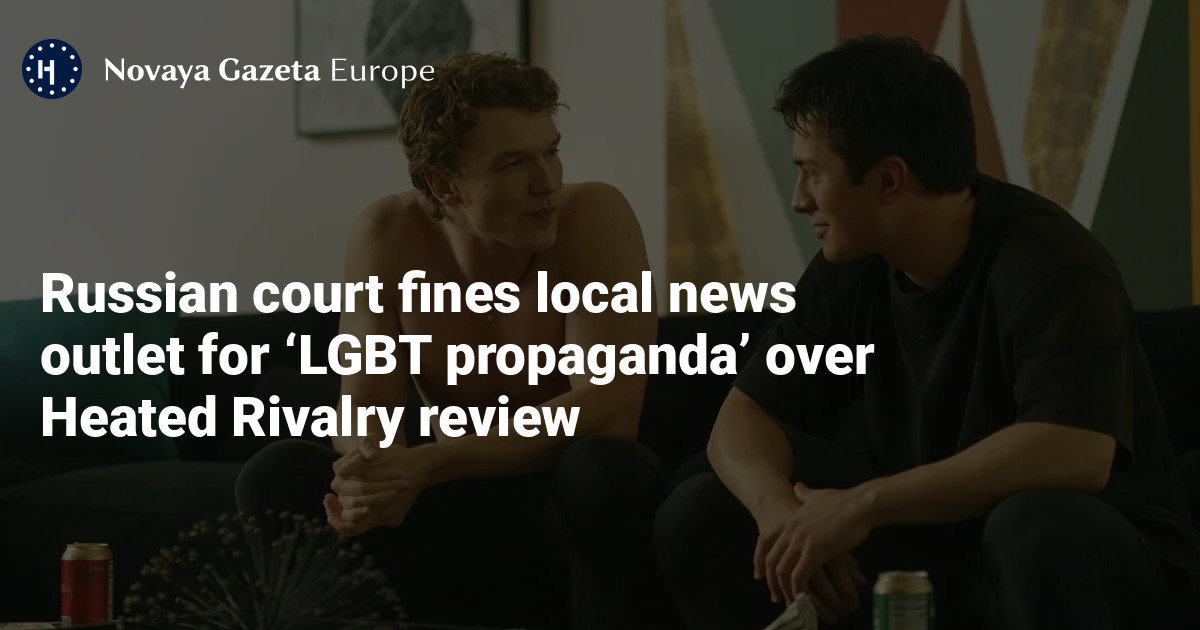
A local media outlet in southern Russia has been slapped with a hefty fine after publishing a review of a Canadian television series featuring a same-sex relationship between hockey players. The incident highlights Russia’s increasingly strict enforcement of its anti-LGBTQ+ legislation.
SaratovBusinessConsulting, a news agency based in Saratov, was ordered to pay 500,000 rubles (approximately €5,600) for violating Russia’s ban on “LGBT propaganda.” The case centered around an article titled “Why Did ‘Heated Rivalry’ Become Popular?” which was published on February 6 and has since been removed from the outlet’s website, according to independent Russian news outlet Mediazona.
The court did not stop at penalizing the organization. Andrey Bashkaikin, the agency’s IT director, was personally fined 50,000 rubles (about €560) in a separate misdemeanor case under the same statute.
An employee of SaratovBusinessConsulting, speaking anonymously to Mediazona, described the offending content as a “harmless review” of a series that had gained significant public attention. “The article came from a third-party content provider. It was published for a short time, but we quickly removed it,” the employee explained.
The television series in question, “Heated Rivalry,” premiered on Canadian streaming platform Crave and HBO Max in the United States in November 2025. The drama is based on the “Game Changers” book series by author Rachel Reid and follows the narrative of a secret romantic relationship between two professional hockey players: Russian star Ilya Rozanov and Canadian Shane Hollander.
This case is part of a broader pattern of censorship that has intensified since November 2022, when Russia expanded its legislation against “LGBT propaganda.” The amended law significantly broadened earlier restrictions that had only prohibited the promotion of “non-traditional sexual relationships” to minors, extending the ban to all age groups and across all media platforms.
The expanded legislation has given Russian authorities wide latitude to prosecute a range of expressions and content. Cases have included numerous fines for individuals displaying rainbow flags on social media and, in one notable instance, a jail sentence handed to a woman for wearing rainbow-colored frog earrings.
The cultural impact of these laws continues to grow. In January, a Russian Orthodox Christian organization called Sorok Sorokov, which advocates for traditional values, announced plans to petition both the Prosecutor General’s Office and Roskomnadzor, Russia’s media regulator, to ban “Heated Rivalry” from being shown on Russian streaming services.
Media freedom observers note that such fines can have a chilling effect on independent journalism in Russia, particularly for smaller outlets that cannot sustain significant financial penalties. The 500,000 ruble fine represents a substantial burden for a regional news agency, potentially forcing similar organizations to self-censor content that might remotely touch on LGBTQ+ themes.
International human rights organizations have repeatedly condemned Russia’s anti-LGBTQ+ legislation as violating freedom of expression and contributing to an atmosphere of discrimination and hostility toward LGBTQ+ individuals in the country. The European Court of Human Rights has previously ruled against similar Russian laws, though Moscow has increasingly distanced itself from the court’s jurisdiction.
As streaming services and global entertainment continue to feature more diverse representations of relationships and identities, Russian media outlets find themselves navigating increasingly treacherous regulatory waters, weighing cultural relevance against legal risk when covering international content.
Fact Checker
Verify the accuracy of this article using The Disinformation Commission analysis and real-time sources.

9 Comments
This is a troubling development and a worrying sign of Russia’s growing authoritarianism. Fining a media outlet for a ‘harmless review’ of a TV show is an egregious violation of free speech. It will only serve to further isolate Russia from the global community.
While I understand Russia’s desire to promote traditional values, this heavy-handed crackdown on LGBTQ+ representation in media is concerning. A diverse and free press is essential for a healthy democracy. I hope Russia reconsiders this approach going forward.
This news is quite distressing. Fining a media outlet for a ‘harmless review’ of a TV show is a clear violation of press freedom and freedom of expression. I worry this is part of a broader crackdown on civil liberties in Russia.
Concerning that Russia is cracking down so heavily on media coverage of LGBTQ+ topics. Seems to go against the principles of free press and expression. I wonder what the broader implications will be for the country’s international reputation and relations.
While I understand Russia’s desire to promote traditional values, this heavy-handed approach to censoring LGBTQ+ content in the media is deeply concerning. Freedom of expression should be a fundamental right, not something to be suppressed by the state.
Russia’s anti-LGBTQ+ laws continue to draw international condemnation. Fining a news outlet over a TV series review is an extreme overreaction that will likely do more harm than good for Russia’s image and influence. Freedom of expression should be a fundamental right.
Agreed. This type of censorship is deeply troubling and sets a dangerous precedent. The international community should continue to pressure Russia to uphold basic human rights and civil liberties.
This news is quite alarming. Penalizing a media outlet for a ‘harmless review’ of a TV show is a blatant violation of press freedom. I worry this is part of a broader trend of Russia curtailing individual rights and liberties.
You raise a good point. This crackdown on LGBTQ+ representation in media is likely just the tip of the iceberg when it comes to Russia’s authoritarian leanings. It’s a troubling development that the international community should continue to monitor closely.