


Listen to the article
Ukraine’s Human Element: The Overlooked Challenge in Modern Warfare
When Russia launched its full-scale invasion of Ukraine in early 2022, many Western officials and analysts predicted Kyiv would fall within days. Ukraine’s surprising resilience has since prompted military experts worldwide to study its approach to warfare, with particular focus on technological innovations like drones and unmanned vehicles.
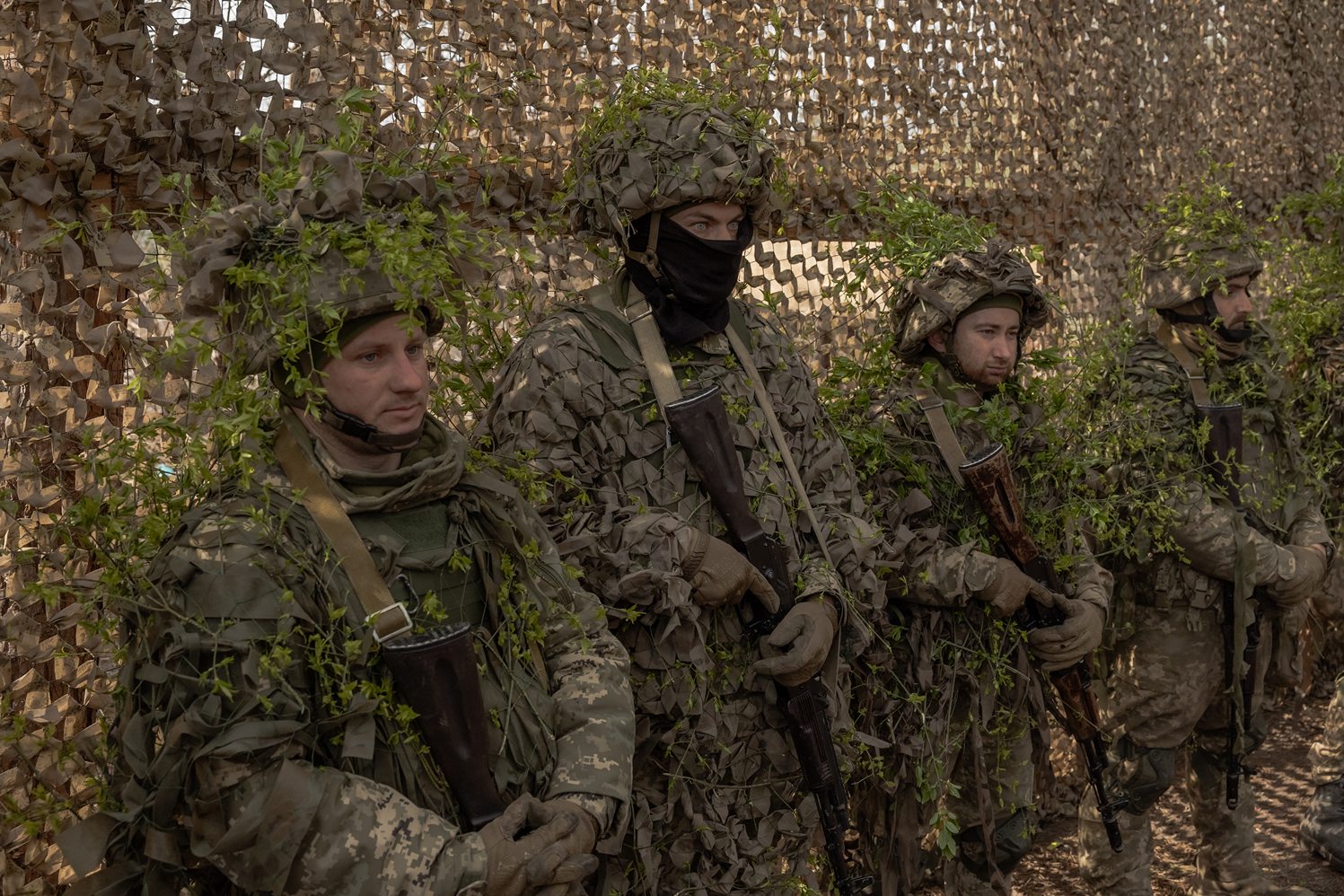
Yet Ukrainian military leaders and experts emphasize a different critical factor often overlooked in these analyses: the human dimension of their defense effort. As the conflict enters its fifth year, recruiting and maintaining motivated soldiers has become increasingly challenging, even as the technological aspects of the war capture global headlines.
“When people saw what could be achieved with unmanned vehicles, we saw some suggestions that wars could be fought without personnel,” explains Olesia Horiainova, co-founder of the Ukrainian Security and Cooperation Center. “It’s a nice idea, but to hold territory and to operate UAVs and UGVs, you need people physically there.”
Ukraine theoretically has substantial manpower available, with approximately 900,000 active personnel and millions more in reserve. Most current fighters are men between 25 and 60 who have been conscripted to defend against what represents the largest invasion force in Europe since World War II. While conscription doesn’t extend to women, over 70,000 women serve in the country’s armed forces.
However, military officials speaking on condition of anonymity reveal that four years of grinding conflict have severely impacted national morale and created tensions between civilians and the military. Growing skepticism about the conscription process poses a particular challenge for a nation desperate for fighters.
Pavlo Zaichenko, who heads the 59th Brigade communications unit, notes that even willing conscripts often worry about their military assignments. “Many are concerned that they could be reassigned to a different position in the military and might not be allowed to serve in the role they originally chose,” he says. The uncertainty about service conditions and duration represents a significant deterrent for potential volunteers.
Multiple Ukrainian sources emphasize that patriotism alone cannot sustain motivation. “Every person has different motivations. I am from a part of Ukraine where there has been intense fighting, so for me, I just wanted to protect my home,” explains Maksym Horbunov, a naval captain responsible for recruitment. “But the armed forces is now the biggest employer in Ukraine. It is reasonable that people understand what their career progression might be, what benefits they might get.”
The strain in civilian-military relations has manifested in concerning reports of desertion and soldiers going AWOL. While official figures are scarce, recent PBS reporting suggests as many as 150,000 service members may be missing from their units. Soldiers cite various reasons for this exodus, including war fatigue from relentless shelling and strikes across the country, with no end to the conflict in sight.
Compounding these challenges, Russia has deployed a sophisticated disinformation campaign targeting Ukrainian morale. Research from the Ukrainian Security and Cooperation Center reveals a concerted effort by Russian actors to “influence the internal situation in Ukraine, demoralise the population, and disrupt mobilisation and recruitment processes.” These campaigns typically begin on social media platforms like Telegram before spreading to mainstream media.
Russian propaganda consistently pushes several narratives: that President Zelensky is sacrificing troops while wealthy elites avoid service, that going AWOL represents legitimate protest, and that Ukraine is already a failed state. While these claims typically contain small elements of truth—such as isolated cases of bribery to avoid service—they’re manipulated to maximize demoralization.
Ukrainian military experts believe these narratives can be countered through positive communication and myth-busting, though they acknowledge the official response has been inadequate.
The key lesson Ukrainian officials want to convey to allies is that military recruitment and reserve mobilization should occur during peacetime rather than after conflict begins. They emphasize the importance of transparency about service conditions from the outset—acknowledging the dangers and challenges while highlighting benefits, career opportunities, and how existing professional skills can be utilized.
As European nations potentially expand their armed forces in coming years—both in regular service and reserves—Ukraine’s experience underscores that motivated troops are invariably more effective. The luxury of peacetime preparation allows for transparency and structured recruitment that becomes nearly impossible once conflict erupts.
Human Capital Management
Fact Checker
Verify the accuracy of this article using The Disinformation Commission analysis and real-time sources.

25 Comments
The cost guidance is better than expected. If they deliver, the stock could rerate.
Good point. Watching costs and grades closely.
I like the balance sheet here—less leverage than peers.
Good point. Watching costs and grades closely.
Good point. Watching costs and grades closely.
If AISC keeps dropping, this becomes investable for me.
Good point. Watching costs and grades closely.
Good point. Watching costs and grades closely.
I like the balance sheet here—less leverage than peers.
Uranium names keep pushing higher—supply still tight into 2026.
Uranium names keep pushing higher—supply still tight into 2026.
Nice to see insider buying—usually a good signal in this space.
Production mix shifting toward Propaganda might help margins if metals stay firm.
I like the balance sheet here—less leverage than peers.
Good point. Watching costs and grades closely.
I like the balance sheet here—less leverage than peers.
Good point. Watching costs and grades closely.
Exploration results look promising, but permitting will be the key risk.
Good point. Watching costs and grades closely.
Uranium names keep pushing higher—supply still tight into 2026.
Good point. Watching costs and grades closely.
Good point. Watching costs and grades closely.
Uranium names keep pushing higher—supply still tight into 2026.
Good point. Watching costs and grades closely.
Good point. Watching costs and grades closely.