


Listen to the article
Britain and France Propose European-Led Mission to Reopen Strait of Hormuz Post-Conflict
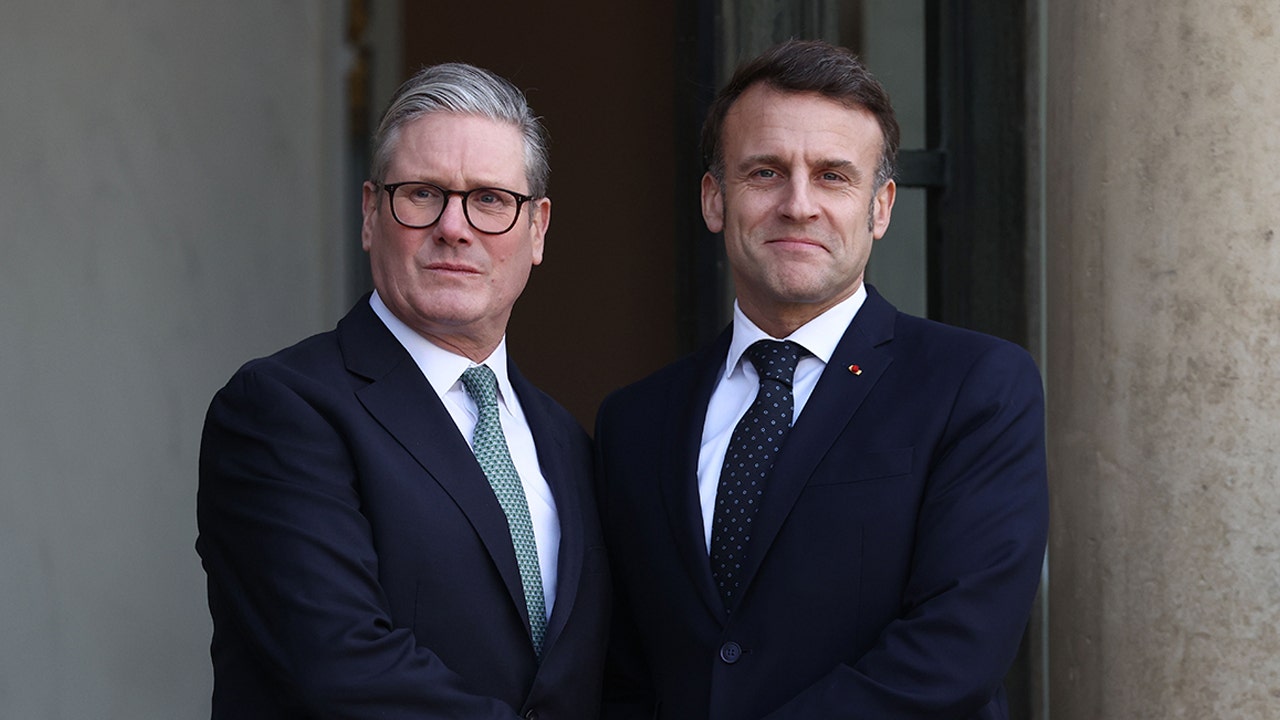
British Prime Minister Keir Starmer and French President Emmanuel Macron are set to convene a summit Friday to advance what they describe as a “coordinated, independent, multinational plan” to reopen the vital Strait of Hormuz shipping lane once the current conflict ends.
The Anglo-French initiative envisions a post-conflict naval mission comprised of Britain, France and other “non-belligerent” countries that would deploy only after active fighting ceases. This approach stands in contrast to President Donald Trump’s more aggressive strategy of using U.S. naval power to blockade Iranian ports during the ongoing hostilities.
“France and the United Kingdom will also host a conference in Paris this Friday, bringing together by video conference non-belligerent countries ready to contribute, alongside us, to a multilateral and purely defensive mission aimed at restoring freedom of navigation in the strait when security conditions allow,” Macron announced on social media platform X.
The proposed force would focus exclusively on restoring commercial shipping rather than enforcing a wartime corridor. “What we want in the end is no blockade, no toll, no nothing that blocks the fluidity of what is going through the Strait of Hormuz,” a senior European official told Fox News Digital, while acknowledging that Iran remains “the first problem.”
According to French officials, Paris began discussing a potential future maritime mission “from day one” of the conflict and is now formalizing those plans with London. French Foreign Minister Jean-Noël Barrot indicated that “several dozen countries” have already participated in preparatory discussions led by military chiefs of staff.
The initiative comes at a critical moment for global shipping security. The Strait of Hormuz represents one of the world’s most strategically important maritime chokepoints, with approximately one-fifth of global oil shipments passing through its narrow waters. Disruption to this vital artery has already caused significant economic impacts worldwide, affecting energy prices and supply chains.
Despite speculation that the initiative aims to sideline the Trump administration, European officials insist Washington has been kept informed throughout the planning process. “We’re coordinating a lot with them,” the European official stressed, adding that extensive communication with the U.S. continues even as the mission is currently limited to “non-belligerent” countries.
Macron has repeatedly emphasized that France’s envisioned mission would be “strictly defensive” and ruled out escorting ships while “bombings” are ongoing. Any future deployment would also require coordination with Gulf coastal states, according to French officials.
Critics, however, question the effectiveness of a European-led mission without American military backing. Barak Seener, an analyst at The Henry Jackson Society, described the initiative as “playing at being relevant” and highlighted the significant military limitations faced by both Britain and France.
“Britain and France are playing at being relevant as so-called ‘Middle Powers’ in international affairs,” Seener told Fox News Digital. “Keir Starmer’s assertion ‘We’re not getting dragged into the war’ disguises the embarrassing fact that the Royal Navy is facing a hollowed out crisis, causing the initiative to be ‘strictly defensive’.”
He added that “France’s navy is also facing structural and budgetary pressures that strain its ability to conduct high-tempo operations.”
The situation underscores growing tensions within the NATO alliance over burden-sharing and strategic autonomy. European nations have faced criticism from Washington for not contributing enough to regional security operations, while European leaders have expressed concerns about over-reliance on U.S. military power.
The timing of this initiative is particularly significant following the collapse of ceasefire talks between the U.S. and Iran in Pakistan. With diplomatic solutions currently stalled, the European proposal represents an attempt to create a framework for post-conflict stability in this crucial maritime region.
Whether this European-led initiative can effectively secure one of the world’s most strategic waterways without substantial American involvement remains an open question. For now, Macron and Starmer appear determined to demonstrate European capability and leadership in addressing a crisis with global implications.
Fact Checker
Verify the accuracy of this article using The Disinformation Commission analysis and real-time sources.

9 Comments
Bringing together ‘non-belligerent’ countries to contribute to the mission could be a smart move, though the definition of ‘non-belligerent’ may be tricky. Still, a multilateral approach may be more stabilizing than unilateral action. Curious to see which nations step up to participate.
This is a complex geopolitical issue with a lot of moving parts. Macron and Starmer’s plan may or may not gain traction, but the goal of securing the Strait of Hormuz is an important one. I’ll be curious to see how this plays out and what the ultimate outcome is.
This proposal stands in contrast to Trump’s more aggressive naval blockade approach. A multinational, defensive mission may be more palatable to some countries. But the logistics of coordinating such an effort could be challenging. Curious to see if it gains traction or remains just an idea.
Macron and Starmer are certainly trying to position themselves as key players in the post-conflict resolution. While their ‘playing at being relevant’ may be criticized, providing a framework for reopening the Strait could have real strategic value. It’s a complex issue with a lot of moving parts.
Overall, this seems like a thoughtful proposal, even if the motivations of Starmer and Macron are being questioned. Restoring freedom of navigation in the Strait is essential, so a coordinated international mission could have real value. The details will be key to its success or failure.
The Paris conference to coordinate the mission will be an important test. Getting buy-in from a diverse set of countries won’t be easy, but could lend more legitimacy to the effort. Striking the right balance between security and commercial interests will be crucial.
Interesting proposal by Starmer and Macron to organize a post-conflict naval mission in the Strait of Hormuz. Seems like a pragmatic approach to reopen critical shipping lanes once active fighting ends. I wonder how the details and logistics would be worked out with various ‘non-belligerent’ countries.
The idea of a ‘purely defensive’ mission to restore freedom of navigation is intriguing. Securing the Strait of Hormuz is vital for global trade and energy supplies, so this could be an important initiative if executed well. I’m curious to see which countries would be willing to participate.
I’m interested to learn more about how this ‘purely defensive’ naval mission would actually function. Restoring commercial shipping is critical, but the geopolitical dynamics in the region are delicate. Careful planning and diplomacy will be key to making this work effectively.