


Listen to the article
Armenian Prime Minister Pashinyan Launches Scathing Attack on Opposition, Vows to Keep “Party of War” Out of Parliament
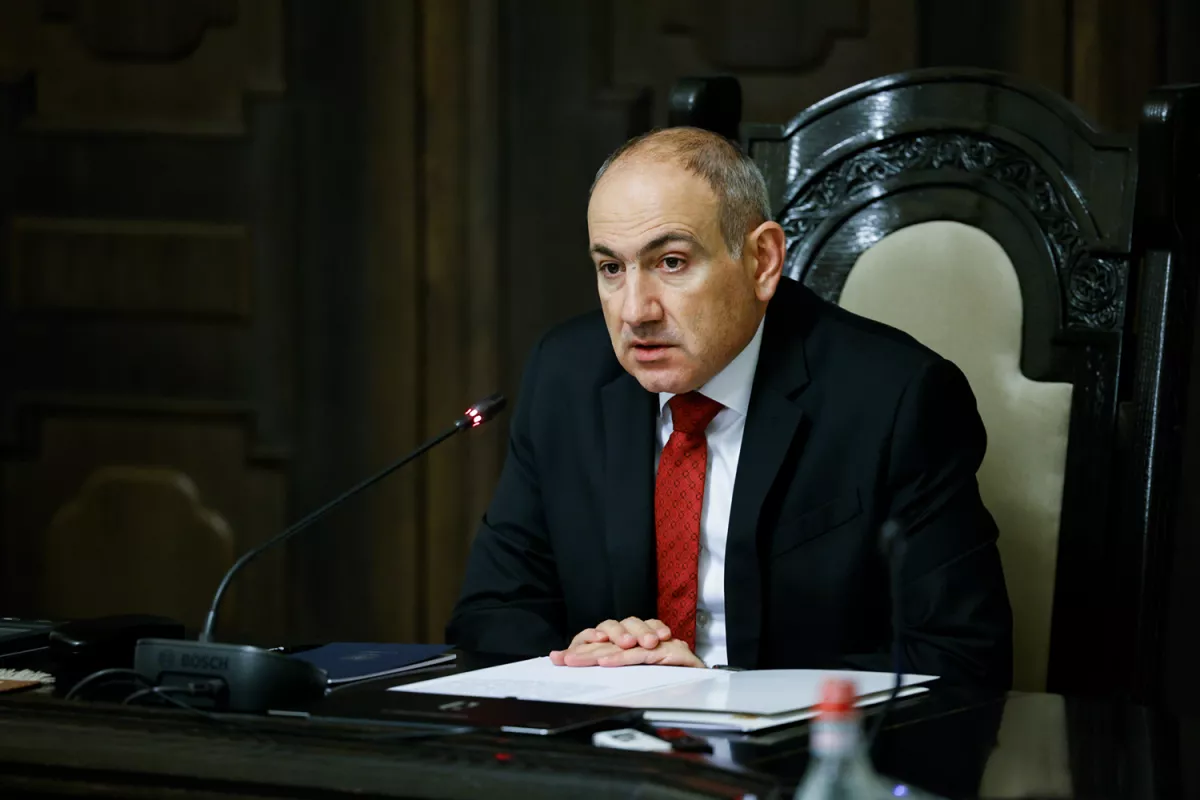
Prime Minister Nikol Pashinyan unleashed a fierce critique of Armenia’s opposition during a recent parliamentary session, accusing former ruling parties of deliberate disinformation campaigns designed to sabotage the country’s peace initiatives. In his pointed address to lawmakers, Pashinyan declared his administration is actively working to prevent what he termed the “three-headed party of war” from regaining parliamentary seats.
“Revising peace is the main and key task of the ‘three-headed party of war,’ formed from representatives of former authorities,” Pashinyan stated, according to Armenian media reports. His comments reflect the deepening political divide in a country still recovering from the 2020 Nagorno-Karabakh conflict with Azerbaijan, which resulted in significant territorial losses for Armenia.
The Prime Minister specifically targeted three opposition blocs—the Armenia bloc, Strong Republican Party of Armenia, and Prosperous Armenia—accusing them of manufacturing public panic through misleading statements about national security.
“At one point they were saying that our army…, that we are defenseless, that our borders… We said: ‘Fine, we will show the acquired weaponry to the public.’ And now they are shouting: what is this, why are they going to show it?” Pashinyan said, highlighting what he described as contradictory messaging from opposition forces.
Armenia has been navigating a complex political landscape since the 2020 war, with Pashinyan’s government pursuing normalization of relations with Azerbaijan and Turkey, while opposition groups have frequently characterized these efforts as capitulation and a threat to national security. This has created ongoing tension within Armenian politics, where debates about defense capabilities have become particularly contentious.
In his remarks, Pashinyan went further, explicitly stating that public demonstrations of newly acquired military hardware serve a dual purpose: countering opposition claims regarding public debt while simultaneously undermining the electoral prospects of these opposition parties.
“We are also showing it so that it becomes another factor ensuring that you—the ‘Armenia’ bloc, ‘Strong RPA’ and ‘Prosperous Armenia’—do not enter parliament,” he declared, in an unusually direct acknowledgment of political strategy. “So that you do not gain the necessary number of votes to become parliamentary parties.”
His comments come at a time when Armenia faces significant regional challenges. Following the Azerbaijani takeover of Nagorno-Karabakh in September 2023, which resulted in the exodus of the region’s ethnic Armenian population, Pashinyan’s government has been pursuing a peace treaty with Azerbaijan while facing domestic criticism for its handling of the situation.
The Prime Minister’s unusually harsh rhetoric reflects the high stakes involved in Armenia’s ongoing political struggles. “Because a political force that tries to plunge the people into chaos through such brazen hybrid disinformation cannot end up in parliament again,” he insisted.
Pashinyan concluded with a provocative assertion that even entertaining the possibility of these opposition forces returning to parliament would constitute “a lack of respect toward the citizens of the Republic of Armenia.”
Political analysts note that Pashinyan’s Civil Contract party currently holds a comfortable majority in parliament following the 2021 snap elections, but the country’s difficult economic situation and the fallout from the Nagorno-Karabakh issue have eroded some of his popular support. The government’s peace agenda with Azerbaijan, while potentially bringing stability, remains controversial among segments of Armenian society that view it as surrendering historical claims.
As Armenia continues its delicate balancing act between pursuing regional peace and addressing domestic concerns, the confrontational tone of political discourse suggests the country’s political polarization shows no signs of abating in the near future.
Fact Checker
Verify the accuracy of this article using The Disinformation Commission analysis and real-time sources.

13 Comments
This situation underscores the delicate balance between national security and democratic principles. Pashinyan seems determined to keep the opposition out of power, but that could further polarize the country if not handled carefully. Constructive dialogue and compromise will be essential.
This is a complex political situation in Armenia. It’s concerning to see accusations of disinformation being thrown around, as that can undermine public trust. I hope the government and opposition can find a constructive way to address the country’s challenges and move forward in a democratic manner.
You raise a fair point. Resolving political differences through open and honest dialogue is crucial for a healthy democracy, even if it’s challenging. Hopefully all sides can focus on the country’s best interests.
This political dispute in Armenia has significant implications for the country’s mining, energy, and broader economic sectors. It’s essential that all stakeholders prioritize stability, transparency, and constructive engagement to find a way forward that serves the nation’s interests. Inflammatory rhetoric and unsubstantiated claims will only deepen divisions.
This is a complex and sensitive political situation that extends beyond just the mining and energy sectors. It’s important for all parties to engage in constructive dialogue, avoid inflammatory rhetoric, and focus on finding solutions that serve the best interests of the Armenian people.
The fallout from the 2020 Nagorno-Karabakh conflict appears to be driving deep political divisions in Armenia. While national security is a valid concern, accusing the opposition of intentionally spreading disinformation is a serious allegation that requires strong evidence.
I agree, transparency and accountability from all parties will be key to rebuilding trust and finding a constructive path forward. Inflammatory rhetoric often obscures the real issues at hand.
Pashinyan’s comments reflect the deep divisions and mistrust in Armenian politics. While he may have valid concerns about the opposition’s agenda, accusing them of deliberately spreading disinformation is a serious charge that requires solid proof. Maintaining an impartial, fact-based political discourse is crucial.
The fallout from the Nagorno-Karabakh conflict appears to be fueling deep political divisions in Armenia. While national security is a legitimate concern, the government’s accusations of deliberate disinformation by the opposition require strong evidence. Maintaining a fair, transparent political process is crucial for the country’s stability.
The accusations of disinformation being thrown around in Armenian politics are concerning and could undermine public trust. While national security is a valid concern, the government needs to substantiate its claims and engage the opposition in a fair, transparent manner. Maintaining democratic principles is crucial, even in challenging times.
The mining and energy sectors are closely tied to geopolitics, so it’s not surprising to see them intersecting with this political dispute. Pashinyan seems intent on preventing the opposition from gaining influence, but that could backfire if it’s perceived as heavy-handed.
Absolutely, the stakes are high when it comes to natural resources and national security. Both sides need to find a way to engage constructively and prioritize the country’s long-term stability and prosperity.
It’s concerning to see the government and opposition in Armenia trading accusations of disinformation. This kind of political tension can create uncertainty and instability, which can impact the mining and energy sectors. Hopefully, all sides can find a way to engage productively and address the country’s challenges.