


Listen to the article
A London judge ruled Friday that mining giant BHP Group bears liability for Brazil’s worst environmental disaster, a devastating dam collapse that occurred nearly a decade ago. The catastrophe killed 19 people and unleashed millions of tons of toxic waste into a major river system, destroying communities and ecosystems along its path.
High Court Justice Finola O’Farrell determined that Australia-based BHP, despite not directly owning the dam, was responsible due to negligence that contributed to the collapse. The ruling noted that “the risk of collapse of the dam was foreseeable” and that it was “inconceivable” that decisions to increase the dam’s height would have proceeded under proper oversight.
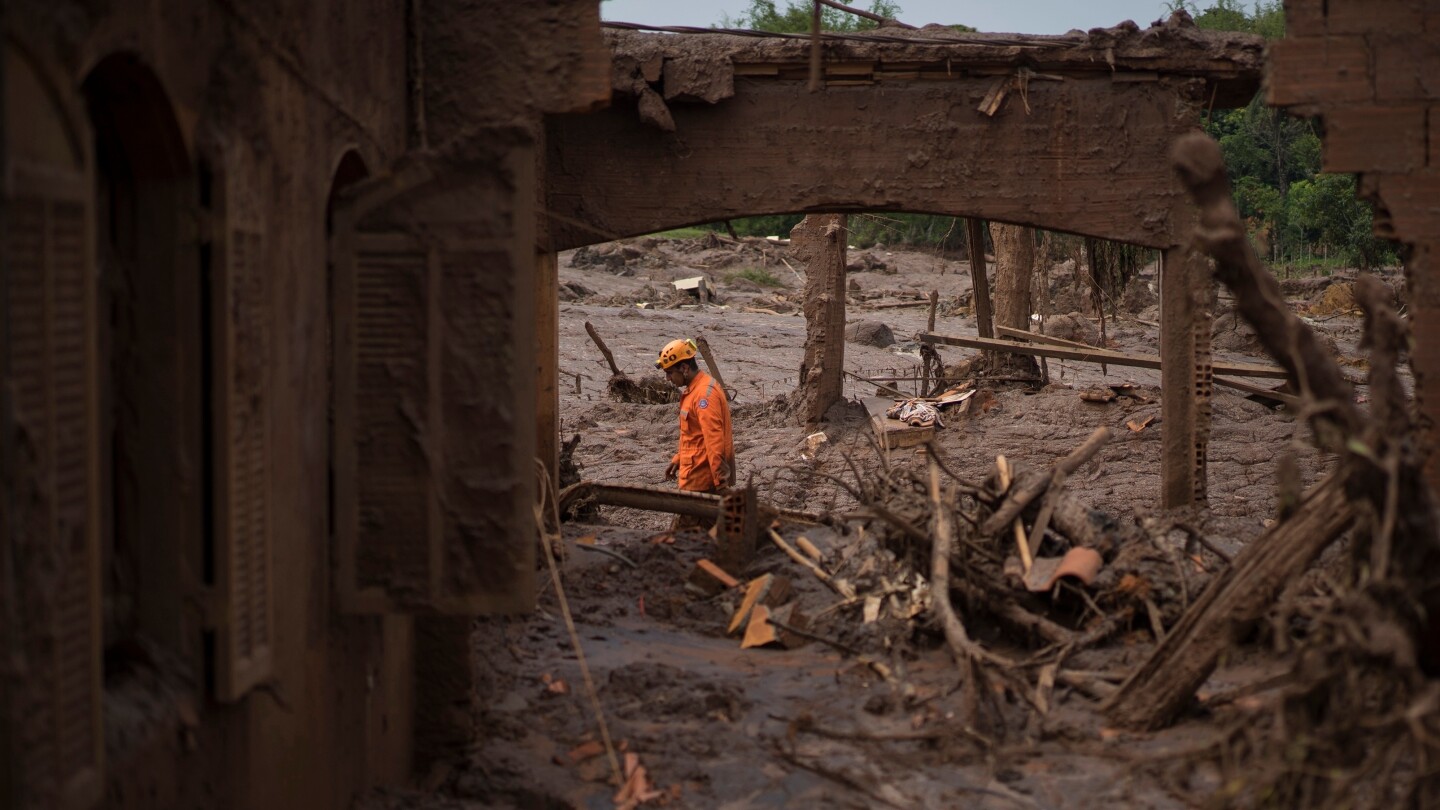
The Fundão dam ruptured on November 5, 2015, at an iron ore mine operated by Samarco, a joint venture equally owned by BHP and Brazilian mining company Vale. The disaster unleashed an unprecedented environmental catastrophe, with enough mining waste to fill 13,000 Olympic-sized swimming pools pouring into the Doce River in southeastern Brazil.
The sludge destroyed the village of Bento Rodrigues in Minas Gerais state and severely damaged other communities along its path. Environmental studies by the University of Ulster in the UK documented the death of approximately 14 tons of freshwater fish as contamination spread along 600 kilometers (370 miles) of the river—a waterway sacred to the Krenak Indigenous people, who consider it a deity.
“We had to cross the Atlantic Ocean and go to England to finally see a mining company held to account,” said Mônica dos Santos of the Commission for Those Affected by the Fundão Dam, reflecting the sentiment of many victims who viewed the ruling as a long-overdue victory.
For Gelvana Rodrigues, whose 7-year-old son Thiago died in the mudslide, the decision validated years of advocacy. “The judge’s decision shows what we have been saying for the last 10 years: it was not an accident, and BHP must take responsibility for its actions,” she stated.
The class-action lawsuit, representing 600,000 Brazilians and 31 communities, argued that BHP was heavily involved in Samarco’s operations and could have prevented the catastrophe. Instead, plaintiffs claimed, the company encouraged raising the dam’s height to increase production, despite known risks.
BHP immediately announced plans to appeal the decision. The company’s shares fell more than 2% on the London market following the ruling, prompting the mining giant to indicate it would update its financial provisions accordingly.
While the ruling addresses liability, a second phase of the trial will determine the damages amount. Claimants are seeking approximately £36 billion ($47 billion) in compensation. The case was filed in Britain because one of BHP’s two main legal entities was based in London when the disaster occurred.
The UK legal proceedings began in October 2024, coinciding with a separate settlement in Brazil where Samarco agreed to pay 132 billion reais ($23 billion) over 20 years to compensate for human, environmental, and infrastructure damage. BHP had argued that the UK case unnecessarily duplicated matters already addressed in Brazilian courts.
However, Justice O’Farrell ruled that those who received compensation through the Brazilian settlement could still pursue claims in the UK, though potentially limited by any waivers they signed. Brandon Craig, BHP’s president of Minerals Americas, suggested nearly half the claimants might be excluded from the group due to such settlement agreements.
The disaster’s environmental impact remains evident a decade later. Despite Brazil’s efforts to position itself as a global environmental leader—including hosting the upcoming UN COP30 climate summit—advocacy groups point to the dam collapse as evidence of industry-friendly policies that have undermined ecological protections. The Doce River continues to show contamination from heavy metals, and reconstruction efforts in affected communities have progressed slowly amid ongoing legal disputes.
The ruling represents a significant milestone in one of the most complex environmental liability cases in recent history, with potential ramifications for how multinational corporations are held accountable for disasters occurring through their subsidiary operations.
Fact Checker
Verify the accuracy of this article using The Disinformation Commission analysis and real-time sources.

13 Comments
The scale of this disaster is truly horrifying. I wonder what steps BHP and the industry as a whole will take to prevent such catastrophic failures in the future and restore the affected region.
This is a stark reminder of the need for rigorous safety standards and oversight in the mining industry. No community should have to bear the devastating consequences of a preventable disaster like this.
This case highlights the need for stronger regulations and enforcement to ensure mining companies operate responsibly and mitigate environmental risks. Profit cannot come at the expense of human lives and ecosystems.
Absolutely. Responsible mining practices should be the industry standard, not the exception. This ruling could spur much-needed reforms.
This is a sobering and tragic case. The negligence that contributed to such a devastating environmental disaster is unacceptable. I hope the ruling leads to meaningful accountability and reforms to prevent similar incidents in the future.
Agreed. Proper oversight and risk assessment is critical for the mining industry to operate responsibly and mitigate the potential for catastrophic failures.
This ruling sets an important precedent for holding multinational mining companies responsible for their actions, or lack thereof, that lead to devastating environmental harm. Hopefully, it leads to meaningful change in the industry.
Agreed. Increased scrutiny and accountability could drive mining companies to prioritize safety and environmental protection more seriously.
It’s good to see the courts holding a major mining company like BHP accountable for its role in this environmental disaster. Hopefully, this sets a precedent for increased corporate responsibility in the sector.
Yes, this ruling could have broader implications for how mining companies are scrutinized and held liable for their actions, or inactions, that lead to environmental harm.
It’s disturbing to see the extent of the damage caused by this preventable disaster. I hope the affected communities receive the support they need to recover and rebuild.
Tragic that 19 lives were lost and entire ecosystems were destroyed due to the negligence of BHP. I hope the affected communities receive the justice and compensation they deserve.
Absolutely. Corporate accountability is essential, especially for industries with such high-risk operations that can cause immense environmental damage.