


Listen to the article
Israeli authorities confirmed Thursday that remains returned from Gaza belonged to Joshua Loitu Mollel, a 21-year-old Tanzanian agricultural student killed during the Hamas-led attack on October 7, 2023. Mollel had arrived at kibbutz Nahal Oz just 19 days before the attack, seeking agricultural experience to apply in his home country.
“Joshua’s return offers some comfort to a family that has endured unbearable uncertainty for over two years,” the Hostages and Missing Families Forum Headquarters said in a statement. Mollel is survived by his parents and four siblings in Tanzania.
The identification marks another step forward in the ongoing U.S.-brokered ceasefire agreement between Israel and Hamas. Since the ceasefire began last month, Hamas has returned 22 bodies of hostages to Israel, with six bodies still remaining in Gaza. Among those still held is the body of Sudthisak Rinthalak, an agricultural worker from Thailand and the only non-Israeli among them.
The agreement has seen Hamas return 20 living hostages to Israel on October 13, with the subsequent exchanges of the deceased forming a central component of the ceasefire’s initial phase. The deal requires Hamas to return all hostage remains as quickly as possible.
These exchanges have continued despite accusations from both sides about breaches of other terms of the agreement. Israel has handed over 285 bodies of Palestinians to Gaza, according to the International Committee of the Red Cross, which facilitates the exchanges.
Gaza health officials report difficulties identifying the remains returned by Israel due to a shortage of DNA testing kits. Israel has been returning 15 Palestinian bodies for each set of hostage remains, though it has not disclosed the total number of bodies it holds or their recovery locations.
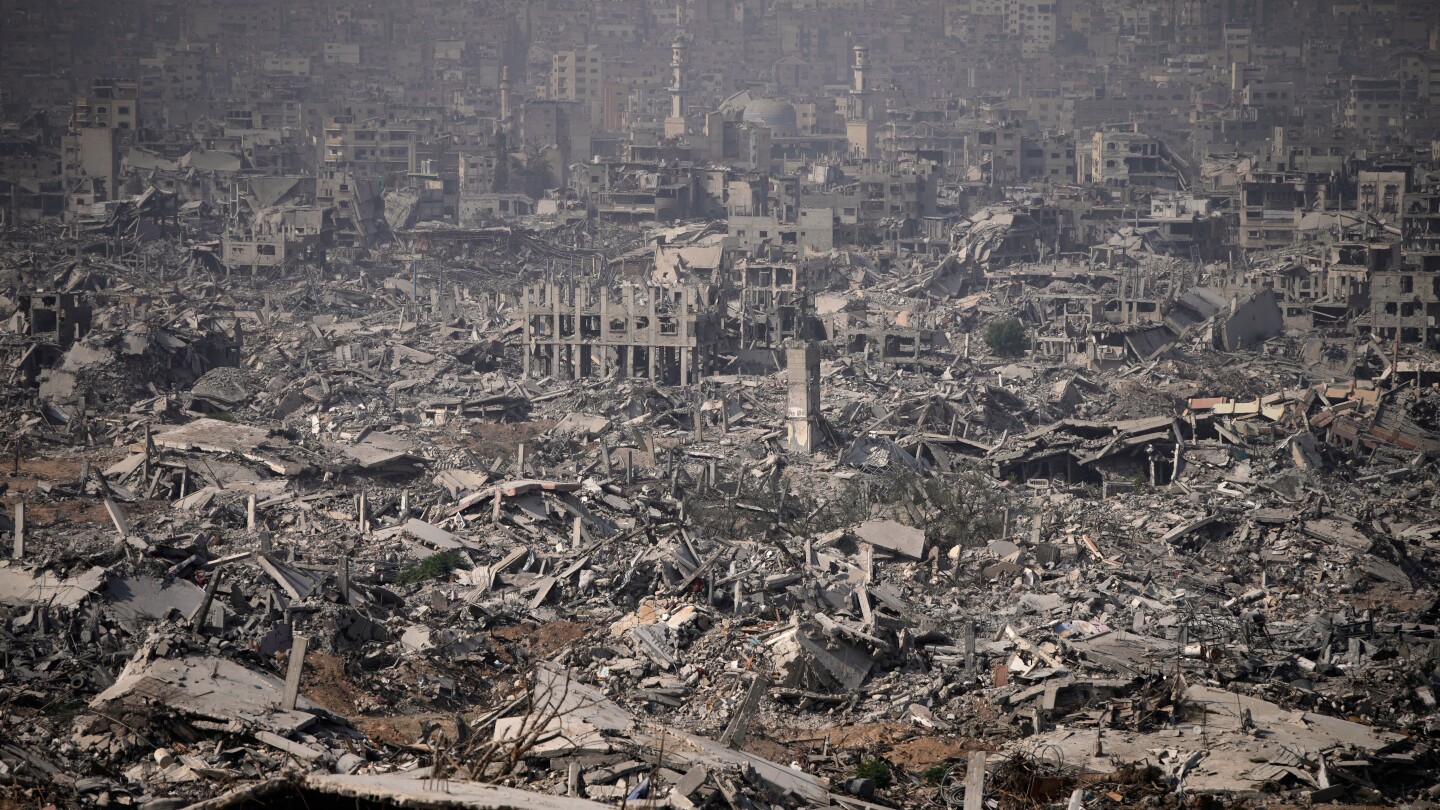
Hamas has cited widespread devastation in Gaza as a complication in recovering bodies, returning one to three remains every few days. Israel has pushed to accelerate this process, though in several cases, the remains have not been those of hostages.
Meanwhile, Israel faces security concerns along its border with Egypt. Defense Minister Israel Katz on Thursday ordered a border area designated as a closed military zone to curb illegal weapons smuggling facilitated by drones along the 200-kilometer (130-mile) frontier.
“Anyone who enters the unauthorized area will be harmed,” warned Katz, who also announced that troops would be authorized to fire on smugglers operating in the zone. Military and security officials have agreed to classify arms smuggling as a terrorist threat, enabling security forces to deploy “appropriate tools” to combat the issue.
On the diplomatic front, U.S. President Donald Trump’s 20-point peace plan includes provisions for an international stabilization force for Gaza. Diplomats are working to define its role, secure Arab participation, and build international support. UN Secretary-General Antonio Guterres emphasized that such a force would require legitimacy through a UN Security Council mandate.
The U.S. reported Wednesday that representatives from Egypt, Qatar, Saudi Arabia, Turkey, and the United Arab Emirates met with non-permanent UN Security Council members to garner support for a Gaza resolution. European Union diplomat Kaja Kallas indicated the bloc is considering extending its current missions that train Palestinian Authority police forces and strengthen security procedures as part of its contribution to the stabilization effort.
In a disturbing development, freed Israeli hostage Ron Braslavski has alleged sexual abuse during his two-year captivity in Gaza. Braslavski, captured while working as a guard at the Nova music festival during the October 2023 attack, reported being stripped naked, beaten, and sexually abused by his captors.
“It was sexual violence and its main purpose was to humiliate me,” he said in an interview partially published by the Daily Mail. “While I was there — every day, every beating — I’d say to myself, ‘I survived another day in hell.'”
Braslavski is the latest of several released hostages to report sexual abuse during captivity. Similarly, Palestinians released from Israeli detention have reported abuses including being stripped to their underwear, frequent beatings, sexual abuse, and being bound for days, sometimes resulting in infections leading to limb amputations. According to UN figures, at least 75 Palestinians have died in Israeli prisons during the war, though Israel maintains it adheres to international standards in its detention facilities.
The original Hamas attack in 2023 killed approximately 1,200 people in Israel and resulted in 251 hostages being taken. Israel’s subsequent military offensive has killed more than 68,800 Palestinians in Gaza, according to the Hamas-run Health Ministry, which maintains records generally considered reliable by independent experts.
Fact Checker
Verify the accuracy of this article using The Disinformation Commission analysis and real-time sources.

8 Comments
Identifying and repatriating the remains of hostages is an important part of the ceasefire process. While it doesn’t undo the tragedy, it at least provides some closure for the affected families.
Agricultural students like Joshua Mollel should never have been caught up in this conflict. I hope his family can find some solace in the return of his remains, even as they grieve his tragic passing.
It’s good to see the ceasefire agreement facilitating these returns, but there’s still a long way to go to resolve the broader issues driving the conflict.
This is a complex and sensitive situation, but I’m glad to see the ceasefire agreement facilitating the return of hostage remains to their families. It’s a small step, but an important one.
Agreed. These kinds of conflicts have immense human costs, and any progress towards resolving them and providing closure to affected families is meaningful.
The loss of Joshua Mollel is heartbreaking. I hope his family can find some solace in the return of his remains and that this ceasefire agreement continues to make progress in resolving these hostage situations.
This is a tragic situation, but I’m glad to see some progress in the ceasefire agreement between Israel and Hamas. The return of the remains provides some closure for the Mollel family, even if it doesn’t undo their immense loss.
Agreed. These kinds of hostage situations are always heartbreaking, but I hope the ongoing negotiations can lead to the safe return of all remaining individuals.