


Listen to the article
Pakistani Leaders Emphasize Press Freedom, Warn of Misinformation Threats
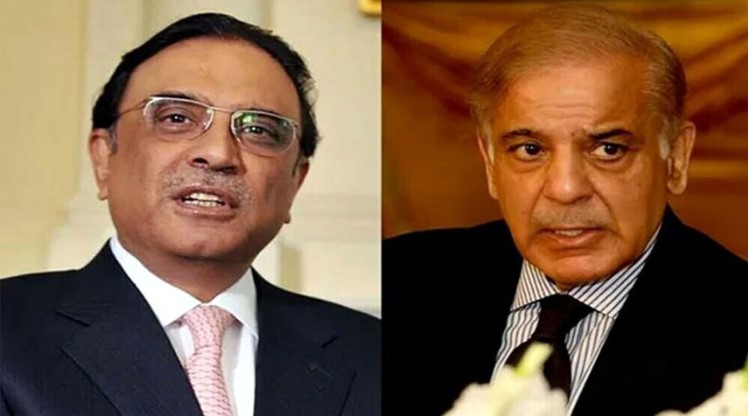
President Asif Ali Zardari and Prime Minister Shehbaz Sharif reaffirmed Pakistan’s commitment to press freedom on Sunday, marking World Press Freedom Day with calls for responsible journalism amid growing challenges from disinformation campaigns and technological disruption.
In separate messages, both leaders stressed that accurate, impartial reporting remains fundamental to democracy while highlighting increasing threats to media independence both domestically and globally.
President Zardari, referencing this year’s theme “Shaping a Future at Peace,” emphasized that peace cannot exist without truth. He cited Article 19 of Pakistan’s Constitution, which guarantees press freedom subject to reasonable legal restrictions, and asserted that “a free, independent and diverse media is not a threat to a confident nation but evidence of one.”
The president cautioned that freedom carries responsibility, noting that “accuracy must not be sacrificed for speed and balance must not give way to partisanship.” He warned that Pakistan faces “particular urgency” from deliberate falsehood campaigns designed to create divisions and weaken national cohesion.
Zardari specifically praised Pakistani media for “standing firm like a wall against the wave of disinformation” during last year’s conflict with India. “It responded not with force, but with facts. Not with noise, but with clarity,” he said, adding that “a nation that aspires to be a trusted voice in the world needs a credible information environment at home.”
The president identified multiple contemporary threats to press freedom, including the growing influence of tech giants controlling social media platforms. He noted these companies often view nation-states “with disdain” and attempt to manufacture consent through algorithmic interventions. “Today, the free press is threatened more by non-state actors, and that includes tech giants and big business,” Zardari stated.
Prime Minister Shehbaz Sharif similarly highlighted the importance of credible journalism, describing journalists as “not only custodians of professional standards but also guardians of societal values.” He urged media professionals to uphold ethics by countering propaganda and fake news.
“Ensuring both speed and credibility in news dissemination is imperative,” the prime minister said. “I urge all journalists to uphold the highest standards of verification, integrity and professionalism, so that in this fast-paced digital era, competition never comes at the cost of truth.”
Sharif also commended national media for demonstrating “commendable responsibility” during the May 2025 conflict with India, saying outlets contributed to a coordinated national response, reinforced unity, and presented Pakistan’s position with clarity while countering misinformation.
The prime minister emphasized that media has “immense potential to promote constructive engagement and strengthen diplomatic, economic and social ties among nations.” He noted the rapidly changing media landscape where digital platforms now play a central role in shaping public opinion both nationally and globally.
“Media institutions must adapt to digital transformation with both speed and a strong sense of responsibility,” Sharif added.
Despite these statements of support for press freedom, a recent report by the Pakistan Press Foundation (PPF) paints a more concerning picture. The organization documented at least 233 incidents targeting journalists between January 2025 and April 2026, including 67 physical assaults, 67 criminal complaints, 11 arrests, 11 detentions, and three abductions.
The PPF report describes Pakistan’s media landscape as being under “mounting pressure, caught between legal constraints, physical violence, digital harassment and financial coercion,” suggesting a gap between official rhetoric and the reality faced by journalists in the country.
The statements from Pakistan’s leadership come as press freedom faces challenges worldwide, with many countries seeing increasing restrictions, violence against journalists, and the undermining of independent media through both regulatory measures and economic pressures.
Fact Checker
Verify the accuracy of this article using The Disinformation Commission analysis and real-time sources.

9 Comments
The call to safeguard press freedom amid technological disruption is an important one. I wonder what concrete steps the government will take to support media outlets and empower citizens to navigate the complex information landscape.
Kudos to the Pakistani leaders for recognizing the critical role of a free press in a democracy. Now the real test will be in their ability to translate these principles into effective, sustainable policies that protect journalists and empower the public.
Balancing press freedom with legal restrictions is a delicate challenge. I’m curious to hear more about the specific measures Pakistan plans to take to shield journalists from misinformation and partisan influence, while upholding democratic principles.
Maintaining a free and independent media is crucial, but it does require a shared sense of civic duty. I hope Pakistan’s leaders can foster an environment where journalists feel empowered to hold power to account without fear of repercussions.
It’s heartening to see the government acknowledging the threats posed by disinformation campaigns. Upholding press freedom while ensuring accuracy and balance is a delicate balance, but one that is essential for a thriving democracy.
Safeguarding press freedom is critical for a healthy democracy. I’m glad to see Pakistani leaders emphasizing the importance of responsible, impartial journalism in the face of growing disinformation threats. Accuracy and balance must be the priority.
It’s encouraging to see the government acknowledging the need to protect media independence in Pakistan. Disinformation campaigns can be very damaging, so I hope they follow through on their commitment to support a free and diverse press.
Responsible, fact-based reporting is essential for a well-informed populace. I appreciate the leaders’ recognition that speed and partisanship should never come at the expense of journalistic integrity and public trust.
Striking the right balance between press freedom and responsibility is always a delicate challenge. I hope the government in Pakistan can find ways to support journalists while also maintaining high standards of accuracy and impartiality in reporting.