


Listen to the article
India’s power grid remains stable with no coal shortages, government confirms amid viral misinformation
Government fact-checkers have moved quickly to dispel widespread rumors of an impending power crisis in India, affirming that the country faces neither coal shortages nor grid failures despite rising temperatures and increasing electricity demand.
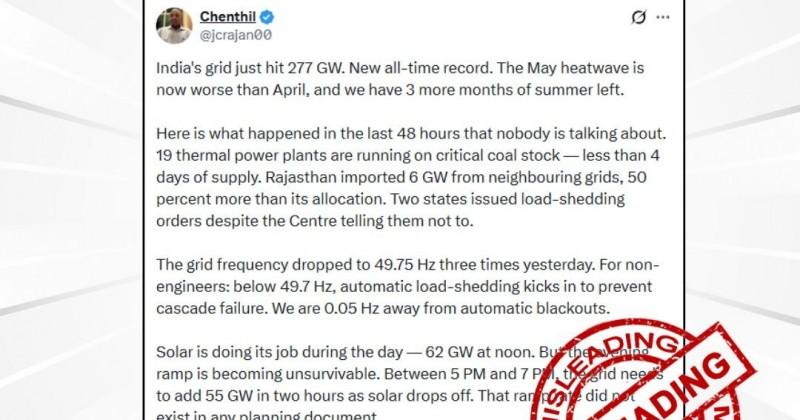
The Press Information Bureau’s Fact Check wing issued a clarification Sunday after alarming social media posts claimed India was experiencing critical coal shortages and widespread load-shedding. One viral post on the social platform X alleged the nation’s power grid had hit an unprecedented demand of 277 gigawatts (GW) amid soaring summer temperatures.
“A post circulating on social media claims India is facing a severe power crisis due to coal shortages. These claims are misleading and aim to create unnecessary panic,” the PIB Fact Check stated in its official response.
According to government data, the actual maximum power demand recorded on May 2 was 229 GW—significantly lower than claimed in the viral posts. Officials emphasized this demand was fully met without disruptions, demonstrating the system’s resilience.
The fact-checking unit reported that thermal power plants currently maintain substantial reserves, with coal stocks standing at 53.702 million tonnes—a figure officials describe as sufficient to meet operational requirements across the country. This stockpile represents part of India’s strategic planning for seasonal demand fluctuations, particularly during summer months when electricity consumption typically surges.
Power availability concerns have been a recurring issue in India, especially as the country navigates rapid economic growth and increasing electrification. The viral posts specifically raised alarms about evening demand spikes when solar generation decreases, suggesting this could lead to grid instability.
Addressing these concerns directly, the government confirmed that established frequency control defense mechanisms provide adequate operational margins to maintain grid stability even during peak demand periods. These technical safeguards help prevent cascading failures that could potentially lead to regional or nationwide blackouts.
India’s power sector has undergone significant transformation in recent years, with substantial investments in both conventional and renewable energy sources. The country has ambitious targets for expanding its renewable energy capacity, particularly in solar power, which has introduced new challenges in managing the electricity grid’s stability as these intermittent sources increase their share of the energy mix.
The false claims come at a time when several regions globally have faced genuine energy crises due to supply chain disruptions, geopolitical tensions affecting fuel supplies, and extreme weather events. These factors may have contributed to the credibility and rapid spread of the misinformation among concerned citizens.
Energy security remains a critical priority for India, the world’s third-largest energy consumer. The government has implemented various measures to ensure adequate power supply, including advance fuel stocking, capacity planning, and diversification of energy sources to reduce dependency on coal imports.
The PIB Fact Check urged citizens to verify information through official channels and avoid sharing unsubstantiated claims that could cause unnecessary public concern. The incident highlights the increasing challenge of misinformation in critical infrastructure sectors and the importance of rapid government response to prevent panic.
As summer progresses and temperatures continue to rise across much of the country, authorities remain vigilant in monitoring the power situation, but maintain that current systems and supplies are well-equipped to handle anticipated demand increases.
Fact Checker
Verify the accuracy of this article using The Disinformation Commission analysis and real-time sources.

7 Comments
Glad to see the government quickly clarifying the facts around the power situation. Responding to misinformation with transparency is an important part of maintaining public confidence.
The details on maximum power demand versus actual usage are helpful to put the situation in perspective. Addressing misinformation proactively is a responsible approach by the authorities.
It’s good to see the government taking steps to dispel false claims about power shortages. Maintaining grid stability during high demand periods is crucial for India’s economic growth.
Agreed. Providing accurate, real-time data on power demand and supply is essential to prevent public panic and ensure trust in the system.
Good to see the Indian government quickly addressing misinformation about power shortages. Maintaining a stable grid during high demand is crucial for the country’s economic and social stability.
It’s reassuring to hear the power system was able to handle the increased demand without disruptions. Transparency and fact-checking from the authorities helps counter misleading narratives.
Absolutely, fact-based information from the government is important to prevent unnecessary panic. Addressing rumors swiftly demonstrates their commitment to providing reliable data.