


Listen to the article
As schools across the United States dismiss for summer break, millions of teenagers are entering what has long served as a crucial gateway to the working world. However, according to labor economists and workforce analysts, the 2025 summer job market may present some of the steepest challenges young workers have faced in decades.
A recent analysis from the Wall Street Journal indicates that teen summer hiring is tracking well below historical averages, with a noticeable decline in available entry-level positions. Young job seekers are now facing intensified competition not only from their peers but also from adult workers and candidates with prior work experience. Early forecasts suggest that teen employment figures this summer could remain suppressed compared to previous years, signaling deeper structural changes within the American labor market.
The disparity between teen unemployment and the national jobless rate continues to widen. Teen unemployment has consistently remained significantly higher than the overall rate, a persistent pattern in U.S. labor statistics. State-level data further reinforces this trend, with projections showing elevated unemployment rates among teenagers as the summer season gets underway. For many young people attempting to secure their first job, these numbers underscore the mounting barriers to workforce entry.
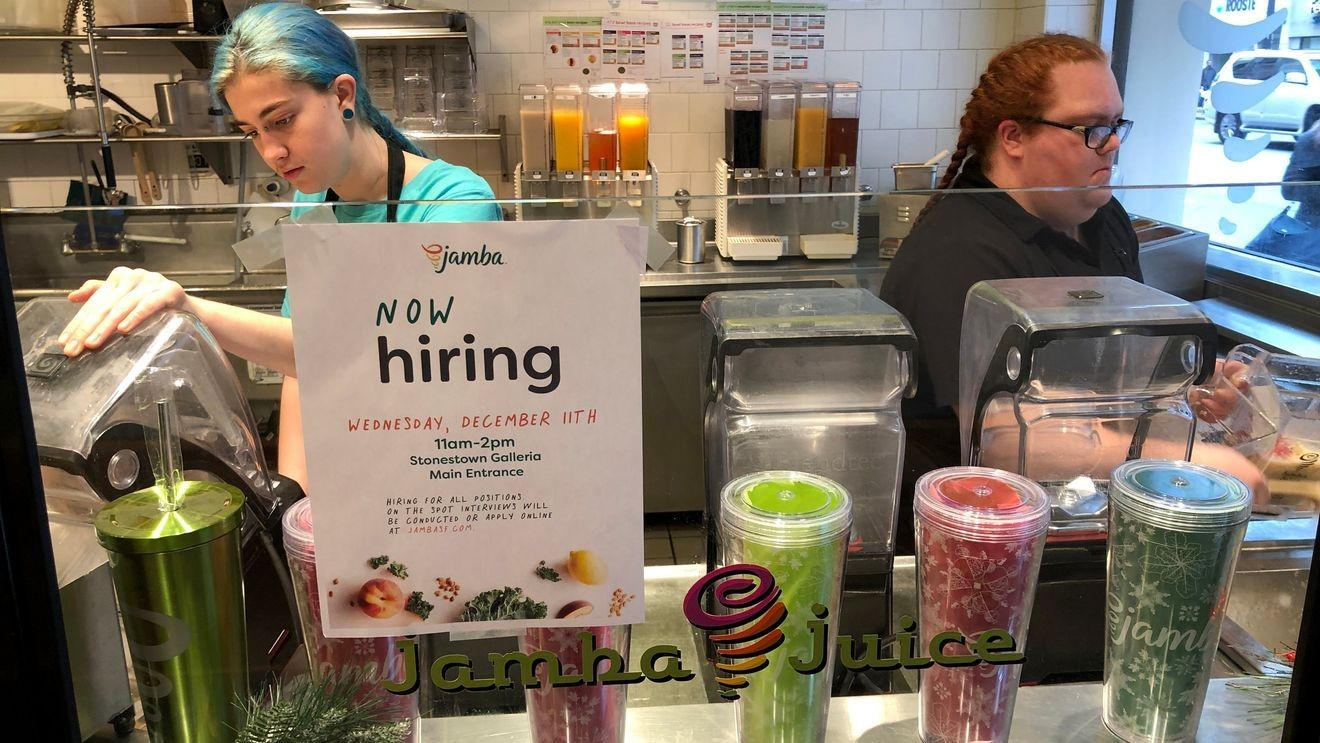
Several converging factors are contributing to the tightening market. Industries that have traditionally served as primary employers of teenage workers, particularly retail and food service, have become increasingly competitive. Many employers in these sectors are opting to hire more experienced workers or are adjusting their staffing strategies in response to rising operational costs and shifting consumer demand patterns. In some instances, the adoption of automation technologies and evolving business models have further reduced the pool of positions typically filled by younger, less experienced workers.
The retail sector, once a reliable source of summer employment for teens working cash registers and stocking shelves, has undergone significant transformation in recent years. E-commerce growth and self-checkout systems have reduced the need for traditional front-line staff. Similarly, the food service industry has implemented digital ordering platforms and kitchen automation that have changed staffing requirements.
Despite these challenges, labor experts caution against concluding that teen employment opportunities are vanishing altogether. Certain seasonal roles continue to see steady demand across many communities. Positions such as camp counselors, lifeguards, and recreation staff remain available, even as the overall landscape for youth employment fluctuates. These jobs often require specific certifications or training, which may provide a pathway for motivated teens willing to invest in qualifying credentials.
Public discourse has occasionally linked declining teen employment to increased instances of unstructured youth activity in public spaces, sometimes referred to as “teen takeovers.” However, academic research does not establish a direct causal relationship between teen job availability and youth disorder or disruptive behavior in communities.
Long-term studies examining adolescent employment patterns reveal a more nuanced picture. Researchers have found that the impact of teen employment varies considerably depending on multiple factors, including the quality of the job, the number of hours worked, and whether employment is stable or sporadic over time. The research suggests there is no universal outcome associated with teen work. Results differ widely based on individual circumstances and environmental factors surrounding each young worker.
The same body of research indicates that teen employment can foster valuable qualities such as responsibility, independence, and practical job skills. However, working excessive hours or being placed in poorly structured work environments may negatively affect academic performance and interfere with important developmental needs during adolescence. Researchers emphasize that outcomes depend less on whether teenagers work at all and more on the specific conditions and context of that employment.
Labor experts maintain that the available data does not support simplistic narratives connecting reduced summer employment to increased youth disruption. Instead, they point to a more complex reality in which access to structured opportunities, whether through jobs, organized programs, or other constructive activities, plays a significant role in determining how teenagers spend their summer months.
In response to these challenges, communities nationwide are taking proactive steps. Many municipalities and organizations are expanding youth employment programs and enhancing recreational opportunities to provide alternatives and keep teenagers productively engaged throughout the summer break. These initiatives aim to bridge the gap left by the contracting traditional job market while supporting youth development during a critical period of growth and learning.
Fact Checker
Verify the accuracy of this article using The Disinformation Commission analysis and real-time sources.

20 Comments
Interesting update on
Fact Check: Where Are the Summer Jobs? Teens Face Challenges in Tough Job Market
. Curious how the grades will trend next quarter.
The cost guidance is better than expected. If they deliver, the stock could rerate.
Good point. Watching costs and grades closely.
Uranium names keep pushing higher—supply still tight into 2026.
Good point. Watching costs and grades closely.
The cost guidance is better than expected. If they deliver, the stock could rerate.
Silver leverage is strong here; beta cuts both ways though.
Production mix shifting toward Fact Check might help margins if metals stay firm.
Silver leverage is strong here; beta cuts both ways though.
Silver leverage is strong here; beta cuts both ways though.
Good point. Watching costs and grades closely.
Good point. Watching costs and grades closely.
Exploration results look promising, but permitting will be the key risk.
Good point. Watching costs and grades closely.
Silver leverage is strong here; beta cuts both ways though.
Good point. Watching costs and grades closely.
If AISC keeps dropping, this becomes investable for me.
Uranium names keep pushing higher—supply still tight into 2026.
Good point. Watching costs and grades closely.
Good point. Watching costs and grades closely.