


Listen to the article
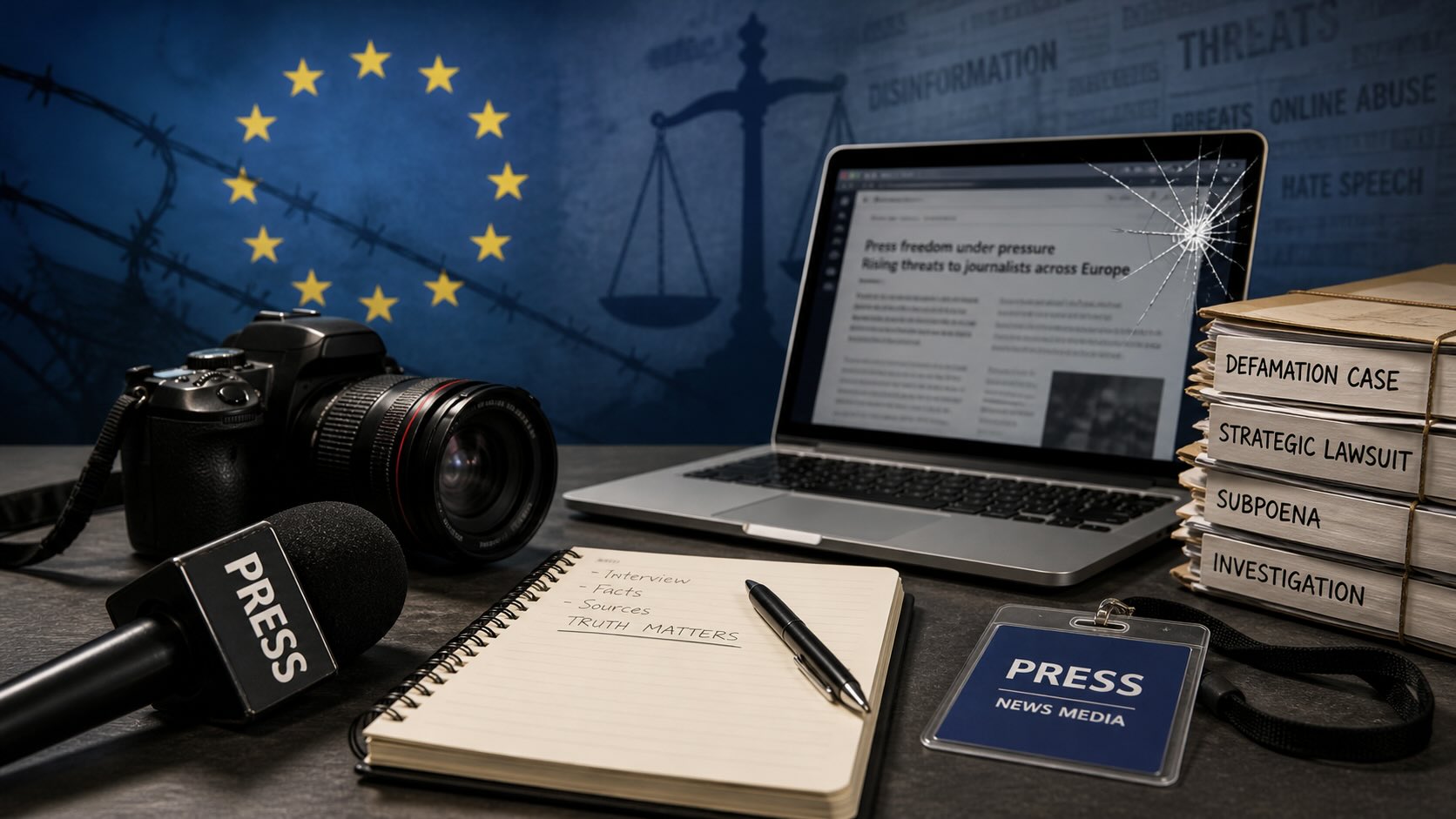
The European Union issued a stark warning on World Press Freedom Day, highlighting escalating threats to journalists including violence, intimidation, legal harassment, and propaganda campaigns. The EU emphasized that the ability of journalists to work freely remains fundamental to democratic governance and accountability.
In its statement ahead of May 3rd’s World Press Freedom Day, the EU underscored that journalists must be allowed to perform their duties without fear of violence, harassment, arbitrary detention, or expulsion. The message, though framed as an annual commemoration, carried unusually pointed language reflecting growing concern about global press freedom conditions.
Brussels specifically highlighted the perilous situation for journalists in conflict zones, where they face not only combat dangers but also targeted intimidation. The EU stressed that media workers documenting war, atrocities, and potential war crimes require special protection. The statement referenced ongoing conflicts in Ukraine, Gaza, Lebanon, and various African regions, emphasizing that killings of journalists must be thoroughly investigated and perpetrators brought to justice.
The EU also drew attention to the growing use of Strategic Lawsuits Against Public Participation (SLAPPs) as weapons against journalism. These legal actions, typically filed by powerful individuals, corporations, or government figures, aim to burden journalists and news organizations with costly, time-consuming litigation. For smaller independent outlets with limited resources, even the threat of such proceedings can force editorial compromises or self-censorship.
Brussels has recently adopted measures intended to shield journalists and civil society organizations from such abusive legal tactics. However, questions remain about how effectively these protections will function in practice, particularly in member states where media independence already faces challenges through political pressure and concentrated media ownership.
The statement further connected the suppression of journalism with the proliferation of disinformation. When foreign correspondents are expelled, independent outlets shuttered, and journalists forced into exile, a vacuum forms that can be filled with unverified claims and propaganda disguised as legitimate news. This creates conditions where public debate becomes easier to manipulate and powerful interests face diminished scrutiny.
UN Secretary-General António Guterres echoed these sentiments in his own World Press Freedom Day message, describing attacks on journalists as direct assaults on freedom of expression itself.
While the EU statement did not announce new funding, sanctions, or legislation, its significance lies in its comprehensive framing of the issue. Brussels presented violence against reporters, abusive litigation, online harassment, restrictions on foreign correspondents, and disinformation as interconnected threats to a crucial public function: the gathering and dissemination of verified information.
For the European Union, this message presents a policy challenge. Defending press freedom requires concrete action beyond annual declarations. It necessitates protecting journalists in conflict zones, supporting independent media under pressure, ensuring thorough investigation of attacks, and preventing legal systems from being weaponized against legitimate reporting.
The issue extends far beyond the journalism profession itself. At stake is whether citizens can access reliable information about the actions of governments, militaries, courts, corporations, and armed groups. As the EU statement implies, World Press Freedom Day ultimately serves as a measuring stick for democratic commitment: whether states and institutions are willing to protect those who report inconvenient truths.
Fact Checker
Verify the accuracy of this article using The Disinformation Commission analysis and real-time sources.

16 Comments
Journalists play a vital role in holding the powerful to account and exposing the truth. It’s deeply troubling to see the increasing threats they face, including in conflict zones. The EU is right to sound the alarm and call for greater protection and accountability.
Protecting journalists and press freedom is essential for democracy. The EU’s strong stance on this issue is commendable, and I hope it leads to concrete actions to address the growing threats faced by media workers around the world.
This is a worrying trend that threatens the foundations of democratic governance. Journalists must be able to report without fear of reprisals, and the EU is right to call for stronger protections and accountability measures.
The EU’s stance on this issue is commendable. Safeguarding press freedom and the safety of journalists is crucial for maintaining transparency and holding the powerful to account.
The EU’s warning on World Press Freedom Day highlights the grave threats journalists face, from violence to disinformation campaigns. Protecting the ability of media workers to report freely is essential for democracy and accountability.
The EU’s strong stance on World Press Freedom Day is commendable. Journalists play a vital role in holding the powerful to account and exposing the truth, but too many face grave threats as a result. More must be done to ensure their safety and defend press freedom.
This is a concerning trend that threatens the foundations of democratic societies. Journalists must be able to report freely without fear of violence, harassment, or other forms of retaliation. The EU is right to draw attention to this critical issue.
Attacks on the press, whether physical, legal, or through disinformation campaigns, are attacks on the public’s right to information. The international community needs to take stronger action to protect media workers.
Sadly, this trend of increasing threats to journalists is not limited to conflict zones. Media workers covering sensitive topics like corruption or government misconduct also face growing risks in many countries. The EU is wise to sound the alarm on this pressing issue.
A free and independent press is a cornerstone of democracy. The international community must do more to protect journalists and hold perpetrators accountable when they are targeted for their work.
The EU’s warning on World Press Freedom Day highlights a worrying global trend. Journalists must be able to report freely and without fear of violence or harassment. This is a fundamental pillar of democracy that needs robust defense.
The EU is right to emphasize the critical importance of ensuring the safety and freedom of journalists, who play a vital role in promoting transparency and accountability.
This is a concerning development that requires a robust international response. Journalists must be able to do their jobs without fear of violence, intimidation, or legal harassment. The EU is right to draw attention to this critical issue.
A free and independent press is a cornerstone of democratic societies. The EU is taking an important stand in defense of press freedom and the safety of journalists.
This is a sobering reminder of the grave threats journalists face in carrying out their crucial role for democracy. The EU is right to call for stronger protections and accountability for violence, harassment, and disinformation campaigns against media workers.
Journalists play a vital watchdog function, and their safety and freedom to operate must be safeguarded. Impunity for attacks on the press erodes democratic norms.