


Listen to the article
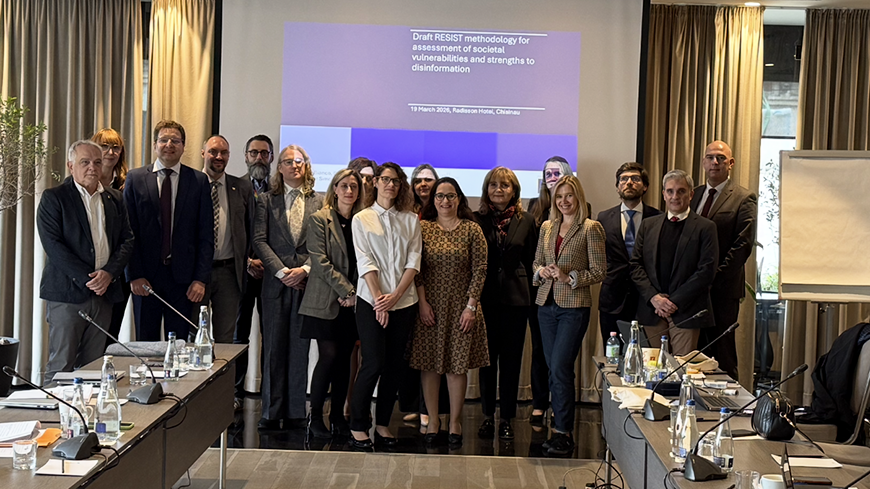
In a significant step towards countering disinformation across Europe, representatives from nine European countries gathered in Chișinău on March 19, 2026, for a workshop focused on implementing the RESIST methodology—a framework designed to assess and strengthen societal resilience against misinformation threats.
The workshop, organized by the Council of Europe’s Division for Cooperation on Freedom of Expression, marked the beginning of a coordinated effort to adapt this assessment tool for varied national contexts. The initiative comes at a critical time when European democracies face increasingly sophisticated disinformation campaigns that threaten to undermine public discourse and democratic processes.
The RESIST methodology provides EEA and Norway Grants’ beneficiary countries with a systematic approach to identify vulnerabilities and strengths in their information ecosystems. By mapping contextual indicators and existing policies across media, culture, education, and youth sectors, the framework enables countries to conduct comprehensive assessments of risk factors and resilience capacities.
“This methodology will give our member states a structured overview of systemic predispositions to disinformation,” said a Council of Europe representative at the event. “It creates an evidence base that can inform policy decisions and strategic actions, ultimately helping European citizens become more resilient to information disorders.”
The workshop brought together officials from ministries, regulatory authorities, and public institutions across the participating countries. Attendees emphasized the necessity of multi-stakeholder collaboration, acknowledging that effective responses to disinformation require coordinated efforts between government authorities, media organizations, and civil society groups.
During discussions, participants shared insights about the unique challenges they face in their respective countries. While disinformation tactics may vary by region, the common thread was the recognition that resilience-building must be tailored to specific national contexts while adhering to shared democratic principles.
“What works in Nordic countries might need adjustment in Eastern European settings,” noted one participant. “The beauty of the RESIST framework is its adaptability while maintaining methodological rigor.”
The implementation of the RESIST methodology will follow a step-by-step process. Countries will first assess their media landscapes, regulatory frameworks, and public awareness levels. This assessment will help identify gaps in existing safeguards and highlight areas where interventions might be most effective.
Experts at the workshop stressed that building resilience is not merely about countering individual false narratives but strengthening societal immunity to manipulation. This includes enhancing media literacy, supporting quality journalism, and fostering transparent communication between institutions and citizens.
The pilot phase of the methodology will see participating countries conducting initial assessments under guidance from Council of Europe experts. These assessments will provide valuable data on the effectiveness of the approach and inform refinements to the methodology before wider implementation.
The timing of this initiative is particularly relevant as elections approach in several European countries, periods when disinformation campaigns typically intensify. By building stronger resilience frameworks now, countries aim to better protect their democratic processes from external interference and manipulation.
“This isn’t just about defending against threats—it’s about proactively building stronger information ecosystems that can withstand attempts to manipulate public opinion,” emphasized a representative from the EEA and Norway Grants, which co-funds the project.
The workshop concluded with participants agreeing on concrete next steps, including timeline commitments for piloting the methodology and establishing regular consultation mechanisms to share findings across countries.
This initiative forms part of the broader “RESIST: Strengthening societal resilience to disinformation in Europe” project, which reflects growing recognition that disinformation represents a transnational challenge requiring coordinated European responses while respecting national contexts and sovereignty.
As the pilot phase begins, experts remain cautiously optimistic that this data-driven, collaborative approach will contribute significantly to Europe’s collective defense against information manipulation that threatens democratic institutions and social cohesion.
Fact Checker
Verify the accuracy of this article using The Disinformation Commission analysis and real-time sources.

16 Comments
Coordinating a multi-country initiative to implement the RESIST methodology is an ambitious undertaking. Sharing best practices and lessons learned across borders will be key to building effective societal defenses against disinformation.
The adaptability of the RESIST framework to different national contexts will be crucial. I’m curious to see how the assessment process and resulting action plans vary across the participating countries.
Strengthening societal defenses against disinformation is an increasingly important priority as these threats continue to evolve. I’m glad to see coordinated efforts between European countries to implement the RESIST methodology.
Assessing risk factors and resilience capacities systematically should provide valuable insights to guide policy and program development. Looking forward to seeing the results of these national assessments.
Disinformation poses a serious threat to democratic discourse and processes. The RESIST methodology seems like a comprehensive approach to identifying vulnerabilities and strengthening societal resilience in a structured way.
Adapting the RESIST framework to diverse national settings will require careful consideration of contextual factors. I’m eager to learn how this initiative unfolds and what insights emerge from the various country assessments.
Addressing disinformation threats through a structured, comprehensive approach like RESIST is a smart move. Mapping vulnerabilities and strengths across key sectors should provide a solid foundation for building societal defenses.
Curious to see how the RESIST methodology can be tailored to account for nuances in national media landscapes, educational systems, and youth engagement. Context-specific adaptations will be crucial.
This RESIST methodology seems like a promising step in the fight against disinformation. Mapping vulnerabilities and strengths across key sectors like media, education, and youth is crucial for building resilient information ecosystems.
I’m curious to learn more about how the RESIST framework will be adapted for different national contexts. Flexibility will be key to addressing the unique challenges each country faces.
Countering disinformation is a complex challenge that requires multifaceted, coordinated responses. I’m encouraged to see European countries coming together to implement the RESIST assessment tool in their national contexts.
Systematic evaluation of risk factors and resilience capacities could yield valuable insights to inform policymaking and grassroots initiatives. Looking forward to learning from the experiences of different countries.
Sophisticated disinformation campaigns that undermine democratic discourse are a major concern. The RESIST framework seems like a thoughtful approach to identifying vulnerabilities and building resilience at a societal level.
Curious to see how the methodology will be applied in practice and what lessons emerge that can be shared across borders to strengthen democratic institutions.
The RESIST framework seems like a practical tool for European democracies to systematically assess and strengthen their resilience against disinformation campaigns. I’m hopeful this coordinated effort can yield meaningful impact.
Evaluating risk factors and resilience capacities across different domains is a smart approach. Can’t wait to see the insights that emerge from these national assessments and how they inform policy responses.