


Listen to the article
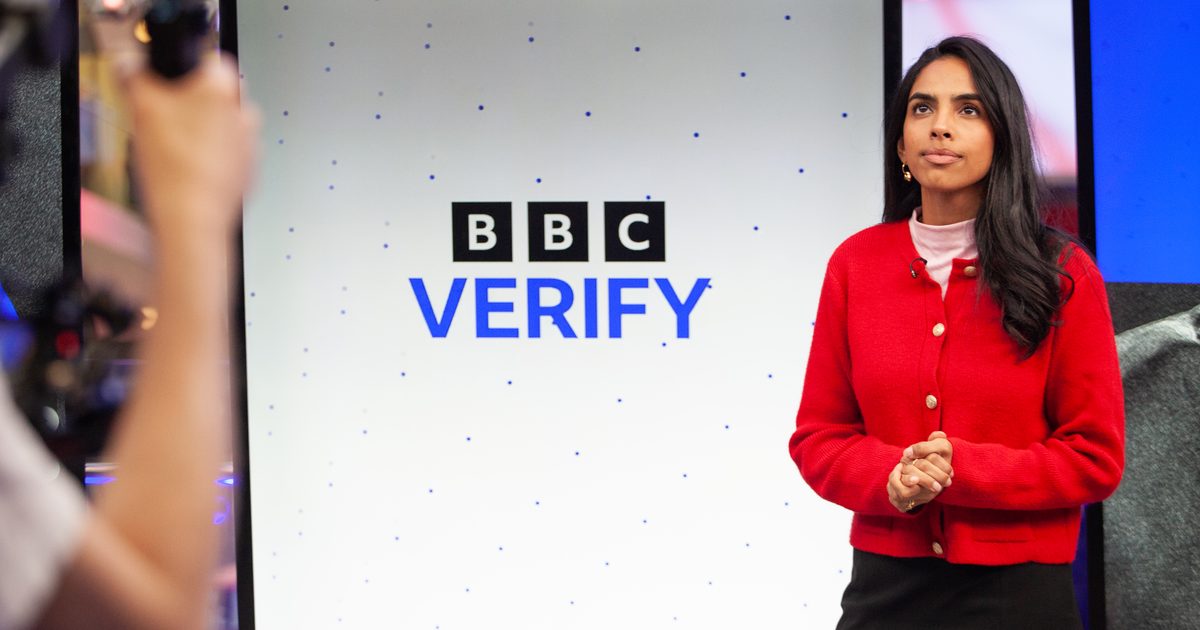
In the battle against digital misinformation, BBC Verify stands at the forefront, employing sophisticated techniques to separate fact from fiction in an increasingly complex information landscape. Launched in May 2023, this specialized unit of approximately 60 journalists works tirelessly to combat the spread of false information across conflict zones including Israel, Gaza, Ukraine, Sudan, and Iran.
Merlyn Thomas, a BBC Verify Correspondent, explains the urgent need for such work: “More and more, we’re being fed information that we don’t really understand – from every single angle. Finding out what’s true is really hard.”
The team employs open-source intelligence gathering, satellite imagery analysis, data evaluation, and forensic techniques to investigate claims circulating online. In June 2025, they expanded their efforts by launching Verify Live, a real-time blog that provides transparent updates on ongoing investigations.
According to Thomas, misinformation doesn’t always spread maliciously. “People are sharing things because they’re worried or care about a particular issue, but in doing so, they’re acting really quickly. It all contributes to such a bad information economy,” she notes.
The impact of BBC Verify is already evident. A November 2024 Ofcom study revealed that one in five UK adults have used the service at least once, with one in 20 reporting regular usage. Overall, 26 percent of UK adults have utilized some form of fact-checking tool.
Thomas, who studied French and Arabic to better communicate with sources in affected regions, joined the BBC as a Creative Access trainee, initially working in radio before focusing on climate disinformation. Her linguistic background proves invaluable for the team’s verification work across international conflicts.
The verification team follows a methodical approach, prioritizing stories based on potential real-world harm and virality. “We don’t want to be the ones platforming misinformation, but if something has already been seen by so many people, we will address it,” Thomas explains.
Interestingly, many verification techniques are accessible to the general public. Thomas encourages everyday users to employ tools like Google Lens for reverse image searches to identify old content being recirculated with false context. “A classic example is wildfires,” she notes. “You’ll see people sharing videos of wildfires saying, ‘This is in XYZ,’ but it’s actually a video from years ago.”
Geolocation presents a more complex challenge, often relying on visual clues like pylons, field intersections, or sunlight direction. Thomas emphasizes the importance of critical thinking: “If it seems too good to be true, it probably is.”
The team publishes its findings across television, radio, digital platforms, and social media to reach audiences where they consume information. This multi-channel approach is particularly crucial given the growing concern about echo chambers, especially during elections when polarized viewpoints can create parallel information streams.
While some verification takes mere minutes, other investigations require extensive effort. Thomas recalls the stark contrast between quickly verifying a synagogue attack in Manchester in October 2025 and the painstaking work required for unclear footage from Ukraine, where a single pylon in foggy conditions might be the only visual reference.
Perhaps the team’s most impactful work involved a secret folder containing hundreds of images of victims killed by the Iranian government. After careful analysis of 392 photos from inside the Kahrizak Forensic Medical Centre, BBC Verify identified 326 individuals, providing crucial documentation in a situation where reliable information was scarce.
The rapidly evolving AI landscape presents the team’s greatest challenge. “AI-generated audio is the scariest thing, because it is the hardest to detect,” Thomas warns. “In the future, it will probably be a big issue we’re going to have to tackle.” While detection tools exist, they lag behind the sophisticated technology creating deceptive content.
Trust in media institutions, including the BBC, has faced challenges in recent years. A 2026 study by the Good Growth Foundation found that public trust in the BBC has declined more significantly over the past decade than any UK institution except the government, with 50 percent of respondents reporting less trust than ten years prior.
Despite criticisms, Thomas emphasizes their commitment to accuracy over speed, implementing rigorous peer reviews and AI checks before publishing. “We always prioritise accuracy over fastness,” she insists.
As information continues to flow at unprecedented rates across global platforms, BBC Verify’s mission of combating misinformation through transparency remains essential. “It’s really hard, it’s a challenge,” Thomas acknowledges, “but we are a team that’s totally up for it. I’m really proud of what we do.”
Fact Checker
Verify the accuracy of this article using The Disinformation Commission analysis and real-time sources.

10 Comments
Kudos to the BBC Verify team for their efforts in conflict zones. Their work must be incredibly challenging, but it’s vital for maintaining informed, fact-based public discourse, especially on sensitive geopolitical issues.
Definitely. Transparency and accountability are critical when it comes to reporting on complex, high-stakes situations. I’m glad the BBC is making this a priority.
Glad to see the BBC taking a proactive approach to tackling misinformation, especially in volatile regions like Iran. Their focus on open-source intelligence and real-time fact-checking is crucial in today’s digital landscape.
Absolutely. Misinformation can have serious consequences, so it’s essential that news organizations put resources towards verifying claims and providing accurate, balanced reporting.
This is an important initiative, though I’m curious to see how the BBC Verify team navigates the complexities of investigating misinformation in places like Iran. Maintaining objectivity and credibility will be key.
That’s a good point. Investigating misinformation in politically charged environments requires a delicate touch. I hope the BBC Verify team is able to remain impartial and fact-based in their approach.
This is an important initiative. With so much conflicting information out there, having a dedicated team of journalists working to separate fact from fiction is invaluable. I’m curious to learn more about their specific investigative methods.
Same here. The use of satellite imagery analysis and forensic techniques sounds particularly interesting. I wonder how they determine which stories to prioritize for investigation.
The point about misinformation not always being malicious is a good one. People often share things with good intentions, but that can still contribute to the spread of false narratives. Educating the public on media literacy is key.
Agreed. Combating misinformation requires a multi-faceted approach, including empowering citizens to think critically about the information they consume and share online.