


Listen to the article
Nigeria’s Government Urges Collaborative Effort to Combat Disinformation
The federal government has issued a call for enhanced collaboration between media organizations, government institutions, and other key stakeholders to address the increasing threat of disinformation and misinformation in Nigeria’s information ecosystem.
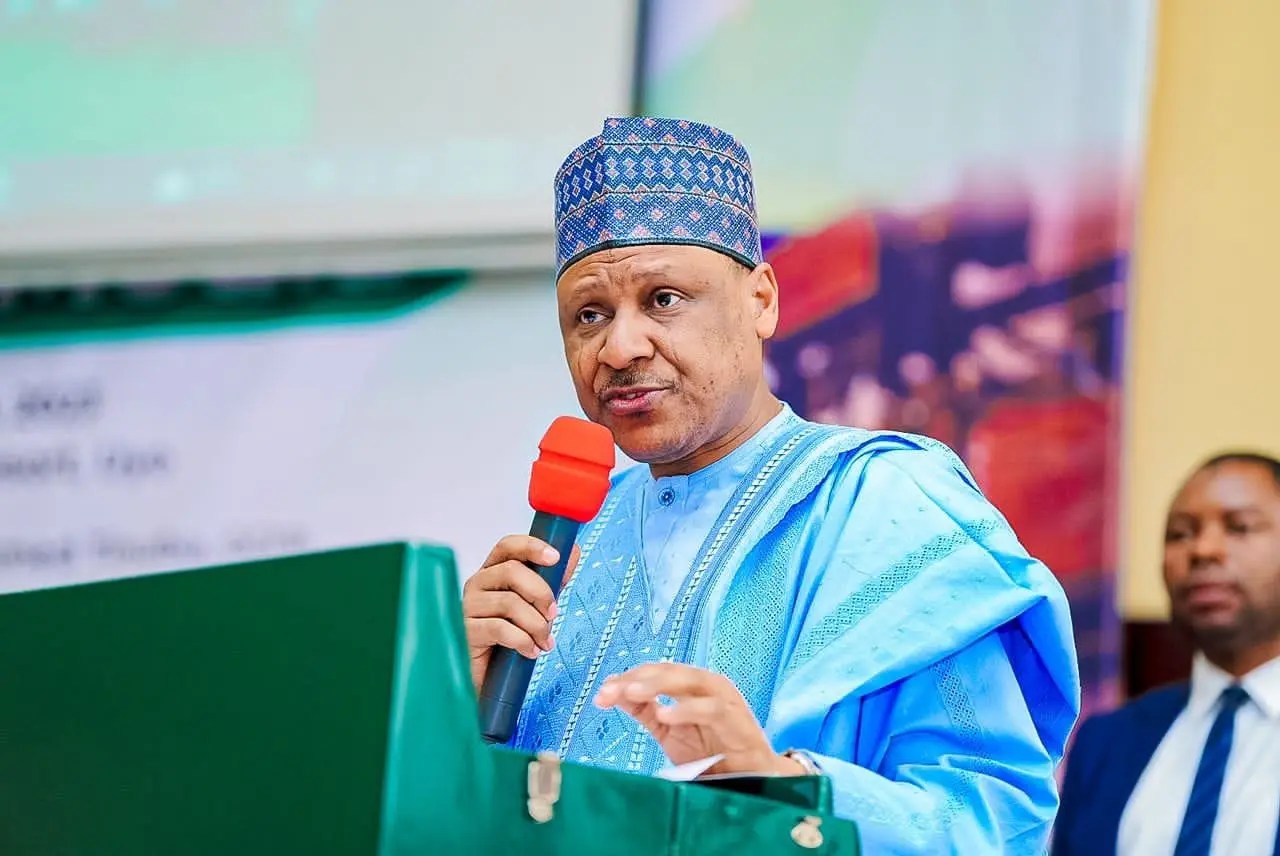
Speaking at the 2026 World Press Freedom Day commemoration held at Radio House in Abuja on Monday, Minister of Information and National Orientation, Mohammed Idris, emphasized that collective action is vital to safeguard public trust and maintain national stability.
“This administration has prioritized collaboration with media stakeholders and international partners to promote responsible journalism and counter disinformation and misinformation,” Idris stated. He reaffirmed the government’s commitment to press freedom, describing it as a fundamental right guaranteed under the Constitution.
The minister’s remarks highlighted the Tinubu administration’s efforts to foster transparency through sustained media engagement, proper implementation of the Freedom of Information Act, and significant investment in public communication platforms.
“The Federal Government fully recognizes press freedom as a fundamental right and remains committed to fostering an environment where the media can operate freely, safely, and responsibly, in accordance with democratic principles and the rule of law,” he added.
In a strong statement of support for journalists’ safety, Idris condemned all forms of intimidation and attacks against media professionals. “We condemn all forms of intimidation, unlawful harassment, or attacks against journalists. A media environment where journalists feel unsafe ultimately weakens democracy itself,” he declared.
Dr. Binyerem Ukaire, Permanent Secretary of the Federal Ministry of Information and National Orientation, who delivered the welcome address, described the World Press Freedom Day event as a crucial platform for strengthening institutional collaboration. She emphasized the importance of coordinated responses to challenges arising from the rapidly evolving digital information landscape.
“The expansion of digital platforms has introduced new complexities that require coordinated institutional responses, especially in addressing misinformation and strengthening public trust,” Ukaire noted, adding that the ministry remains dedicated to facilitating dialogue, strengthening partnerships, and promoting professionalism within Nigeria’s media space.
The government’s stance comes at a critical time when digital platforms have transformed how information is disseminated and consumed in Nigeria, creating both opportunities and challenges for media practitioners and the public. The increasing prevalence of false information has raised concerns about its potential impact on social cohesion and democratic processes in Africa’s most populous nation.
In a related development that underscores the importance of press freedom in Nigeria’s democracy, the International Press Institute (IPI) Nigeria announced plans to commission a new headquarters and Press Freedom Hub in Abuja on Wednesday, May 6, as part of activities marking World Press Freedom Day.
According to Ahmed Shekarau, IPI Nigeria’s Secretary, the facility, located along Kado Expressway in the nation’s capital, will serve as the organization’s operational base for defending press freedom and protecting journalists and media professionals throughout the country.
IPI Nigeria President, Musikilu Mojeed, elaborated on the center’s mission: “The centre will anchor our media advocacy programmes and accelerate efforts to promote press freedom and protect journalists facing threats and censorship. It will also function as a venue for periodic reviews of media freedom and journalist safety, drive policy and legal reforms to strengthen independent journalism, and foster dialogue between the media and government.”
IPI Nigeria is an affiliate of IPI Global, a network of editors, media executives, and leading journalists spanning more than 100 countries. The global organization has been at the forefront of defending press freedom for over 70 years since its founding in 1950.
The Nigerian chapter, established in the 1970s by media luminaries including the late Lateef Jakande, the late Ismaila Isa Funtua, Segun Osoba, the late Wada Maida, and Sam Amuka-Pemu, has consistently advocated for press freedom, independent journalism, and journalist safety in Nigeria’s sometimes challenging media environment.
Fact Checker
Verify the accuracy of this article using The Disinformation Commission analysis and real-time sources.

10 Comments
Addressing disinformation requires a multi-stakeholder effort. Nigeria’s plan to partner with media organizations and international partners is a sensible strategy to combat this complex issue.
Investing in public communication channels and implementing the Freedom of Information Act can help improve transparency and empower citizens to discern fact from fiction.
Combating disinformation is a significant challenge, but Nigeria’s commitment to collaboration and press freedom is encouraging. Strengthening ties between media and government is a crucial step in this battle.
Safeguarding public trust and maintaining national stability should be the top priorities when addressing the proliferation of misinformation. Nigeria’s approach appears to be heading in the right direction.
Collaborative efforts between media and government are crucial in combating the spread of disinformation. Nigeria’s plan to engage with international partners and promote responsible journalism is a step in the right direction.
Maintaining national stability and public trust should be the top priorities when addressing the growing challenge of misinformation. Nigeria’s initiatives appear to be aligned with these goals.
Establishing a collaborative approach between media and government is crucial to effectively tackle the growing challenge of disinformation. Nigeria’s efforts to foster transparency and media engagement are a step in the right direction.
Responsible journalism and public communication platforms are vital to maintaining trust and stability in the face of misinformation. This initiative aligns with the fundamental right to press freedom.
Disinformation poses a serious threat to democratic societies. Nigeria’s initiative to foster cooperation between media and government is a positive move towards tackling this complex issue.
Responsible journalism and transparent communication are essential in the fight against misinformation. Nigeria’s efforts to invest in public platforms and uphold press freedom are commendable.