


Listen to the article
Rescue Team Successfully Releases Stranded Humpback Whale into North Sea
A humpback whale that captured international attention after becoming stranded in Germany’s Baltic Sea coast for over a month has been successfully released into the North Sea, according to witnesses present during Saturday’s rescue operation.
The whale, affectionately nicknamed “Timmy” by German media, was first spotted swimming near the coastal city of Wismar on March 3, far from its natural Atlantic Ocean habitat. As weeks passed, the mammal’s health deteriorated while repeatedly becoming stranded in shallow waters, with unsuccessful attempts to guide it toward deeper seas livestreamed globally.
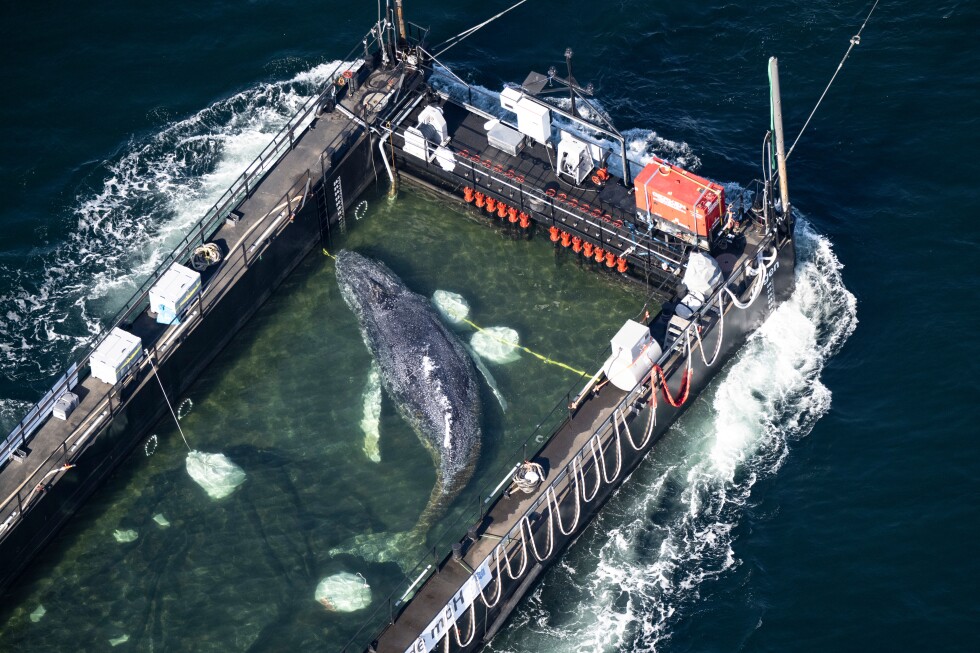
Jens Schwarck, a member of the private initiative responsible for the rescue, confirmed the whale was released around 9 a.m. local time on Saturday. According to the German news agency dpa, the release took place approximately 70 kilometers (45 miles) from the coast of Skagen, Denmark. Drone footage later showed a whale swimming and spouting water near the rescue barge, though officials have not yet confirmed whether this was definitively Timmy.
The rescue operation proceeded after receiving approval from the environment minister for Germany’s Mecklenburg-Western Pomerania state, despite some scientific experts expressing concerns that such an intervention might place too much stress on the already weakened animal.
The whale’s plight sparked significant public debate in Germany about the ethics of wildlife intervention. Some argued the animal should be allowed to die naturally without human interference, while others advocated strongly for rescue attempts. Activists even staged beach protests in Wismar calling for the whale’s liberation, showing the emotional impact the situation had on local communities.
While some marine biologists believed the whale had deliberately sought shallow waters because it was weak and needed rest, veterinarians from the private rescue initiative assessed the animal as fit enough for transport. Before release, rescuers reportedly attached a GPS transmitter to track the whale’s future movements, providing valuable data for scientists.
During its time in the Baltic Sea, Timmy suffered visibly from the low salt content of the water, developing a severe skin condition that required treatment with substantial amounts of zinc ointment. Observers noted the mammal’s distress, irregular breathing patterns, and extended periods of minimal movement.
Marine experts remain puzzled about why the humpback entered the Baltic Sea in the first place. Some theories suggest it may have become disoriented while following a shoal of herring or during seasonal migration, ultimately finding itself in an unsuitable environment far from its normal range.
The unusual situation generated extraordinary public interest across Germany and beyond. Local media outlets produced continuous livestreams documenting the whale’s condition, while online news sources sent frequent push notifications updating readers on even minor developments regarding Timmy’s health status.
The successful release represents a significant conservation effort, highlighting both the challenges and possibilities of human intervention in wildlife emergencies. While the long-term outcome for the whale remains uncertain, its journey from the shallow Baltic waters to the open North Sea offers a more promising future than its previous predicament.
Wildlife experts will continue monitoring the situation through the attached GPS device, hoping to confirm that the humpback successfully adapts to its more natural environment and potentially rejoins other members of its species in the Atlantic.
Fact Checker
Verify the accuracy of this article using The Disinformation Commission analysis and real-time sources.

7 Comments
I’m curious to know more about what may have drawn Timmy so far from his typical habitat in the Atlantic. Was it an issue with navigation, or perhaps a shift in food sources? Investigating the root causes could yield important insights for whale conservation efforts.
It’s remarkable that the rescue team was able to safely release Timmy back into the North Sea after such a protracted ordeal. Humpback whales are incredibly resilient creatures, but extended strandings can take a major toll. Kudos to all involved for their perseverance.
While it’s good news that Timmy the humpback was freed, I hope the team can determine what caused the whale to end up so far off course in the first place. Identifying and addressing any underlying environmental issues could help prevent similar incidents down the line.
That’s a good point. Understanding the factors that led to this stranding will be key to protecting humpbacks and other marine life going forward.
It’s heartening to see the collaborative effort to save this whale. Humpbacks are such majestic creatures, and it’s encouraging that the rescue team persevered until Timmy could be safely released. Hopefully this whale can now continue its migration without further incident.
Yes, the teamwork and dedication shown here is truly admirable. Rescues like this require a lot of coordination and expertise to pull off successfully.
Glad to hear the rescue team was able to free Timmy the humpback whale and guide it back to the open waters of the North Sea. Whales can get disoriented and stranded, so this was likely a challenging but important operation to ensure the whale’s safety.