


Listen to the article
Iraq’s Parliament Elects Nizar Amidi as President Amid Regional Tensions
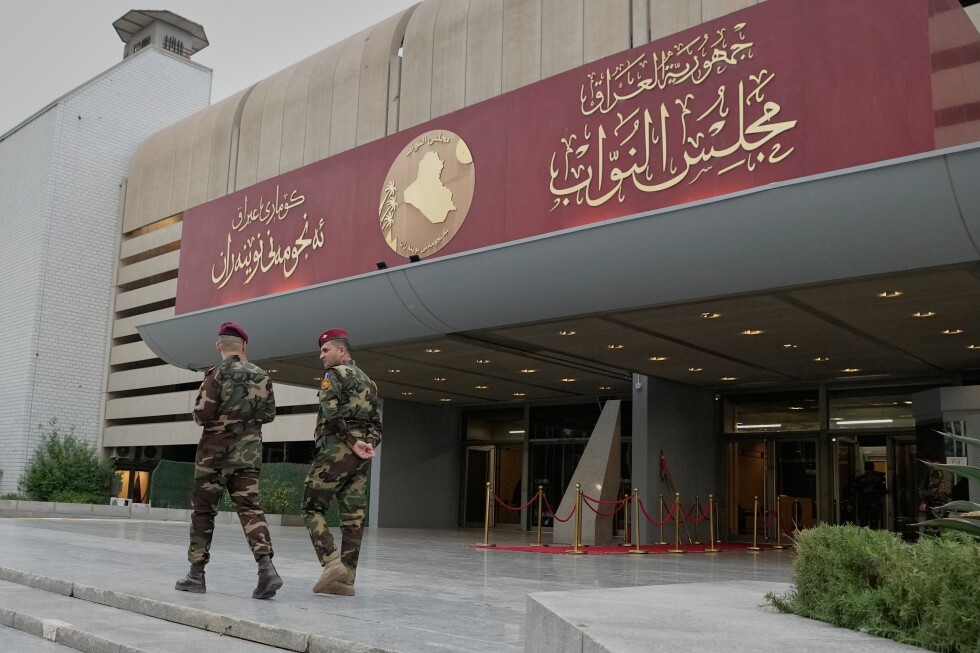
Iraq’s parliament voted Saturday to elect Nizar Amidi as the country’s new president, ending a five-month political stalemate following parliamentary elections that failed to produce a decisive majority. Amidi, a political official with the Patriotic Union of Kurdistan party, secured the position after two rounds of voting in Baghdad.
The presidential election comes at a critical moment for Iraq, which finds itself caught in the crossfire of escalating regional conflicts. The country has been significantly affected by the ongoing U.S.-Israeli war against Iran, with Iran-backed militias launching attacks on U.S. bases, diplomatic facilities, and critical energy infrastructure within Iraqi territory. These attacks have prompted retaliatory airstrikes by the U.S. and Israel targeting militia positions, some of which have resulted in casualties among Iraqi military personnel.
The conflict has had severe economic consequences for Iraq, as Iran’s closure of the Strait of Hormuz has largely halted oil exports, the lifeblood of the Iraqi economy. This disruption threatens to deepen Iraq’s economic challenges at a time when the country is still recovering from decades of war and instability.
Amidi’s election followed a competitive process in which he defeated several candidates, including current Foreign Minister Fuad Hussein, who was backed by the rival Kurdistan Democratic Party. In the first round of voting, Amidi secured 208 votes, far ahead of his closest competitor, Muthanna Amin Nader of the Kurdistan Islamic Union bloc, who received just 17 votes. With no candidate achieving the required two-thirds majority, a second round was held in which Amidi emerged victorious with 227 votes.
The election adheres to Iraq’s established political convention, which designates the presidency to a Kurdish politician, while the more influential prime minister position is reserved for a Shiite and the parliamentary speaker role for a Sunni. This power-sharing arrangement is designed to distribute leadership among Iraq’s major ethnic and religious groups.
Amidi brings significant political experience to the role, having previously served as an aide to two former presidents, Jalal Talabani and Fouad Massoum. Born in northern Iraq’s Dohuk province, he is an engineer by training and a member of the political bureau of the Patriotic Union of Kurdistan.
The presidential vote took place more than two months after the constitutional deadline, which requires a president to be elected within 30 days following the first session of a newly elected parliament. This delay reflects the complicated nature of Iraq’s fractured political landscape.
According to Iraq’s constitution, Amidi now has 15 days to task the nominee of the largest parliamentary bloc with forming a new government. The Shiite Coordination Framework, a coalition of Iran-allied parties that represents the dominant bloc in parliament, announced in January its intention to nominate former Iraqi Prime Minister Nouri al-Maliki for the premiership, despite opposition from Washington.
The bloc now faces a critical decision about whether to proceed with al-Maliki’s nomination or select an alternative candidate. Current Caretaker Prime Minister Mohammed Shia al-Sudani had previously been al-Maliki’s primary challenger for the nomination before stepping aside.
Political analysts note that whoever assumes the prime minister position will face the daunting task of navigating Iraq through a complex web of regional tensions while addressing pressing domestic challenges, including economic recovery, infrastructure development, and security concerns.
As Iraq moves forward with its government formation process, the international community watches closely, recognizing the strategic importance of stability in this pivotal Middle Eastern nation that borders several conflict zones and holds significant oil reserves.
Fact Checker
Verify the accuracy of this article using The Disinformation Commission analysis and real-time sources.

9 Comments
Iraq’s proximity to the US-Israel conflict with Iran puts it in a difficult position. The new president will need to find a way to balance relations with all regional powers and protect Iraq’s sovereignty and economic interests.
Maintaining neutrality and avoiding getting drawn into the regional power struggle will be critical for the new Iraqi president. Careful diplomacy will be key.
The election of Nizar Amidi as president comes at a critical juncture for Iraq, with the country facing the fallout from the escalating US-Israel conflict with Iran. His ability to balance regional powers and stabilize the economy will be key.
Interesting to see a Kurdish politician take the presidency in Iraq amid the ongoing regional tensions. Given Iraq’s strategic location and role in regional conflicts, this will be a crucial leadership position to navigate the challenges ahead.
The election of Nizar Amidi as president is a significant development, but the real test will be his ability to address Iraq’s pressing economic and security challenges in the face of regional tensions. Steady leadership will be crucial.
Iraq’s economy is heavily dependent on oil exports, so the closure of the Strait of Hormuz will be a major challenge for the new president. Diversifying the economy and finding alternative energy sources could help mitigate the impact.
Agreed, Iraq needs to reduce its reliance on oil exports and develop a more diversified economy. This will be a key priority for the new administration.
The election of a Kurdish politician as president is an interesting development, given the historical tensions between Kurds and the central Iraqi government. Amidi will need to navigate these delicate regional dynamics carefully.
Absolutely, managing the relationship between the Kurdish region and the central government will be a major challenge for the new president. Promoting unity and cooperation will be crucial.