


Listen to the article
Nobel Laureate Mohammadi Remains Defiant in Iranian Prison as Opposition Seeks Unifying Voice
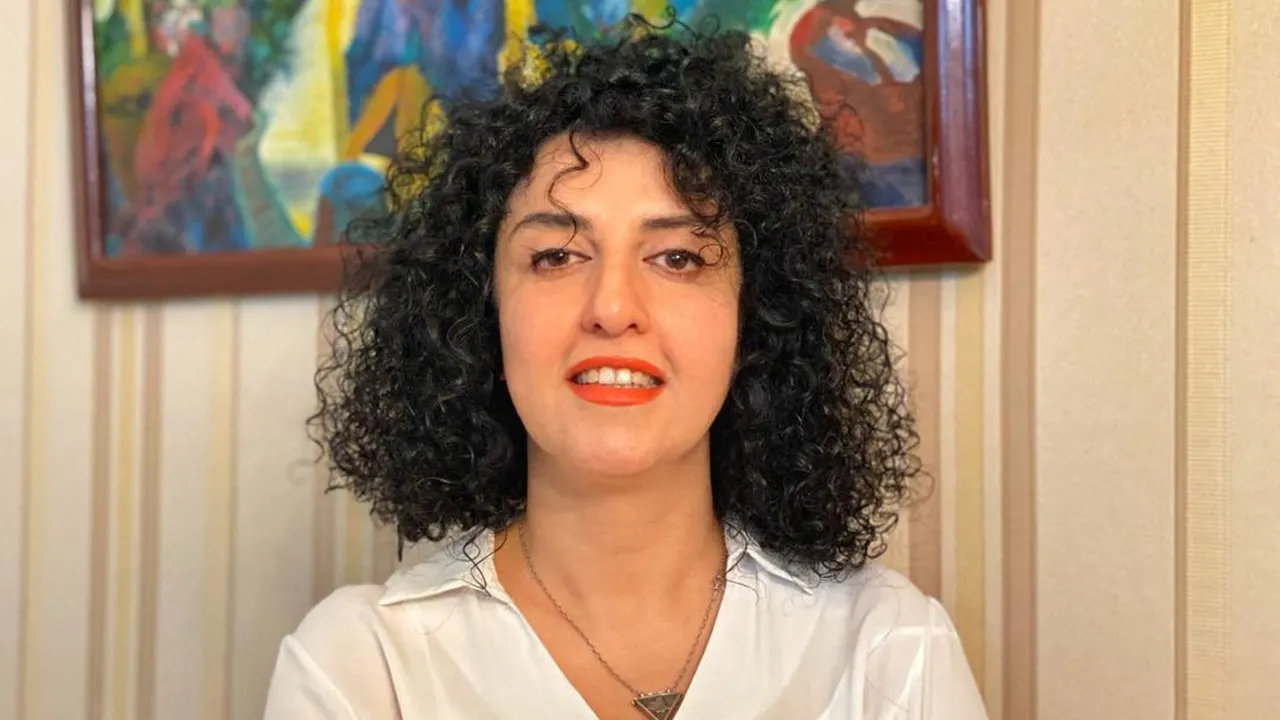
Iran’s jailed Nobel Peace Prize laureate Narges Mohammadi remains “physically battered but politically unbroken” according to her husband, even as she endures harsh imprisonment after what he describes as a brutal arrest and beating.
“Narges is a human rights activist and an advocate for civil society,” her husband, Taghi Rahmani, told Fox News Digital in an exclusive interview from his exile in Europe. “In mobilizing society, and in organizing and shaping civil institutions, she is an active and courageous woman.”
At a critical moment when Iran’s ruling establishment faces the aftermath of U.S. and Israeli strikes, economic collapse and intensified crackdowns, Mohammadi has emerged as a powerful symbol of resistance. Unlike many opposition figures who operate from exile, her legitimacy stems from her suffering within the system rather than from dynastic connections or factional politics.
Mohammadi, awarded the 2023 Nobel Peace Prize while imprisoned, has spent decades as one of Iran’s most prominent human rights activists. Trained as an engineer and later working as a journalist, she served as vice president of the Defenders of Human Rights Center, founded by fellow Nobel laureate Shirin Ebadi. She gained international recognition for her campaigns against compulsory hijab laws, solitary confinement, prisoner abuse and the death penalty.
According to Rahmani, Mohammadi’s condition has deteriorated dramatically in recent months.
“Narges is currently detained in Zanjan prison,” he said. “She was arrested in Mashhad during the month of Dey (around January) and was severely beaten. During her arrest, she received numerous blows, resulting in severe injuries to her chest, head, body and lungs.”
Rahmani revealed that prison medical authorities had determined she should be transferred for treatment under her own physician’s supervision, but Iran’s Ministry of Intelligence has refused the transfer and insists she remain in Zanjan.
“Spiritually and mentally, Narges remains steadfast,” he added. “She believes the Islamic Republic is not desirable for the Iranian people, and advocates for a system based on freedom, human rights and open relations with the world. Physically, however, she has sustained severe trauma and urgently requires medical attention.”
Iran’s Fractured Opposition
As international attention focuses on Iran, questions about who could effectively lead opposition to the regime are intensifying. Maryam Shariatmadari, a prominent activist from Iran’s “Girls of Revolution Street” movement who was sentenced to prison in 2018 for publicly removing her hijab, explained to Fox News Digital that Iran’s opposition comprises two main camps.
“The first group considers the 1979 revolution a disaster and seeks a return to Iran’s previous path,” she said. The second includes “those who participated in the revolution but later became opposition figures after being excluded from power,” including former revolutionaries, reformists, communist factions and groups such as the Mujahedin-e Khalq (MEK).
This distinction helps explain why Reza Pahlavi, the exiled son of Iran’s last shah, maintains unique recognition among many anti-regime Iranians despite decades outside the country. Foreign policy analyst Lisa Daftari noted, “Inside Iran, Pahlavi remains one of the only opposition figures with broad name recognition, and his message clearly resonated during the January protests.”
Pahlavi himself recently criticized European politicians and journalists for ignoring the scale of Iranian suffering. Following appearances across Europe, he stated, “My visit had one objective: to give a voice to the millions of Iranians held hostage by the Islamic Republic… But I can now say with confidence that silencing, that censorship is not just happening at the hands of the regime in Iran, but by the international and particularly the European media.”
However, analysts note that while Pahlavi represents dynastic memory and explicit regime-change politics, Mohammadi represents something fundamentally different – a figure who embodies endurance under the current regime and whose legitimacy stems from her ongoing resistance within Iran itself.
Challenges to Opposition Movement
Rahmani warned that current conditions within Iran make any mass uprising extraordinarily difficult. “As you know, war serves as an excuse to suppress domestic forces within a country,” he said. “This war has now increased the intensity of the regime’s actions against the opposition.”
He argued that despite internal divisions, the Islamic Revolutionary Guard Corps has effectively consolidated power, militarized the streets and severely weakened civil society.
“The Islamic Republic has practically taken control of the streets during wartime and has severely weakened Iran’s civil society, which is the guarantor of democracy. In our opinion, this war, under these conditions, is not to the benefit of Iran, nor to the benefit of the Iranian people.”
This represents the defining challenge for Iran’s opposition today: not simply finding a leader, but surviving long enough under extraordinary repression for one to emerge. Whether Mohammadi can become that figure remains uncertain, but according to her husband, she continues to believe Iran’s future can be different, even from behind prison walls.
The Iranian mission to the United Nations did not respond to requests for comment.
Fact Checker
Verify the accuracy of this article using The Disinformation Commission analysis and real-time sources.

16 Comments
The crackdowns and economic challenges facing Iran’s ruling establishment underscore the importance of voices like Mohammadi’s in the battle for human rights and civil liberties.
I hope the international community continues to shed light on her case and the plight of other political prisoners in Iran.
This article highlights the importance of courageous individuals like Narges Mohammadi in standing up for civil society and human rights, even in the face of brutal repression.
Her actions have the potential to inspire and unite Iran’s opposition at a critical juncture.
Mohammadi’s status as a Nobel Laureate adds significant weight to her voice and the cause she represents. Her continued struggle from within prison walls is truly remarkable.
It will be interesting to see if her high-profile recognition can help unite Iran’s fragmented opposition and amplify their demands for reform.
The article paints a powerful picture of Mohammadi’s defiance and continued activism from within the Iranian prison system. This is a testament to her unwavering commitment to her principles.
I hope her story helps shine a light on the ongoing human rights abuses in Iran and galvanizes international support for her cause.
The article highlights how Mohammadi’s legitimacy stems from her personal sacrifices, rather than political connections. This makes her a unifying figure that the opposition could rally around.
I’m curious to see if her continued activism from prison can indeed help unite Iran’s fragmented opposition at this critical moment.
Mohammadi’s story is a sobering reminder of the sacrifices that human rights defenders often make. Her resilience in the face of such adversity is truly admirable.
I wonder if her Nobel Prize recognition will bring more attention and support to her cause.
Narges Mohammadi’s steadfast resolve, even from prison, is truly inspiring. As a Nobel Laureate and prominent human rights activist, she has become a powerful symbol of resistance for Iran’s opposition.
Her continued fight for civil society and human rights in the face of harsh imprisonment is a testament to her bravery and principles.
The article highlights the immense personal sacrifices that Mohammadi has made in her fight for human rights and civil society in Iran. Her resilience is truly inspiring.
I hope her story can serve as a rallying cry for the Iranian opposition and bring greater international attention to the repression they face.