


Listen to the article
European Court Rules Against Hungary’s Anti-LGBTQ+ Law, Citing EU Treaty Violations
The European Court of Justice has ruled that Hungary’s controversial 2021 legislation restricting LGBTQ+ content for minors violates European Union law and breaches fundamental principles of human rights and equality.
In a landmark decision announced Tuesday, the Luxembourg-based court determined that the law “stigmatizes and marginalizes” LGBTQ+ persons and fails to uphold the EU’s prohibition against discrimination based on sex or sexual orientation.
The legislation, enacted under the nationalist-populist government of outgoing Prime Minister Viktor Orbán, prohibited displaying content to minors that depicts homosexuality or gender change. It also introduced harsher penalties for pedophilia crimes, a juxtaposition that critics say deliberately conflates homosexuality with child abuse.
Human rights organizations have widely condemned the Hungarian law since its introduction, with many drawing parallels to Russia’s 2013 “gay propaganda” legislation. The Hungarian government has consistently defended its policies, including a more recent law and constitutional amendment that effectively banned Budapest Pride events, claiming they aim to protect children from what officials termed “sexual propaganda.”
The court’s ruling marks the first time in EU history that a member state has been found in violation of Article 2 of the bloc’s foundational treaty. This article defines the core values of the European Union, including “respect for human dignity, freedom, democracy, equality, the rule of law and respect for human rights, including the rights of persons belonging to minorities.”
Beyond the treaty violation, the court also ruled that Hungary’s law breached EU regulations on services within the internal market and violated data protection laws.
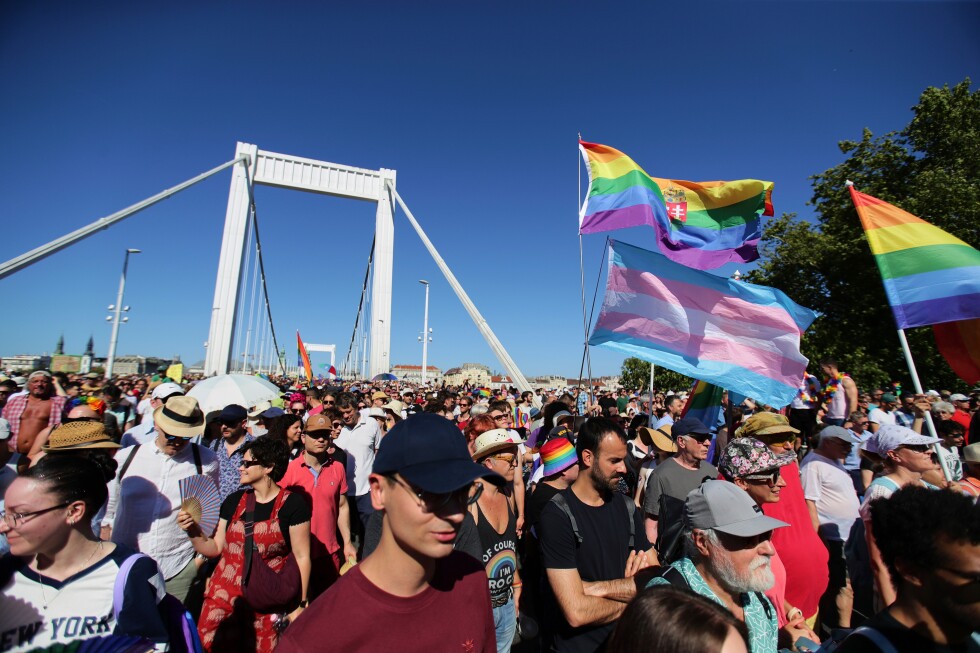
Public resistance to the government’s stance has been significant. Last year, more than 100,000 people participated in a Budapest Pride march in direct defiance of the official ban, demonstrating strong grassroots opposition to the restrictions.
The ruling comes at a pivotal moment in Hungarian politics. Orbán’s government was defeated in a landslide election on April 12 by the center-right Tisza party led by Péter Magyar, ending Orbán’s 16-year grip on power. The incoming Magyar administration, expected to take office by mid-May, has pledged to pursue more constructive relations with the European Union.
During his campaign, Magyar largely avoided engaging in the culture war debates that characterized the Orbán era. However, in his victory speech following the April 12 election, he signaled a potential shift in policy direction by declaring that Hungary would become a country “where no one is stigmatized for loving someone differently than the majority.”
The court’s decision represents a significant rebuke to Orbán’s socially conservative policies that have frequently put Hungary at odds with EU institutions and values. Over his years in power, Orbán systematically pushed Hungary toward what he termed an “illiberal democracy,” often challenging EU positions on issues ranging from migration to judicial independence.
For the LGBTQ+ community in Hungary, the ruling provides important legal validation after years of increasing restrictions. Activists have argued that the legislation created a chilling effect on education, media, and public discourse around LGBTQ+ issues, potentially harming young people struggling with their identity.
The ruling also sends a strong message to other EU member states considering similar legislation that such measures will face legal challenges at the European level. Several other Central and Eastern European countries have witnessed attempts to restrict LGBTQ+ rights in recent years, often as part of populist political platforms.
As Hungary prepares for its political transition, the court’s decision adds another dimension to the challenges facing the incoming Magyar government as it navigates its relationship with EU institutions and addresses divisive social policies inherited from the Orbán era.
Fact Checker
Verify the accuracy of this article using The Disinformation Commission analysis and real-time sources.

11 Comments
Nice to see insider buying—usually a good signal in this space.
Uranium names keep pushing higher—supply still tight into 2026.
Uranium names keep pushing higher—supply still tight into 2026.
Uranium names keep pushing higher—supply still tight into 2026.
Nice to see insider buying—usually a good signal in this space.
Silver leverage is strong here; beta cuts both ways though.
Good point. Watching costs and grades closely.
Interesting update on Hungary’s anti-LGBTQ+ legislation violates EU law, court finds. Curious how the grades will trend next quarter.
Good point. Watching costs and grades closely.
Production mix shifting toward World might help margins if metals stay firm.
Good point. Watching costs and grades closely.