


Listen to the article
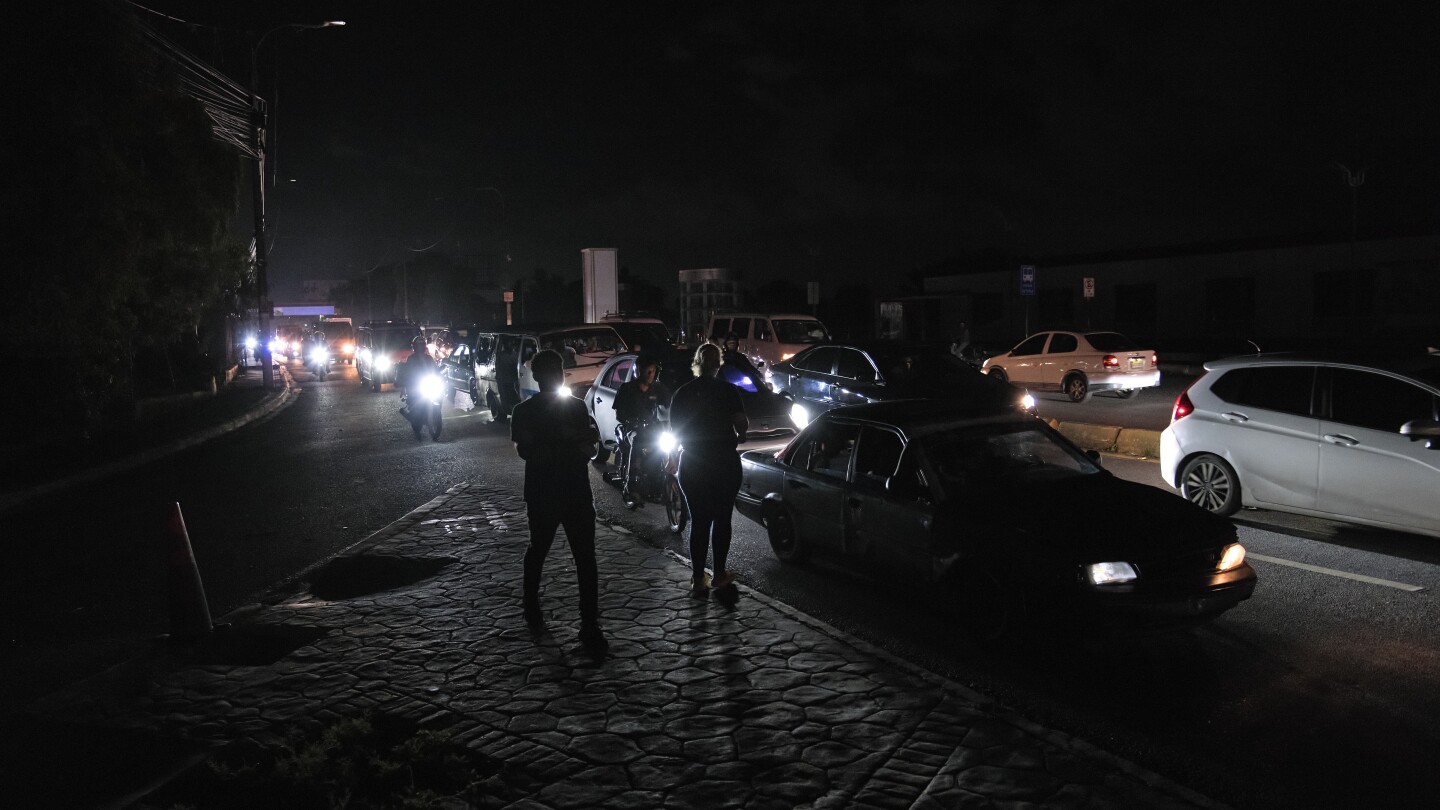
Nearly 11 million people in the Dominican Republic were plunged into darkness on Tuesday as a rare nationwide blackout paralyzed the Caribbean nation, disrupting transportation systems, businesses, and daily life across the country.
The widespread power outage, which began unexpectedly on Tuesday morning, was attributed to a failure in the country’s electrical transmission system. According to the Dominican Electricity Transmission Company, a decentralized state agency, the blackout originated with shutdowns at generation units in San Pedro de Macorís and the Quisqueya Power Plant, triggering a cascade of failures throughout the nation’s power infrastructure.
By Tuesday evening, Energy Minister Joel Santos reported that only about 15 percent of the system had been restored, signaling a potentially lengthy recovery process. “We’ll restore power little by little,” Santos told reporters, noting that transportation and healthcare facilities would receive priority during the restoration efforts.
The exact cause of the initial failure remains under investigation. “The electrical system is complex and requires in-depth analysis before a final report can be issued,” Santos explained, emphasizing the need for a thorough investigation before drawing conclusions.
The blackout brought Santo Domingo’s mass transit systems to a standstill, including the capital’s metro and aerial cable cars. Some passengers, stranded mid-journey, were forced to evacuate trains and walk through tunnels alongside railway tracks to reach their destinations.
“Traffic is already chaos in eastern Santo Domingo,” said Tomás Ozuna, a 37-year-old IT worker, as he prepared for his night shift. “I don’t know how we’ll work.”
While hospitals, banks, and larger institutions were able to switch to backup generators, many homes and small businesses were left without alternatives. Lissa Fernández, a 26-year-old bank employee, expressed concern about her commute home. “The metro isn’t running. I have to figure out how to get there,” she said.
For small business owners like Leonel Encarnación, who operates a barbershop in Santo Domingo, the economic impact was immediate. “Ever since the air conditioning shut down, the clients left,” he lamented, highlighting the immediate financial toll on local entrepreneurs who rely on daily cash flow.
The Dominican Republic’s energy infrastructure has long faced challenges with reliability and capacity. The country’s energy supply is heavily dependent on imported fossil fuels, with oil and its derivatives serving as the primary energy source. Coal and natural gas make up significant portions of the remainder, while renewable sources like solar, wind, and hydroelectric power contribute smaller amounts to the national grid, according to the International Energy Agency.
This dependency on imported fuels has made the Dominican Republic vulnerable to international price fluctuations and supply chain disruptions. In recent years, the government has announced plans to diversify its energy matrix and strengthen its transmission infrastructure, though progress has been incremental.
Nationwide blackouts of this magnitude are unusual in the Dominican Republic, where localized power outages are more common. The country, which shares the island of Hispaniola with Haiti, has the largest economy in the Caribbean and Central American region, with tourism serving as a crucial economic pillar.
The timing of this blackout could potentially impact the tourism sector if prolonged, as the country welcomes millions of visitors annually to its beaches, resorts, and historical sites. Tourism accounts for approximately 8.4 percent of the country’s GDP.
Government officials have not yet provided an estimated timeline for complete power restoration, but the process is expected to continue throughout the night and possibly into the following days as crews work to bring generation units back online systematically.
Fact Checker
Verify the accuracy of this article using The Disinformation Commission analysis and real-time sources.

8 Comments
Wow, a nationwide blackout in the Dominican Republic – that’s a huge disruption. I hope the crews can restore power quickly and safely. Failures in the electrical transmission system can be really tricky to diagnose and fix.
Agreed, this will likely be a lengthy process to fully restore the grid. Prioritizing critical infrastructure like healthcare is the right call.
A countrywide blackout is really concerning. I wonder what the underlying cause was – equipment failure, cybersecurity issues, or something else? Hopefully the investigation can shed some light on the root problem.
Good point. Identifying the root cause is key to preventing future outages. The electrical system does sound complex, so it may take time to determine exactly what happened.
Nationwide blackouts are always worrying, especially in a country that relies so heavily on electricity. I hope the authorities can get a handle on this situation quickly and figure out the root cause.
A 15% restoration rate after a day is concerning. This seems like it could be a prolonged outage. I wonder if they have backup generators or alternative power sources they can utilize in the meantime.
Good point. Critical infrastructure like hospitals and transportation will likely need to rely on backup power until the main grid is fully restored.
This must be really disruptive for businesses and daily life in the Dominican Republic. Losing power on that scale is a major challenge. I hope the restoration efforts can get things back up and running quickly and safely.