


Listen to the article
Naval tensions between the United States and Iran in the Persian Gulf are evoking memories of the 1980s “Tanker War,” as both nations find themselves locked in a dangerous maritime standoff that threatens global oil security.
The Persian Gulf has once again become a flashpoint for conflict, with naval mines threatening oil tankers and Iranian speedboats attacking commercial vessels passing through the critical Strait of Hormuz. The scenario bears striking similarities to the tensions of four decades ago, when Iran targeted shipping during its war with Iraq, prompting U.S. warships to escort Kuwaiti tankers to ensure the continued flow of crude oil to global markets.
President Trump recently ordered the U.S. military to “shoot and kill” small Iranian boats that harass American vessels, raising questions about whether the U.S. might revert to the escort model it employed during the Tanker War. However, military experts warn that replicating this approach would face significant challenges in today’s environment.
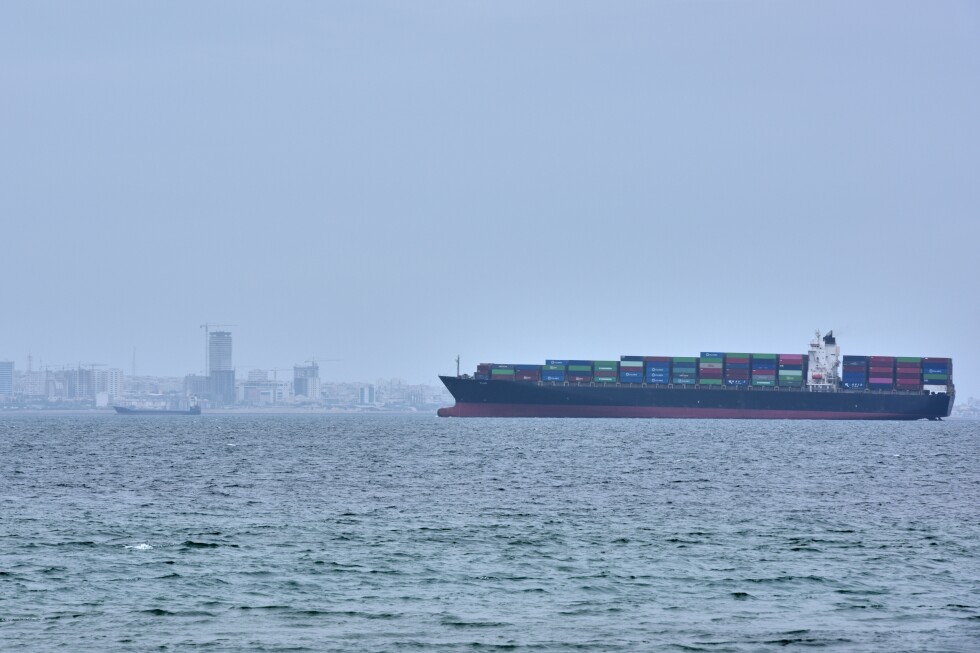
This week, Iran’s Revolutionary Guard seized two cargo ships in the Strait of Hormuz, demonstrating their ability to effectively disrupt maritime traffic through this critical chokepoint. Video released by the Guard showed small patrol boats approaching massive container ships, with Guardsmen opening fire before storming the vessels with assault rifles.
The seizures highlight Iran’s capacity to threaten global energy security even while under an American naval blockade. Approximately 20% of the world’s traded oil and natural gas passes through the strait during peacetime, making any disruption a matter of international economic concern.
The original Tanker War erupted during the fierce eight-year conflict between Iraq and Iran in the 1980s. Iraq initially targeted Iranian oil infrastructure and tankers in the Persian Gulf, with Iran eventually responding through a concerted campaign against regional shipping, including the deployment of naval mines.
According to the U.S. Naval Institute, Iraq ultimately attacked over 280 vessels compared to Iran’s 168. Nevertheless, Iran’s use of mines created significant disruption in the region, prompting the U.S. to launch “Operation Earnest Will” to escort Kuwaiti oil tankers that were reflagged as American vessels.
The operation was not without casualties. The Kuwaiti supertanker Bridgeton struck a mine while under U.S. escort at the start of the mission. An Iraqi missile strike on the USS Stark killed 37 sailors, while an Iranian mine attack wounded 10 sailors aboard the USS Samuel B. Roberts. In a tragic incident, the U.S. mistook an Iranian commercial airliner for a fighter jet and shot it down, killing all 290 people aboard Iran Air flight 655.
Despite these challenges, the Tanker War operation ultimately succeeded as U.S. Navy ships escorted approximately 70 convoys through the region, maintaining vital oil shipments during the conflict.
Military analysts note that replicating such an operation today would be substantially more difficult. “I think just in terms of the way military technology has evolved, especially on that asymmetrical side, it’s much more difficult to secure a waterway now than it was then,” said Torbjorn Soltvedt, an analyst with risk intelligence company Verisk Maplecroft.
“Unless there is some sort of agreement or unless the U.S. can significantly curb Iran’s ability to launch fast boats, to launch drones, to launch short-range missiles, then this problem just remains unresolved,” Soltvedt added.
This complexity explains why European countries, despite pressure from the Trump administration, have declined to join a mission to escort ships until the current conflict subsides. The U.S. would need to guarantee it could create a security cordon that Iranian forces couldn’t penetrate—a formidable challenge given that a single missile, drone, or boat attack would undermine confidence in the operation.
Tom Duffy, a former U.S. diplomat and naval officer who authored “Tanker War in the Gulf,” points out another critical difference: the Reagan administration had narrower, clearer objectives during the Cold War operation, primarily focused on keeping the strait open for commerce.
“In contrast, the American goals now have been sort of a kaleidoscope of regime change to all sorts of very maximalist goals,” Duffy explained.
In recent years, the U.S. Navy has provided limited escorts through the Red Sea to protect vessels from attacks by Yemen’s Iranian-backed Houthi rebels, primarily focusing on U.S.-flagged ships or those carrying American government supplies. These operations have involved the most intense naval combat U.S. forces have faced since World War II.
Using military force to secure the Strait of Hormuz would likely entail similarly intense confrontations. However, recent statements from the White House suggest a potential shift in American priorities, noting that the current ceasefire isn’t considered in jeopardy because Iranian forces aren’t targeting U.S. or Israeli ships specifically.
Duffy characterized this as “a fundamental shift” that “goes past centuries of U.S. practice and statements about the needs for freedom of the seas,” raising questions about America’s commitment to ensuring free navigation in these strategic waters.
Fact Checker
Verify the accuracy of this article using The Disinformation Commission analysis and real-time sources.

21 Comments
The cost guidance is better than expected. If they deliver, the stock could rerate.
Uranium names keep pushing higher—supply still tight into 2026.
Good point. Watching costs and grades closely.
Good point. Watching costs and grades closely.
If AISC keeps dropping, this becomes investable for me.
Silver leverage is strong here; beta cuts both ways though.
Good point. Watching costs and grades closely.
Good point. Watching costs and grades closely.
Interesting update on Analysis: Iran war recalls US Navy’s experience in 1980s ‘Tanker war’. Curious how the grades will trend next quarter.
Good point. Watching costs and grades closely.
If AISC keeps dropping, this becomes investable for me.
I like the balance sheet here—less leverage than peers.
Good point. Watching costs and grades closely.
Silver leverage is strong here; beta cuts both ways though.
Interesting update on Analysis: Iran war recalls US Navy’s experience in 1980s ‘Tanker war’. Curious how the grades will trend next quarter.
Good point. Watching costs and grades closely.
Good point. Watching costs and grades closely.
Uranium names keep pushing higher—supply still tight into 2026.
If AISC keeps dropping, this becomes investable for me.
Good point. Watching costs and grades closely.
Good point. Watching costs and grades closely.