


Listen to the article
Beijing’s most prominent “wolf warrior” diplomat has caused a stir in China after appearing in a Volvo advertisement, raising questions about the evolving role of the country’s aggressive foreign policy spokespeople.
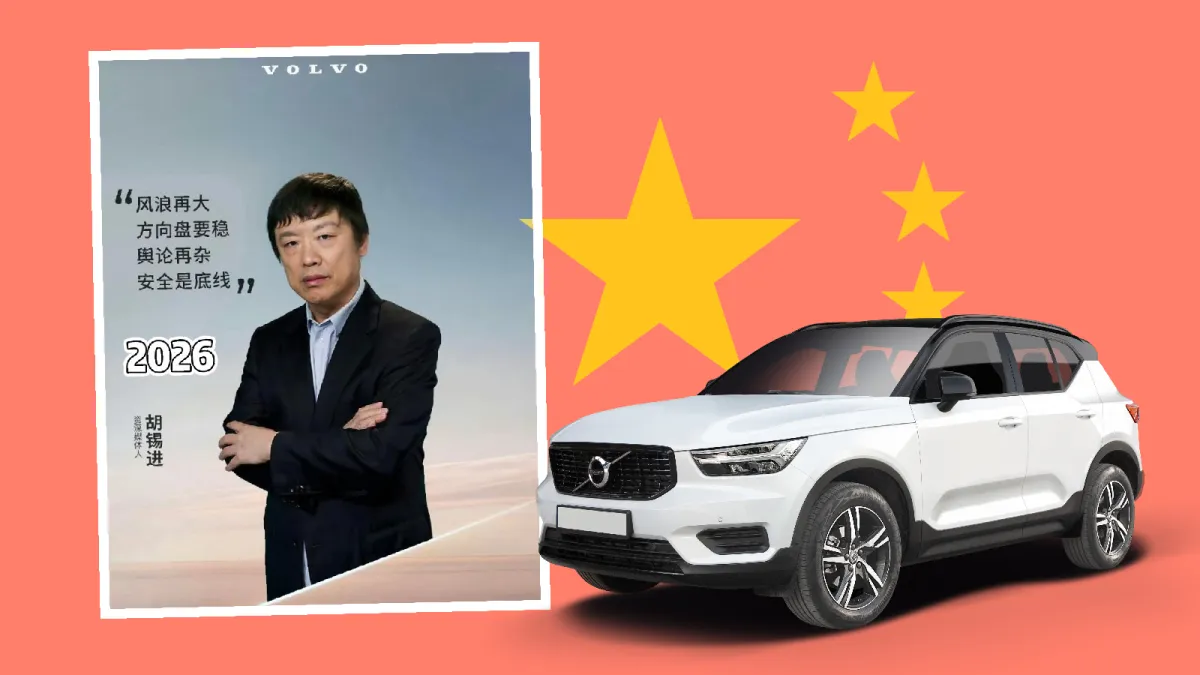
Zhao Lijian, formerly the face of China’s confrontational diplomatic approach during his tenure as foreign ministry spokesman, appears in a recent commercial for the Swedish carmaker’s luxury EX90 electric SUV. The advertisement shows Zhao driving through Beijing’s streets while discussing his career journey and family life in surprisingly personal terms.
The appearance marks a striking shift for a man who built his reputation on fiercely defending China’s interests and launching verbal attacks against Western countries. During his time as foreign ministry spokesman between 2020 and 2023, Zhao became notorious for his combative press conferences and inflammatory social media posts, including promoting conspiracy theories that the U.S. military brought COVID-19 to China.
Zhao’s commercial debut has sparked widespread discussion on Chinese social media platforms. Many users expressed surprise at seeing such a high-profile political figure endorsing a foreign luxury brand. “From wolf warrior to car salesman,” commented one user on Weibo, China’s Twitter-like platform, while others questioned whether current government officials should participate in commercial advertising.
The term “wolf warrior” emerged from a patriotic Chinese film series and became shorthand for the aggressive diplomatic style embraced by Beijing during heightened tensions with Western powers. This approach represented a dramatic departure from China’s traditional diplomatic principle of keeping a low profile on the global stage.
Political analysts suggest Zhao’s commercial appearance could signal a subtle shift in China’s foreign policy approach. “President Xi Jinping appears to be moderating China’s diplomatic tone as economic challenges mount at home,” said Dr. Zhang Wei, an international relations expert at Peking University. “Having former wolf warriors adopt softer public personas might be part of a broader strategy to improve China’s international image.”
Zhao was transferred from his high-profile spokesperson role to a less visible position at the Department of Boundary and Ocean Affairs in 2023, a move widely interpreted as a demotion. His reassignment coincided with China’s efforts to repair strained relationships with Western countries amid domestic economic challenges and global supply chain disruptions.
Volvo, owned by Chinese automotive conglomerate Geely since 2010, likely calculated that Zhao’s appearance would generate publicity in the critical Chinese luxury vehicle market. The company has invested heavily in electric vehicle production in China as part of its global sustainability strategy. However, featuring a controversial political figure in marketing materials represents an unusual approach for an international brand.
“Volvo is walking a fine line here,” noted Sarah Johnson, an automotive industry analyst. “They’re leveraging Zhao’s recognition factor in China while potentially risking backlash in Western markets where his confrontational diplomatic stance was not well-received.”
The advertisement carefully avoids political topics, instead portraying Zhao as a family man who values safety and technological innovation. This sanitized presentation has drawn criticism from human rights advocates who argue it normalizes a figure who defended controversial policies, including Beijing’s approach to Hong Kong and Xinjiang.
The Chinese government has not officially commented on Zhao’s commercial appearance. However, state media outlets have covered the advertisement neutrally, suggesting tacit approval of his new public role.
The incident highlights the complex relationship between politics, commerce, and public diplomacy in contemporary China. As Beijing recalibrates its international approach amid economic headwinds and geopolitical tensions, the rehabilitation of controversial figures like Zhao into more approachable public personas may become more common.
Whether this represents a genuine softening of China’s diplomatic approach or merely a cosmetic change remains to be seen. What is clear, however, is that the boundaries between government service, personal branding, and commercial endorsements continue to blur in China’s evolving political landscape.
Fact Checker
Verify the accuracy of this article using The Disinformation Commission analysis and real-time sources.

14 Comments
Zhao Lijian, the notorious ‘wolf warrior’ diplomat, in a Volvo advertisement – that’s certainly an unexpected pairing. I wonder if this is a calculated move to soften China’s diplomatic image or just a unique marketing collaboration.
Good point. It will be worth following to see if this is a one-off or part of a broader effort by China to present a more approachable face on the global stage.
This Volvo ad featuring Zhao Lijian is quite a departure from his usual combative public persona. I’m curious to see if this is a one-off or part of a broader effort to soften China’s diplomatic image.
You raise a good point. It will be interesting to see if this is a strategic shift or just an isolated marketing tactic by Volvo.
The appearance of China’s ‘wolf warrior’ diplomat Zhao Lijian in a Volvo ad is certainly an intriguing development. I’m curious to understand the strategic rationale behind this unusual collaboration and what it might signal about China’s diplomatic approach.
Agreed, it’s a surprising move that has generated a lot of discussion. It will be interesting to see if this is a calculated shift in China’s messaging or just a unique marketing tactic by Volvo.
Interesting to see Zhao Lijian, the famous ‘wolf warrior’ diplomat, appearing in a Volvo ad. I wonder if this signals a shift in China’s foreign policy approach or if it’s just a strategic business move for Volvo.
It’s definitely a surprising move, given Zhao’s reputation for aggressive rhetoric. Perhaps he’s trying to humanize himself and the Chinese government’s messaging.
The appearance of Zhao Lijian, China’s outspoken ‘wolf warrior’ diplomat, in a Volvo ad is certainly an intriguing development. It will be interesting to see if this signals a broader shift in China’s diplomatic approach.
Absolutely, it’s a striking contrast to Zhao’s typical combative style. I’m curious to see if this is a one-off attempt at humanizing China’s foreign policy or part of a larger strategic direction.
Seeing Zhao Lijian, the infamous ‘wolf warrior’ diplomat, in a Volvo commercial is quite a surprising development. I’m curious to understand the strategic rationale behind this unusual pairing.
Agreed, it’s a curious move that seems to clash with Zhao’s public persona. I wonder if Volvo is hoping to tap into a new market segment in China with this endorsement.
The appearance of the ‘wolf warrior’ diplomat in a Volvo ad seems like a curious juxtaposition. I wonder if this is a calculated move to present a more approachable face of China’s foreign policy.
It’s certainly an unexpected move that has generated a lot of discussion. It’ll be worth following to see if this is part of a broader shift or just a one-off collaboration.