


Listen to the article
Iran’s Visual Propaganda Evolution: From Murals to Memes in US Conflict
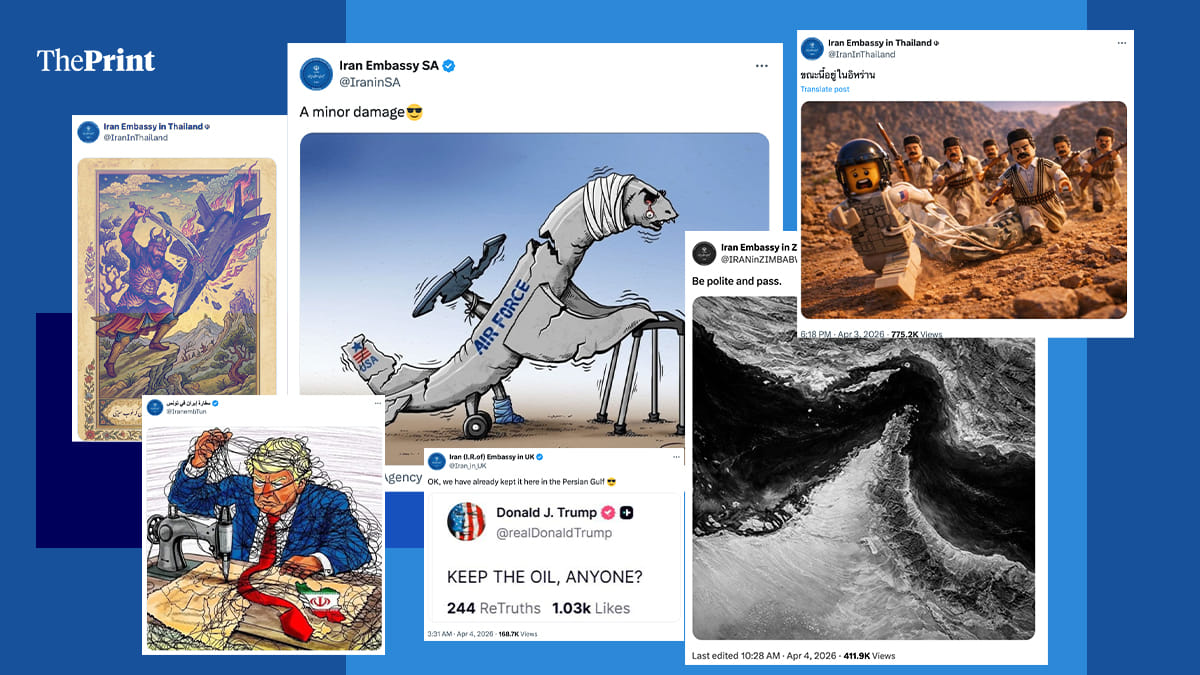
Iran’s use of meme warfare in its ongoing hostilities with the United States has captured significant attention across social media platforms and news outlets in recent weeks. This digital strategy represents the latest chapter in the country’s long-established tradition of visual propaganda directed against Western adversaries.
According to scholar Christiane Gruber’s influential research, the Iranian state has historically relied on visual media such as murals to reinforce narratives of religious nationalism, anti-Americanism, and sacrificial martyrdom. Since the 1979 revolution, these state-sponsored visual elements have served to legitimize the Iranian government by positioning it as a bulwark against American imperialism.
Some of the most striking examples of this tradition can be found on the walls of the former US embassy in Tehran, which was seized by the Islamic Revolutionary Guard Corps (IRGC) following the revolution. One prominent mural depicts the Statue of Liberty as an ominous metal-faced figure, effectively inverting America’s iconic symbol of freedom into a representation of imperial tyranny. Another shows a pistol bearing the US flag intruding upon traditional Iranian design motifs, symbolizing the perceived American threat to Iran’s cultural heritage.
These images reveal the Iranian state’s deeply antagonistic view of the United States as a malevolent superpower threatening Iran’s sovereignty. Another embassy mural reinterprets the Great Seal of the United States into a caricature meant to depict moral decay and military interventionism.
During the devastating Iran-Iraq War (1980-1988), which claimed approximately one million lives, state-commissioned murals played a crucial role in commemorating the sacrifice of young soldiers. A notable example from this period features 13-year-old Mohammad Hossein Fahmideh, who was glorified after killing several Iraqi soldiers in a suicide bombing mission. Scholars have observed how the Iranian state effectively leveraged concepts of Shia martyrdom to facilitate the recruitment of thousands of young soldiers during this bloody conflict.
This narrative of martyrdom has resurfaced prominently in the current Iran-US tensions, with Iranian embassies sharing posts honoring both senior leaders and young soldiers killed by US and Israeli strikes. Analysts note that this deeply entrenched cultural framework of sacrificial martyrdom provides the regime with a steady supply of willing combatants.
While themes of martyrdom and anti-Americanism remain central to Iran’s visual rhetoric, the tone of its propaganda has evolved significantly in the digital age. Contemporary Iranian social media posts not only depict the US as the enemy but also mock former President Donald Trump’s perceived erratic statements and hyperbolic threats.
The current government has also humanized the concept of martyrdom by extending it to civilian casualties. Iranian embassies have highlighted incidents like the bombing of a school in Minab that reportedly resulted in over 170 deaths, including more than 100 children. Through colorful AI-enhanced digital artwork, these posts implicitly condemn what they portray as the enemy’s inhumanity by emphasizing the innocence of the victims.
In Tehran’s busy Enghelab Square, large-scale digital murals are now projected onto a wide-screen billboard. Unlike the static physical murals of previous decades, this digital medium allows for dynamic, changing displays that memorialize fallen leaders, civilians, and children – adapting traditional propaganda methods for the digital era.
Iran’s campaign has also attempted to extract diplomatic soft power from its military actions. Social media accounts have displayed images of Iranian missiles allegedly signed with “Thank You” messages to people from India, Pakistan, Germany, and Spain for their perceived support. Another post showed a missile bearing the message “In memory of victims of Epstein Island” – efforts that appear designed to recast Iran’s international image from pariah state to respected nation while simultaneously portraying the US as corrupt.
Despite these propaganda efforts, there are limitations to the state’s narrative control. In recent years, Iranian artists and activists have developed their own counter-narratives challenging the regime. This artistic resistance was particularly evident during the 2022 protests when Iranian women took to the streets with calls of “zan, zendegi, azadi” (women, life, and freedom).
At times, the aesthetic façade of Iran’s visual propaganda has faltered to reveal deeper issues. Israeli media outlets have accused Iran of disseminating antisemitic content, including imagery depicting Israel as a rat – a visual trope with origins in Nazi propaganda.
For now, however, Iran’s digital propaganda campaign appears to be reinforcing a growing perception that while the US may have inflicted significant military losses on Iran, Tehran is claiming a moral victory by positioning itself as a courageous underdog confronting a global superpower. In this narrative framing, Iran’s social media strategy effectively obscures the repressive aspects of the Iranian state while amplifying criticism of American hegemony.
Fact Checker
Verify the accuracy of this article using The Disinformation Commission analysis and real-time sources.

7 Comments
Iran’s shift from revolutionary murals to meme-based propaganda is a noteworthy shift. It demonstrates the regime’s adaptability in leveraging new media to shape global perceptions and counter US influence.
Fascinating how Iran’s visual propaganda has evolved from revolutionary murals to modern meme warfare. Reflects a savvy digital strategy to counter US influence and bolster the regime’s nationalist narratives.
The evolution of Iran’s visual propaganda, from the 1979 revolution to today’s meme campaigns, offers a fascinating window into the country’s strategic communication. It’s a complex blend of tradition and digital innovation.
The Statue of Liberty mural is a striking inversion of America’s symbol of freedom. It’s a powerful example of how Iran has long leveraged visual propaganda to position itself against ‘imperial tyranny’.
Yes, the mural’s subversion of the Statue of Liberty is a provocative artistic statement. It speaks volumes about Iran’s staunch anti-American sentiment and desire to delegitimize US global influence.
Iran’s transition from analog to digital propaganda, from murals to memes, reflects the changing media landscape. It’s a savvy adaptation to reach new audiences and amplify its message in the social media age.
Absolutely. Meme warfare is a shrewd tactic to spread Iran’s narratives more virally across online platforms. It shows the regime’s willingness to evolve its propaganda techniques for maximum impact.