


Listen to the article
Iran’s AI-Generated Memes: When Propaganda Meets Internet Culture
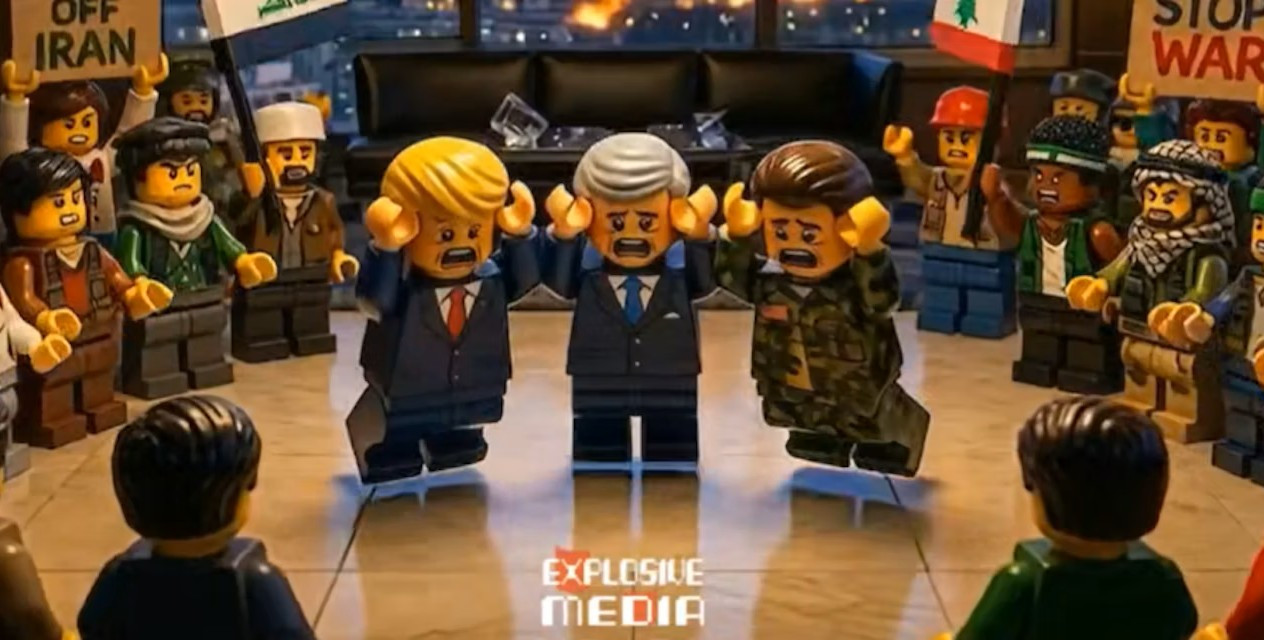
A Lego-style Iranian military commander raps over a gangster beat: “Our inbox is flooded with Americans saying they don’t watch the news. They listen to our songs instead since your media is full of sh*t.”
This striking opening line from an AI-generated video represents a sophisticated new front in information warfare. Since late February, pro-Iranian media groups—most notably the X account Explosive Media—have been flooding social media with AI-generated content mocking Donald Trump, Benjamin Netanyahu, and U.S. foreign policy. These videos have accumulated billions of views online, representing what experts are now calling “slopaganda.”
What makes this campaign particularly effective is that it doesn’t resemble traditional state propaganda. Despite the spokesperson for Explosive Media admitting to the BBC that the Iranian government is a client, the content feels native to internet culture—fast-paced, humorous, and designed specifically for virality.
The videos frequently contain disinformation and antisemitic tropes, but these elements are embedded within content that captures the current internet zeitgeist, making them particularly difficult to identify as foreign propaganda.
Media analyst Emerson Brooking notes that this content is uniquely effective because it reaches “politically uninvested people who otherwise wouldn’t have engaged with war-related content.” This represents a significant shift in propaganda strategy—instead of targeting those actively seeking news about the Middle East, these memes mimic everyday internet culture to reach casual social media users.
Humor serves as the primary delivery mechanism. The videos function as Trojan horses, drawing viewers in with recognizable imagery, pop culture references, and catchy music while simultaneously communicating narratives about American foreign policy, governmental dysfunction, and corruption.
This strategy exploits a fundamental weakness in how political information circulates today. While press conferences, policy statements, and traditional news coverage reach people already paying attention to geopolitics, these AI meme videos target everyone else—the millions whose understanding of international conflicts extends no further than what appears in their social feeds.
The success of Iran’s approach stems from shifts in how audiences, particularly younger demographics, have come to consume political content over the past two decades. Shows like Jon Stewart’s “The Daily Show” conditioned a generation of Americans—and increasingly British and European viewers—to process political news through satire rather than traditional journalism.
Late-night comedians like Stephen Colbert, John Oliver, and Seth Meyers further reinforced the notion that humor isn’t merely supplementary to political commentary but potentially a more honest form of it. This created an expectation that political content should be entertaining and that comedy is a legitimate vehicle for political understanding.
Iran’s strategy also mirrors techniques already proven successful by Western populist politicians. Donald Trump’s campaign appearances on comedy podcasts, his garbage truck and McDonald’s drive-through stunts, and his prolific use of memes aren’t distractions from his political strategy—they are his strategy. Through these methods, Trump has mobilized millions of typically disengaged voters who had stopped consuming political news in traditional forms.
“Iran is using popular culture against the No.1 pop culture country, the United States,” notes Nancy Snow, an American scholar of propaganda. The careful selection of the Lego aesthetic, rap beats, 1980s pop covers, and specific joke styles demonstrates a precise understanding of what effectively captures attention in the Western digital landscape.
The most concerning aspect of this phenomenon is what it reveals about our current information environment. The line between political entertainment and political persuasion has blurred significantly. When propaganda becomes indistinguishable from satire, and when satirical content accumulates millions of views while traditional news struggles for attention, our collective ability to identify and evaluate political messaging deteriorates.
Ultimately, those most vulnerable to this new form of propaganda are precisely those who believe they aren’t following geopolitical events at all—casual social media users who see an entertaining video in their feed without recognizing its origins or intent. As our media consumption habits continue to evolve, so too will the sophisticated methods used to influence public opinion through seemingly innocuous entertainment.
Fact Checker
Verify the accuracy of this article using The Disinformation Commission analysis and real-time sources.

8 Comments
While the use of AI to create engaging content is an innovative tactic, the report of disinformation and antisemitic tropes is concerning. We should be cautious about consuming media that may have ulterior motives, even if it is entertaining.
This ‘slopaganda’ approach highlights how social media can be leveraged to push narratives, sometimes with questionable intentions. It will be interesting to see how platforms and users respond to this evolving information warfare tactic.
Absolutely. The blending of entertainment and propaganda is a concerning trend that requires careful scrutiny. Fact-checking and media literacy will be crucial in navigating this landscape.
I’m curious to see how this AI-generated ‘slopaganda’ campaign evolves and what impact it may have. Memes can be a powerful tool for shaping narratives, but we must be vigilant about the underlying agendas.
You raise a good point. The viral nature of these memes makes them an effective way to spread information, whether true or false. It will be important to critically analyze the content and sources behind these campaigns.
This is an intriguing development in the realm of propaganda and information warfare. The use of AI-generated content that mimics internet culture is a clever tactic, but one that should be approached with caution and critical thinking.
Interesting use of AI to push propaganda. While the memes may be engaging, we should be wary of the disinformation and antisemitic elements they contain. This propaganda technique blurs the line between entertainment and influence.
The report on Iran’s use of AI-generated memes to spread its messaging is a fascinating look at the changing face of information warfare. While the content may be engaging, we must remain vigilant about the potential for manipulation and disinformation.