


Listen to the article
Leaked Russian Propaganda Documents Reveal African Disinformation Campaign, but Overstate Kremlin Influence
A cache of 75 secret Russian memos has exposed an extensive disinformation campaign across Africa by the Wagner Group and its successor organization, known as “The Company.” The documents, mostly written in 2024 and recently leaked, detail a continent-wide social media operation that paid websites and journalists to spread pro-Kremlin narratives about Russia’s war with Ukraine, anti-French sentiment, and various conspiracy theories.
Independent investigators, including Africa Confidential, Forbidden Stories, The Continent, All Eyes On Wagner, and France 24, have been examining the leaks since October. The documents were obtained from the Estonian investigative outlet Delfi and the Organized Crime and Corruption Reporting Project.
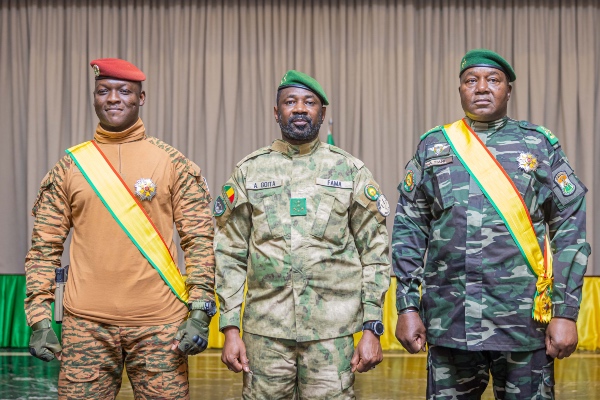
While the propaganda efforts are real, analysts say the memos greatly exaggerate Russian influence over policy decisions in African nations, particularly in the Sahel region where military juntas have taken power in Mali, Burkina Faso, and Niger.
“The Company” claims to have initiated or shaped key policies of these Sahelian juntas, now united in the Alliance des États du Sahel (AES). However, detailed analysis shows these assertions are either false or greatly inflated, despite being intended for internal use within the Russian organization that absorbed Wagner’s operations after the death of its leader Yevgeny Prigozhin in August 2023.
Wagner’s assets have been redistributed among “The Company” and other entities like the “Africa Corps” and “African Politology,” controlled by Russian intelligence services. The documents boast about influencing the creation of the AES, formed in 2023 when the three countries were facing pressure from the Economic Community of West African States (Ecowas).
In reality, the AES was formed independently, drawing on elements of the pre-existing G5 Sahel alliance as a defensive response to Ecowas pressure. The Sahelian juntas capitalized on anti-French sentiment after seizing power, but this was their own initiative rather than Moscow’s doing.
The memos also claim that Russian specialists drafted Mali’s new mining code adopted in 2023, which they say led to the revision of contracts with Western, Turkish, Chinese, and Australian companies. However, mining experts confirm that Mali has neither nationalized mining companies nor expelled them, nor has it shown favoritism toward Russian firms.
Instead, the driving force behind Mali’s mining reforms is Mamou Touré, a respected Malian mining expert trained with Randgold in South Africa. His consultancy, Iventus Mining, is credited with many of the tactics used in negotiations with mining corporations and the revised taxation regime. While some Russian mercenaries are believed to control artisanal mining sites, there is no evidence of Kremlin-driven policy.
Russia’s security assistance has also fallen short. One of Moscow’s primary attractions as an African ally was its security expertise, unconstrained by human rights considerations that limit UN or European forces. But this advantage has quickly dissipated in Mali.
“Russia has difficulty providing what Mali needs,” a top analyst told Africa Confidential. “The jihadists in Mali are not small groups of peasants with a few guns and fewer bullets, like those in Central African Republic. They are well-organized, well-supplied, and difficult for Mali’s weak army to fight.”
Wagner fighters and Malian government soldiers suffered a humiliating defeat in northern Mali in August 2024, when dozens were killed in an ambush near the Algerian border. Recent reports indicate Russians are now limited to escorting road transport on vital routes to Bamako.
The Kremlin’s influence has been further diminished by the United States’ diplomatic pivot. Nicholas Checker, head of the US Bureau of Africa Affairs, visited Bamako in February, and by March, the US had lifted sanctions on senior military junta leaders previously punished for human rights abuses.
The Trump administration’s approach focuses on counterterrorism cooperation with the juntas while reducing Russian influence, setting aside concerns about human rights and democratic transitions. This direct engagement challenges Russia’s plans to create an anti-Western front in Africa.
Perhaps the clearest evidence of Moscow’s failing African strategy is the trial of two Russian operatives in Angola, exposed by the BBC in March. Political consultant Igor Ratchin and translator Lev Lakshtanov face charges of espionage, subversion, and terrorism while working for “African Politology,” another front for “The Company.”
The leaked documents list dozens of propaganda articles placed in Angolan media, but President João Lourenço has since pivoted toward the West after being courted by the Trump White House and American businesses.
“Once the US has decided to engage with African leaders, it has far deeper pockets than the Kremlin, and President Vladimir Putin simply cannot compete,” noted an analyst.
Similar dynamics are playing out in Chad, where President Mahamat Idriss Déby Itno has resisted Russian overtures despite Moscow’s efforts to support him in a rigged presidential election. While French troops were finally expelled in January 2025, this wasn’t due to Russian influence.
Chad has remained outside the AES, primarily due to clan politics and personal conflicts with other Sahelian leaders. Unlike other countries in the region, Chad already has a well-trained officer corps and army, making Russian mercenaries unnecessary. Additionally, Chad has found a more valuable patron in the United Arab Emirates, which uses the country as a key conduit for arms and medical assistance to Sudan’s Rapid Support Forces.
As Washington recalibrates its approach to the region and competes more directly for influence, Moscow’s grand designs for Africa – already exaggerated in the leaked documents – may ultimately collapse under the weight of their own ambition.
Fact Checker
Verify the accuracy of this article using The Disinformation Commission analysis and real-time sources.

14 Comments
The leaked Russian memos provide a concerning glimpse into the Kremlin’s coordinated propaganda campaign across Africa. However, it’s reassuring to see that independent analysts are scrutinizing the claims and finding the impact may be exaggerated.
Yes, this is a good reminder to be cautious about accepting claims of influence at face value, especially when it comes to disinformation efforts. Maintaining a critical, evidence-based approach is key to understanding the true dynamics at play.
The leaked Russian memos provide valuable insights into the Kremlin’s attempts to manipulate narratives and sow division in Africa through social media. While concerning, it’s reassuring that the impact on military juntas may not be as significant as claimed.
Exactly, keeping a clear-eyed, evidence-based view on the real-world effects of these propaganda campaigns is crucial. Fact-checking and rigorous analysis are key to understanding the true extent of their influence.
This report on Russia’s disinformation campaign in Africa is a sobering reminder of the scale of the challenge. However, it’s good to see that independent investigators are scrutinizing the claims and finding the impact may be overstated.
Yes, it’s critical to maintain a skeptical, fact-based approach when assessing the reach and influence of foreign propaganda efforts. Relying on credible, independent sources is essential.
This report highlights the scale and sophistication of Russia’s disinformation efforts in Africa, but also suggests their impact may be overstated. It’s important to rely on independent investigations to separate the hype from the reality on the ground.
Absolutely. Maintaining a balanced, nuanced perspective is essential when assessing the reach and effects of foreign influence operations. Careful analysis and fact-checking are crucial to understanding the true dynamics at play.
This report sheds light on the scale of Russia’s social media propaganda in Africa, but also suggests the impact on military juntas may be overstated. It’s important to rely on rigorous, fact-based analysis to separate hype from reality when it comes to foreign influence operations.
Absolutely. Maintaining a nuanced, evidence-based perspective is crucial when assessing the real-world effects of disinformation campaigns. Independent investigations and fact-checking are essential to understanding the true dynamics at play.
The leaked memos provide valuable insight into Russia’s coordinated social media efforts to spread pro-Kremlin narratives across Africa. While the propaganda is real, it’s reassuring to know the impact on policy decisions may be exaggerated.
Absolutely, transparency around these kinds of influence operations is key. Careful analysis is needed to separate the hype from the actual influence on the ground.
Interesting to see how Russia’s disinformation campaign is being exposed in Africa. It’s concerning that they’re trying to sow division and conspiracy theories, but good to hear the impact on military juntas may be overstated.
Yes, it’s important to scrutinize propaganda efforts and understand their real influence, rather than just the claimed impact. Fact-checking and independent investigations are crucial.