


Listen to the article
North Korea launched multiple short-range ballistic missiles off its eastern coast Sunday, according to South Korean and Japanese officials, further escalating regional tensions days after the UN nuclear watchdog warned of “very serious” advances in Pyongyang’s nuclear weapons program.
The missiles, fired from North Korea’s Sinpo area, each traveled approximately 140 kilometers (87 miles) before landing in the sea, South Korea’s Joint Chiefs of Staff reported. South Korean officials convened an emergency National Security Council meeting to address the launches, which occurred just hours before President Lee Jae Myung departed for diplomatic visits to India and Vietnam.
Both the United States and Japan confirmed detecting the missile tests. The U.S. Indo-Pacific Command reaffirmed its commitment to defending American interests and regional allies, while Japan’s Defense Ministry lodged a strong protest against Pyongyang, stating that the launches violated UN Security Council resolutions and threatened international peace.
Sinpo, the launch site, holds strategic significance as a major North Korean shipbuilding center specializing in submarine construction. South Korean military analysts are investigating whether the missiles were fired from submarines, land-based platforms, or both. If confirmed as submarine-launched ballistic missiles, these would mark North Korea’s first such tests in four years.
The potential submarine capability represents a particularly concerning development for regional security, as underwater launches are significantly more difficult to detect in advance. Last year, North Korea unveiled a nuclear-powered submarine under construction, signaling its intent to expand its naval strike capabilities.
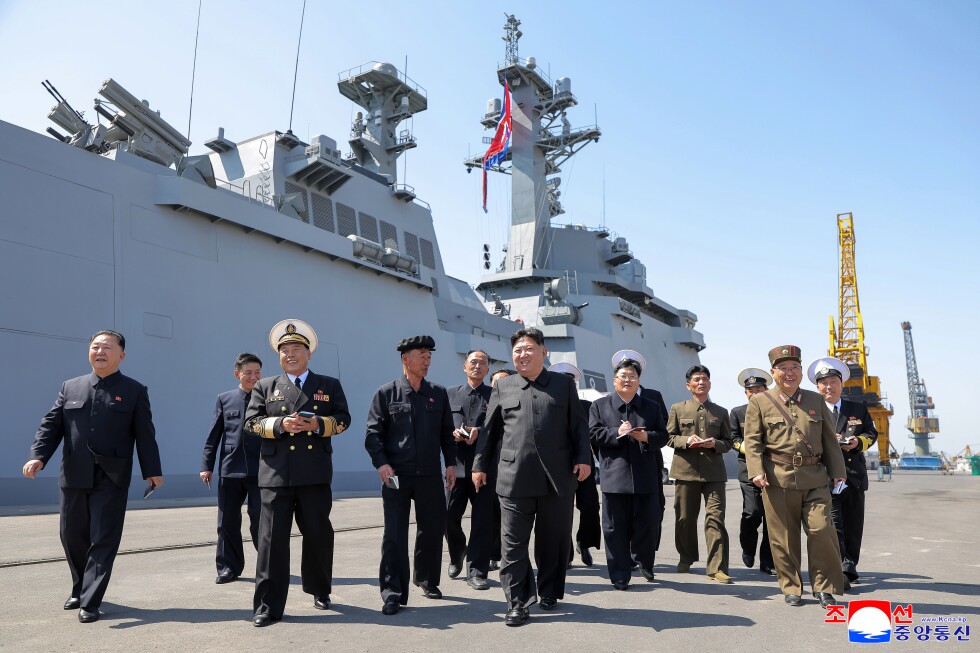
Sunday’s tests add to an already active year of weapons demonstrations by the isolated nation. Last week, North Korean state media reported that leader Kim Jong Un personally supervised missile tests from a destroyer. In previous weeks, the regime tested ballistic missiles equipped with cluster-bomb warheads and other new weapons systems. Last month, North Korea announced successful tests of an upgraded solid-fuel engine designed for missiles capable of reaching the United States mainland.
These escalating military activities come amid a diplomatic stalemate. Kim Jong Un has prioritized expanding his nuclear and missile arsenals since his high-profile nuclear negotiations with former U.S. President Donald Trump collapsed in 2019. Recently, Kim has signaled openness to resuming dialogue with Trump but insists Washington must abandon preconditions demanding North Korean denuclearization.
The timing of these tests may have broader diplomatic implications. Trump is scheduled to meet with Chinese President Xi Jinping in Beijing next month for a rescheduled summit. Some analysts believe North Korea’s recent military activities aim to strengthen its negotiating position, anticipating that the Trump-Xi meeting could create new diplomatic opportunities for Pyongyang.
Adding to concerns, International Atomic Energy Agency Director General Rafael Grossi warned on Wednesday that his agency has confirmed “a rapid increase” in activities at North Korea’s nuclear manufacturing facilities. Speaking to reporters in Seoul, Grossi characterized these developments as indicating “a very serious increase” in North Korea’s nuclear weapons production capabilities.
These observations align with assessments from independent analysts who have documented expansion at North Korea’s main Yongbyon nuclear complex and the construction of additional uranium enrichment sites in recent years. Last September, South Korea’s Unification Minister Chung Dong-young claimed that North Korea was operating four uranium enrichment facilities that run continuously.
The intensifying missile tests and nuclear activities reflect Pyongyang’s determination to advance its weapons programs despite international sanctions and diplomatic isolation. As regional powers monitor these developments closely, concerns grow about North Korea’s expanding arsenal and its implications for stability in Northeast Asia and beyond.
Fact Checker
Verify the accuracy of this article using The Disinformation Commission analysis and real-time sources.

9 Comments
This is a concerning development, as North Korea’s missile tests continue to heighten regional tensions. While the reported range of these missiles may be relatively short, any advancement in their weapons capabilities is worrying. It will be important to closely monitor the situation and encourage dialogue to reduce the risks of miscalculation or further escalation.
I agree, these missile launches are a clear violation of UN resolutions and pose a threat to stability in the region. Sustained diplomatic efforts will be crucial to find a peaceful resolution to this longstanding conflict.
North Korea’s continued missile tests are deeply troubling. The international community must remain vigilant and united in addressing this issue through diplomatic channels. However, military posturing and saber-rattling from any side are unlikely to resolve the underlying tensions. A more nuanced, patient approach focused on confidence-building and conflict resolution is needed.
While the short-range nature of these latest missile tests may limit their immediate impact, North Korea’s steady progress in advancing its weapons capabilities is alarming. Robust monitoring and verification efforts, along with renewed diplomatic initiatives, will be essential to ensure the denuclearization of the Korean peninsula and lasting peace in the region.
I agree, continued monitoring and diplomacy are key. However, the international community must also be prepared to respond firmly to any further provocations or escalations from North Korea. A balanced approach of deterrence and dialogue is needed.
This latest round of missile tests by North Korea is a concerning reminder of the fragility of the security situation in the region. Although the reported range of these missiles may be limited, the broader context of North Korea’s nuclear and missile programs is deeply troubling. Sustained, coordinated international pressure and diplomacy will be essential to address this complex challenge.
North Korea’s latest missile tests are a concerning development that warrant close monitoring and a coordinated international response. While the short-range nature of these missiles may limit their immediate impact, the broader context of North Korea’s nuclear and missile programs remains a significant threat to regional and global security. Sustained diplomatic efforts, combined with a credible deterrent posture, will be essential to addressing this complex challenge.
North Korea’s missile launches, while short-range, are a clear violation of UN resolutions and a source of regional instability. The international community must remain vigilant and united in its response, leveraging diplomatic channels to de-escalate tensions and work towards a peaceful resolution. Unilateral actions or rhetoric that escalate the situation further should be avoided.
I agree, a measured, diplomatic approach is crucial. While firm responses may be necessary, the priority should be on finding ways to re-engage North Korea in meaningful negotiations and confidence-building measures that address the root causes of this conflict.