


Listen to the article
Oil prices surged early Sunday as ongoing tensions between the United States and Iran continued to disrupt tanker traffic through the critical Strait of Hormuz, reversing much of Friday’s sharp decline.
U.S. crude oil jumped 6.4% to $87.90 per barrel within an hour of trading resumption on the Chicago Mercantile Exchange, while Brent crude, the international benchmark, rose 5.8% to $95.64 per barrel.
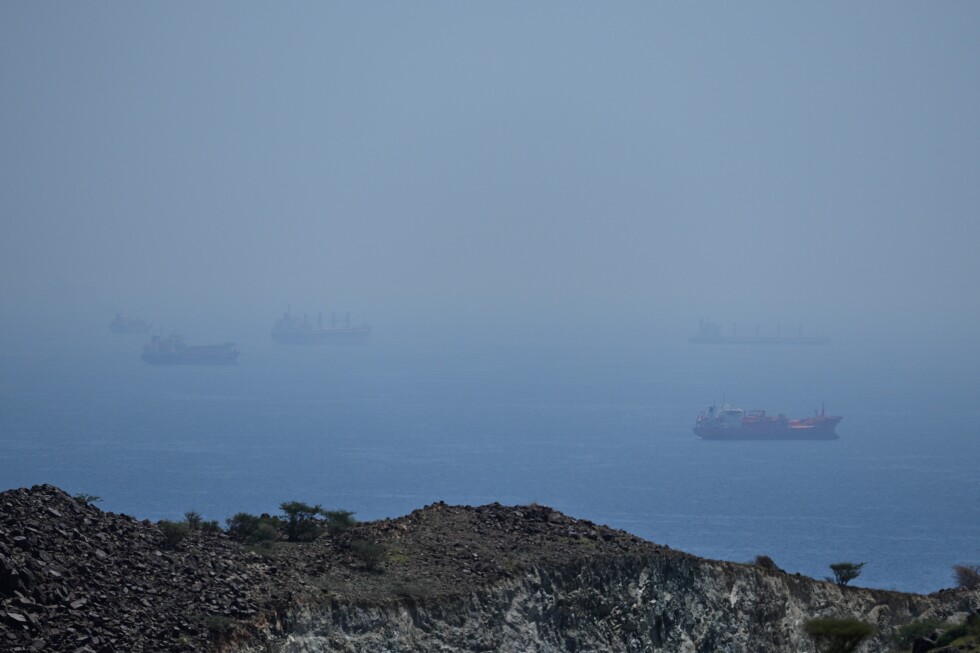
The volatile price movement follows a chaotic weekend in the Persian Gulf. Oil prices had plummeted more than 9% on Friday after Iran announced plans to fully reopen the strait, which carries roughly one-fifth of the world’s oil supply, to commercial traffic.
However, Tehran quickly reversed that decision on Saturday following President Donald Trump’s declaration that a U.S. Navy blockade of Iranian ports would remain in effect. Iranian forces subsequently fired on several vessels attempting to transit the waterway.
Tensions escalated further Sunday when Trump announced that U.S. forces had “attacked and forcibly seized” an Iranian-flagged cargo ship allegedly attempting to circumvent the blockade. Iran’s joint military command promptly vowed retaliation, heightening concerns about a broader regional conflict.
“Sunday’s higher prices essentially erased Friday’s optimism, reflecting renewed market uncertainty about when normal oil shipments from the Middle East will resume,” said Alicia Martinez, senior energy analyst at Global Risk Advisors. “The situation remains highly fluid and unpredictable.”
The conflict, now in its eighth week, has created one of the worst global energy crises in decades. Asian and European nations that depend heavily on Gulf oil imports have been hit hardest by supply disruptions and production cuts, though the effects of rapidly rising prices for gasoline, diesel, and jet fuel are being felt globally.
Market analysts note that even if diplomatic efforts succeed in reopening the strait, restoring normal oil flows could take months. Factors complicating the situation include the massive backlog of tankers waiting to transit the strait, reluctance from shipping companies concerned about another flare-up, and damage to energy infrastructure from military strikes.
“We’re looking at a multi-month recovery period at best, assuming hostilities cease,” said Daniel Cohen, chief economist at International Energy Consultants. “The physical logistics of clearing the backlog alone would take weeks, not to mention the risk premiums that will remain in place for some time.”
In the United States, consumers continue feeling the pinch at gas pumps. According to AAA, a gallon of regular gasoline averaged nearly $4.05 nationwide on Sunday. While that’s about 8 cents lower than a week ago, it remains significantly higher than the pre-war average of $2.98 per gallon.
When asked during a CNN “State of the Union” interview when Americans might again see gas prices below $3 per gallon, Energy Secretary Chris Wright suggested such relief might not arrive until next year. “But prices have likely peaked, and they’ll start going down,” Wright said.
The price volatility reflects the strait’s crucial importance to global energy markets. Before the conflict erupted on February 28, crude traded at approximately $70 per barrel. Since then, prices have spiked as high as $119 during periods of intense fighting before settling at Friday’s close of $82.59 for U.S. oil and $90.38 for Brent.
Meanwhile, a fragile two-week ceasefire between the U.S. and Iran is set to expire Wednesday. The escalating tensions around the Strait of Hormuz have cast doubt on prospects for new negotiations to end the conflict.
Energy analysts continue to warn that prolonged disruption of the strait could send oil prices surging to new heights, potentially exceeding the wartime peaks seen earlier this spring if a diplomatic solution isn’t reached soon.
Fact Checker
Verify the accuracy of this article using The Disinformation Commission analysis and real-time sources.

32 Comments
If AISC keeps dropping, this becomes investable for me.
Production mix shifting toward Business might help margins if metals stay firm.
Good point. Watching costs and grades closely.
Good point. Watching costs and grades closely.
Exploration results look promising, but permitting will be the key risk.
Good point. Watching costs and grades closely.
I like the balance sheet here—less leverage than peers.
Good point. Watching costs and grades closely.
Good point. Watching costs and grades closely.
Uranium names keep pushing higher—supply still tight into 2026.
Production mix shifting toward Business might help margins if metals stay firm.
Good point. Watching costs and grades closely.
Good point. Watching costs and grades closely.
If AISC keeps dropping, this becomes investable for me.
Good point. Watching costs and grades closely.
Production mix shifting toward Business might help margins if metals stay firm.
Good point. Watching costs and grades closely.
Good point. Watching costs and grades closely.
Uranium names keep pushing higher—supply still tight into 2026.
I like the balance sheet here—less leverage than peers.
Nice to see insider buying—usually a good signal in this space.
Good point. Watching costs and grades closely.
Good point. Watching costs and grades closely.
The cost guidance is better than expected. If they deliver, the stock could rerate.
Good point. Watching costs and grades closely.
Production mix shifting toward Business might help margins if metals stay firm.
Good point. Watching costs and grades closely.
Interesting update on Oil prices rise anew amid a US-Iran standoff in the Strait of Hormuz. Curious how the grades will trend next quarter.
Good point. Watching costs and grades closely.
Nice to see insider buying—usually a good signal in this space.
Good point. Watching costs and grades closely.
Good point. Watching costs and grades closely.