


Listen to the article
US Backs South African Rare Earths Project to Counter Chinese Mineral Dominance
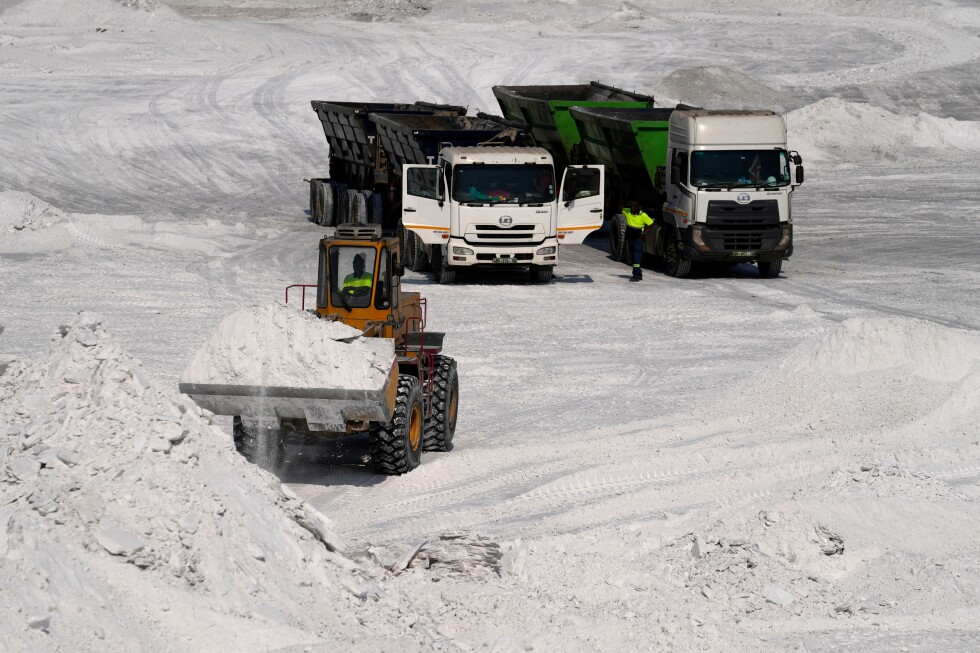
Two massive sandlike dunes in Phalaborwa, South Africa have become the focal point of an ambitious U.S.-backed initiative to extract valuable rare earth elements from industrial mining waste. The project represents a strategic move in the growing global competition for critical minerals.
The Phalaborwa Rare Earths Project has secured a substantial $50 million equity investment from the U.S. International Development Finance Corporation (DFC). This support is part of accelerated American efforts to reduce dependence on China, which currently dominates the global supply of rare earth elements crucial for manufacturing high-tech products including electronic devices, robotics, defense systems, and electric vehicles.
The 17 rare earth elements form a critical subset of dozens of minerals identified as essential for emerging technologies. Their strategic importance has prompted President Donald Trump to make expanding U.S. access to these resources a central policy objective in countering Chinese influence. Earlier this year, the Trump administration announced plans to deploy nearly $12 billion to establish an American strategic mineral reserve.
While the DFC was created during Trump’s first administration, the commitment to the Phalaborwa project came in 2023 under the Biden administration. Notably, the current Trump administration has continued supporting the project despite a significant diplomatic rift with South Africa that began when Trump returned to office and issued an executive order halting financial assistance to the country. This continuation underscores how certain economic and strategic interests transcend broader diplomatic tensions.
The Phalaborwa project is being developed by Rainbow Rare Earths, with the DFC’s investment flowing through TechMet, a company focused on securing critical mineral supplies for Western nations. The South African government does not hold a direct stake in the venture.
George Bennett, CEO of Rainbow Rare Earths, told The Associated Press that the company aims to primarily supply the United States, noting that American interest in the project is largely related to defense systems. The company plans to extract neodymium, praseodymium, dysprosium, terbium, and other rare earth elements used in high-performance magnets for wind turbines, electric vehicles, defense systems, and emerging technologies like robotics.
The project takes an innovative approach by targeting 35 million tons of phosphogypsum—a byproduct of mining waste and phosphate rock processing for acid and fertilizer production. Production is expected to begin in 2028, with operations continuing for approximately 16 years. The $50 million from the DFC will be deployed once Rainbow Rare Earths commences construction of its processing factory in Phalaborwa, anticipated in early 2027.
Despite their name, rare earth elements are relatively common in the Earth’s crust but typically occur at low concentrations, making extraction technically challenging and costly. This has contributed to China’s dominance in the sector, as the country developed extraction capabilities while other nations neglected this strategic resource.
Neha Mukherjee, research manager at Benchmark Mineral Intelligence, described the Phalaborwa project as unique due to its experimental above-ground mineral extraction process. “It looks like a fairly low-cost asset in terms of operational cost,” she said. “Even the capital requirement is not very high, which is a good sign.” Mukherjee emphasized the project’s importance, noting that “we do not have enough projects to meet the entire demand outside of China.”
Rainbow Rare Earths claims their extraction method will use up to 90% renewable energy and be significantly less expensive than conventional rare earth mining. Bennett believes Phalaborwa will become a low-cost producer comparable to Chinese operations. Project director Alberto Bruttomesso explained that much of the expensive processing has already been done when creating the phosphogypsum waste: “Heating is the most expensive part of the process. It’s what costs the most money.”
The Trump administration has also invested in critical mineral mining within the United States and pursued deals to secure access abroad, including in Ukraine. Trump’s interest in acquiring Greenland was partly motivated by the island’s rare earth deposits.
The Phalaborwa project is one of several mineral initiatives in Africa receiving DFC investment. Patience Mususa, a mining specialist at the Nordic Africa Institute in Sweden, observed that the U.S. is “trying to catch up in terms of investment in mining” on the African continent, where China has established itself as the dominant player.
American efforts to secure critical minerals in Africa extend beyond South Africa. In February, the U.S. Trade and Development Agency provided $1.8 million for a feasibility study at the Monte Muambe rare earths project in Mozambique. The Trump administration is also continuing U.S. financial support for the Lobito Corridor, an initiative to build an 800-mile railway linking mineral-rich regions of Congo and Zambia to Africa’s Atlantic coast.
These investments reflect growing recognition that securing supply chains for critical minerals has become essential for economic security and technological leadership in the 21st century.
Fact Checker
Verify the accuracy of this article using The Disinformation Commission analysis and real-time sources.

9 Comments
Rare earth elements are the lifeblood of so many modern technologies, so I’m glad to see the US taking steps to secure alternative sources beyond China. Extracting them from mining waste is an innovative approach, and I hope this South Africa project can deliver results.
Me too. Reducing the stranglehold China has on the rare earths market is a key priority, so this investment in South Africa is a smart play.
I’m somewhat skeptical about the viability of extracting rare earths from mining waste, but if the US is willing to invest $50 million, there must be some promising technology or approach. It will be interesting to see if this South Africa project can become a viable alternative to China’s rare earths supply.
A fair point. Extracting rare earths from waste is a challenging technical problem, but the US government is clearly betting that this project has merit. Time will tell if it can deliver on its promise.
Fascinating project to extract rare earth elements from mining waste in South Africa. Reducing reliance on China for these critical minerals is a strategic priority for the US. I’m curious to see how this initiative develops and what it means for the global rare earths supply chain.
This investment by the US to support a rare earths project in South Africa is a savvy move to counter China’s dominance in this vital sector. Access to rare earth elements is crucial for advanced technologies, so diversifying supply sources is important for national security and economic competitiveness.
Absolutely, rare earths are essential for so many emerging technologies. Backing this project in South Africa gives the US more options beyond relying on China, which is a smart strategic play.
The global competition for access to critical minerals like rare earths is only going to heat up in the years ahead. This US-backed project in South Africa seems like a prudent move to diversify supply and counter China’s dominance in this strategic sector.
This is an important strategic move by the US to reduce its reliance on China for rare earth elements. Diversifying supply sources is crucial, and I’m glad to see the government backing this initiative in South Africa. The global competition for critical minerals is only going to intensify.