


Listen to the article
Wyoming’s Nuclear Future Sparks Debate Over Waste Storage and Community Consent
With TerraPower’s advanced nuclear power plant under construction near Kemmerer, Wyoming faces a pivotal decision about its nuclear future, including the storage of high-level radioactive waste within state borders.
Wyoming lawmakers previously carved out an exception to the state’s blanket ban on nuclear waste storage specifically for spent fuel from in-state nuclear power plants. This exception, made shortly after TerraPower announced its Natrium plant in November 2021, represents just the beginning of Wyoming’s evolving relationship with nuclear energy.
The Bill Gates-backed TerraPower is already considering additional Natrium power plants in Wyoming, while state officials actively recruit nuclear developers. Governor Mark Gordon, the Wyoming Energy Authority, and the Wyoming Business Council have shown enthusiasm for connecting the state’s uranium mining industry with the Department of Energy’s Nuclear Lifecycle Innovation Campuses initiative.
“Wyoming welcomes the opportunity to partner with DOE, national laboratories and private industry to strengthen the domestic nuclear fuel cycle,” the Wyoming Energy Authority recently told federal officials, though they emphasized this was “not an expression of interest in nuclear waste storage.”
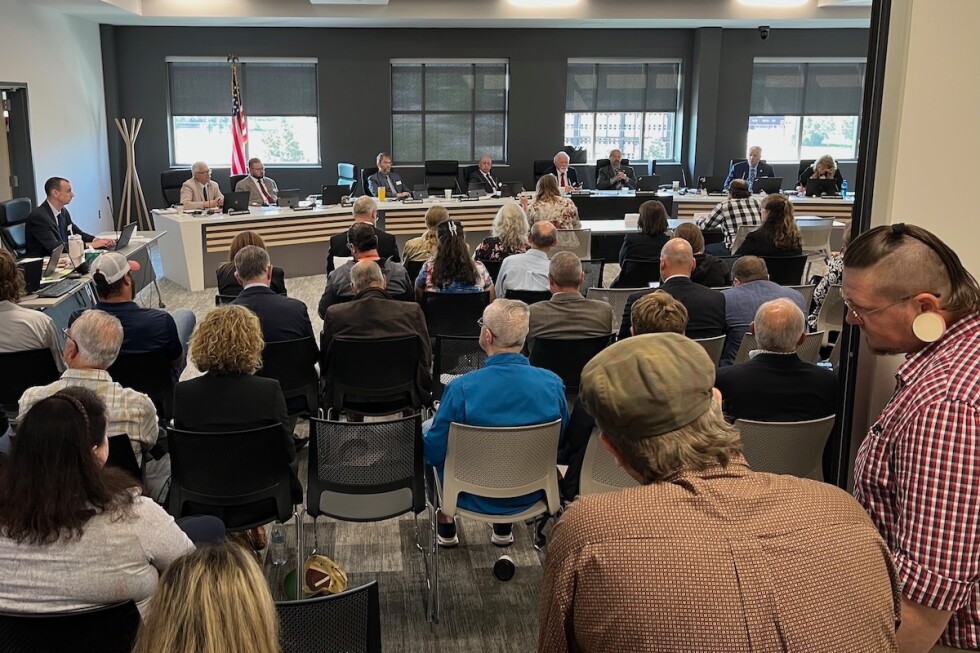
This pro-nuclear stance has created tensions in some Wyoming communities. The debate was highlighted during a recent forum hosted by the University of Wyoming’s School of Energy Resources, where participants discussed how to educate and empower communities to make informed decisions about nuclear development.
“There’s all this risk, and we’re trying to make sure those risks are minimized,” said Big Wind Carpenter, a member of the Northern Arapaho tribe and tribal engagement coordinator for the Wyoming Outdoor Council. “What is the benefit for the community? I think those are good discussions to start to happen.”
The state’s nuclear dialogue has already proven contentious. Several legislative attempts to further amend or eliminate Wyoming’s waste storage ban have failed amid intense disagreement that has divided communities. In November, Radiant Industries withdrew its proposed nuclear microreactor manufacturing facility from Natrona County after failing to secure assurances about waste storage regulations.
The situation prompted Governor Gordon to criticize opponents, particularly the far-right Freedom Caucus, as “Club No,” suggesting they oppose development reflexively regardless of merit.
Jennifer Richter, an associate professor at Arizona State University who studies community responses to nuclear development, warns that such tensions often result from moving too quickly. She notes that the federal government has tried for over 40 years to gain community support for a centralized nuclear waste repository without success.
“It’s because we have a much longer and more complicated history with nuclear,” Richter explained. The American West has experienced radioactive contamination that led to increased cancer rates in affected communities, including on Wyoming’s Wind River Reservation. Additionally, the boom-and-bust cycle of uranium mining has left economic scars across the region.
“How to reckon with that history is actually what a lot of communities are asking, rather than just going forward,” Richter added.
Despite these concerns, industry representatives emphasize the safety of modern nuclear technology. Christine King, director of the Idaho National Laboratory’s Gateway for Accelerated Innovation program, noted that cooling systems like liquid sodium and new fuel types such as tri-structural isotropic pellets (TRISO) are designed with multiple safety layers.
“It’s not up to anybody to tell you whether nuclear power or how much or how little is right for Wyoming,” King said. “These are 100-year relationships you’re going to have with these projects.”
Meanwhile, regulatory changes are accelerating at the federal level. The Nuclear Regulatory Commission is undergoing a “wholesale revision” of regulations and permitting timelines, with numerous rule changes expected in the coming weeks. According to Tison Campbell, a former NRC official now with K&L Gates, “They’re planning to finalize everything by the end of November, so there could be a new regulatory regime in place.”
As Wyoming’s uranium mining industry experiences a resurgence, with idle operations restarting and new projects developing, state regulators insist they’re prepared to oversee the expansion. Wyoming’s Department of Environmental Quality claims it exceeds federal standards in its oversight.
However, some residents remain skeptical. At the forum, Converse County resident Maria Katherman questioned officials about alleged wastewater leaks at the Smith Ranch-Highland uranium facility.
“If our industry is going to expand, and you talk about, ‘How can we convince the public?’ Well, in Converse County, I’m the public, and no amount of regulations on paper are going to convince me,” Katherman stated, highlighting the trust gap that exists between regulators and some community members.
As Wyoming contemplates its nuclear future, the balance between economic opportunity and environmental safety remains at the heart of this complex debate.
Fact Checker
Verify the accuracy of this article using The Disinformation Commission analysis and real-time sources.

14 Comments
Nuclear energy could be a valuable asset for Wyoming, but the state must carefully weigh the trade-offs. Ensuring the safety and consent of local communities should be the top priority as Wyoming explores this complex issue.
Well said. Proactive stakeholder engagement and a rigorous, evidence-based evaluation of all aspects – from economic impacts to environmental risks – will be essential for Wyoming to make an informed decision.
The prospect of new nuclear power plants in Wyoming is intriguing, but the state must exercise great caution. Radioactive waste management and community consent are paramount concerns that require careful, impartial examination.
Absolutely. Wyoming should facilitate a comprehensive, evidence-based evaluation that fully engages all stakeholders to ensure any nuclear energy developments align with the state’s long-term interests and values.
Nuclear power could be an important part of Wyoming’s future energy mix, but the state must carefully consider the long-term implications and ensure robust safeguards are in place. Gaining community buy-in will be key to the success of any nuclear projects.
Absolutely. The storage and management of radioactive waste is a critical concern that needs to be fully addressed upfront. Difficult trade-offs, but an open and deliberative process is crucial.
As a major uranium-producing state, Wyoming’s embrace of nuclear energy could leverage its existing infrastructure and expertise. However, the state must balance economic opportunities with environmental and public health considerations.
Agreed. Rigorous safety assessments and robust community engagement will be essential to ensure any nuclear projects in Wyoming have the full support and confidence of local residents.
Wyoming’s nuclear energy ambitions raise valid concerns around radioactive waste storage and community acceptance. The state must balance economic opportunities with comprehensive risk assessment and a truly inclusive decision-making process.
Agreed. Transparent dialogue, robust safety measures, and ensuring the full support of local communities should be the guiding principles as Wyoming navigates this critical energy policy decision.
The prospect of new nuclear power plants in Wyoming is intriguing, but the state must proceed cautiously. Radioactive waste storage and community consent are critical issues that require thorough examination and open dialogue.
Absolutely. Wyoming’s government should facilitate a comprehensive, transparent process to fully understand the risks and benefits and ensure the local communities have a meaningful voice in the decision-making.
Interesting to see Wyoming communities weighing the pros and cons of embracing nuclear energy. The potential economic benefits and role in reducing emissions must be balanced with concerns over radioactive waste storage and community consent.
It’s a complex issue without easy answers. Transparent dialogue between state officials, nuclear developers, and local communities will be crucial in ensuring an informed and inclusive decision-making process.