


Listen to the article
U.S. to Resume Iran Talks in Pakistan as Strait of Hormuz Standoff Continues
President Donald Trump announced Sunday that U.S. negotiators will head to Pakistan on Monday for a fresh round of talks with Iran, potentially extending a fragile ceasefire set to expire Wednesday. The announcement comes amid ongoing tensions over the Strait of Hormuz, where a standoff between Washington and Tehran has effectively closed the critical maritime passage.
Vice President JD Vance will lead the U.S. delegation to Pakistan, accompanied by envoys Steve Witkoff and Jared Kushner, according to the White House. The team previously conducted historic face-to-face talks with Iranian representatives last weekend.
Iranian officials have not officially confirmed their participation, though Iran’s chief negotiator and parliament speaker Mohammed Bagher Qalibaf indicated in a recent state television interview that diplomatic efforts would continue despite significant differences between the two sides.
“There will be no retreat in the field of diplomacy,” Qalibaf stated, acknowledging the substantial gaps that remain in the negotiations.
Security in Islamabad is already being heightened in preparation for the high-stakes talks. Pakistani authorities have begun implementing enhanced security measures, with U.S. advance teams already on the ground, according to a regional official familiar with the arrangements who spoke anonymously due to the sensitive nature of the preparations.
Iran reported Saturday that it had received new proposals from the United States. However, it remains unclear whether either side has shifted positions on the key issues that derailed previous negotiations—specifically Iran’s nuclear enrichment program, its support for regional proxy groups, and control over the Strait of Hormuz.
Trump’s announcement included threatening language that has drawn international criticism. The president warned that if Iran fails to accept the U.S.-proposed deal, “the United States is going to knock out every single Power Plant, and every single Bridge, in Iran”—statements that some experts have suggested could constitute threats of war crimes.
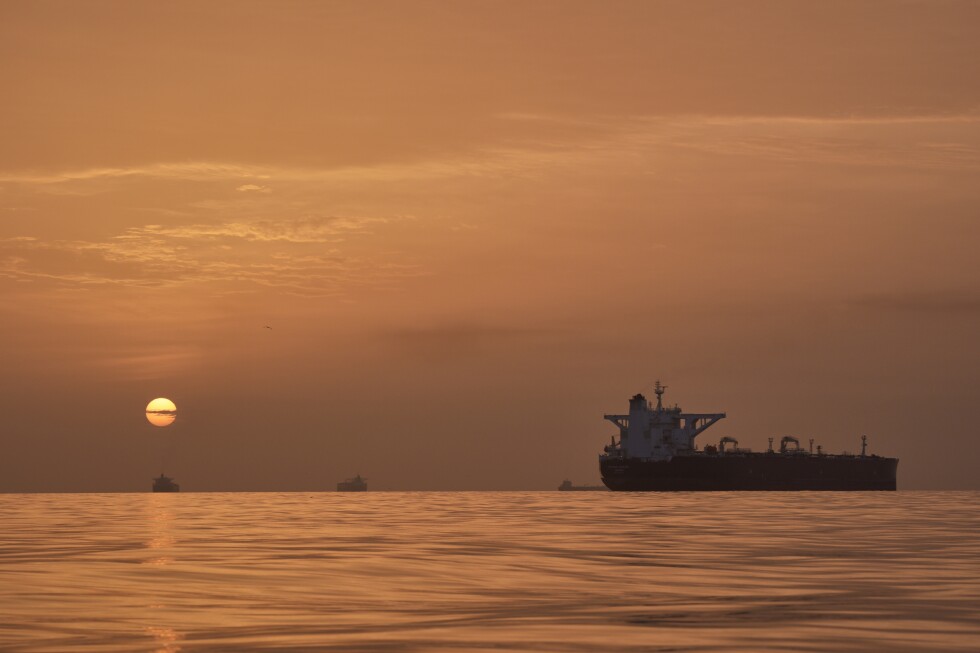
The Strait of Hormuz remains a central flashpoint in the crisis. Ships cannot transit this vital waterway due to Iranian threats and a U.S. blockade on vessels heading to and from Iranian ports. The strait typically serves as a conduit for approximately one-fifth of global oil trade, and its closure has exacerbated an already serious global energy crisis as the conflict enters its eighth week.
Iranian officials maintained Sunday that normal maritime traffic cannot resume while the U.S. blockade remains in effect. “It is impossible for others to pass through the Strait of Hormuz while we cannot,” Qalibaf insisted.
Trump has accused Iran of violating the ceasefire by firing at ships attempting to transit the strait. Iran, meanwhile, characterizes the U.S. blockade as “an act of aggression” and a violation of the truce, according to foreign ministry spokesperson Esmaeil Baqaei.
The current impasse developed after Iran initially announced the strait’s reopening following a 10-day truce between Israel and the Iranian-backed Hezbollah militant group in Lebanon that took effect Friday. However, Iran reversed course on fully reopening the waterway after Trump declared that the U.S. blockade “will remain in full force” until Tehran reaches an agreement with the United States.
Saturday saw a brief increase in transit attempts through the strait, but Iran fired upon two India-flagged merchant vessels, forcing them to turn around. This incident prompted India to summon Iran’s ambassador to address what it called a “serious incident,” noting that Iran had previously allowed several India-bound ships through the strait.
For Iran, closing the strait represents perhaps its most potent leverage against the United States, creating political challenges for Trump’s administration. Conversely, the U.S. blockade puts additional pressure on Iran’s already struggling economy by restricting its access to critical revenue streams.
The conflict has resulted in significant casualties, with at least 3,000 people killed in Iran, more than 2,290 in Lebanon, 23 in Israel, and over a dozen in Gulf Arab states. Military casualties include 15 Israeli soldiers in Lebanon and 13 U.S. service members throughout the region.
Iran’s Supreme National Security Council, which has recently functioned as the country’s de facto top decision-making body, stated late Saturday that “Iran is determined to maintain oversight and control over traffic through the strait until the war fully ends.” This control would involve Iran-designated shipping routes, payment of fees, and issuance of transit certificates.
Pakistani Foreign Minister Ishaq Dar, who spoke with Iranian Foreign Minister Abbas Araghchi on Sunday, said his country is working to “bridge” differences between the U.S. and Iran, underscoring Pakistan’s role as a mediator in the crisis.
Iranian Deputy Foreign Minister Saeed Khatibzadeh warned Saturday that the U.S. is “risking the whole ceasefire package” with its blockade. He firmly rejected U.S. demands for Iran to surrender its stock of 970 pounds of enriched uranium, calling the proposal “a nonstarter,” though he indicated openness to addressing concerns through other means.
Fact Checker
Verify the accuracy of this article using The Disinformation Commission analysis and real-time sources.

28 Comments
If AISC keeps dropping, this becomes investable for me.
Good point. Watching costs and grades closely.
Good point. Watching costs and grades closely.
Nice to see insider buying—usually a good signal in this space.
Good point. Watching costs and grades closely.
Good point. Watching costs and grades closely.
Silver leverage is strong here; beta cuts both ways though.
Interesting update on Trump says US negotiators will go to Pakistan for Iran talks. Curious how the grades will trend next quarter.
Good point. Watching costs and grades closely.
I like the balance sheet here—less leverage than peers.
If AISC keeps dropping, this becomes investable for me.
Good point. Watching costs and grades closely.
Good point. Watching costs and grades closely.
Nice to see insider buying—usually a good signal in this space.
Good point. Watching costs and grades closely.
Good point. Watching costs and grades closely.
I like the balance sheet here—less leverage than peers.
Production mix shifting toward Business might help margins if metals stay firm.
If AISC keeps dropping, this becomes investable for me.
Good point. Watching costs and grades closely.
Good point. Watching costs and grades closely.
Nice to see insider buying—usually a good signal in this space.
Interesting update on Trump says US negotiators will go to Pakistan for Iran talks. Curious how the grades will trend next quarter.
Good point. Watching costs and grades closely.
Production mix shifting toward Business might help margins if metals stay firm.
Good point. Watching costs and grades closely.
Silver leverage is strong here; beta cuts both ways though.
Good point. Watching costs and grades closely.