


Listen to the article
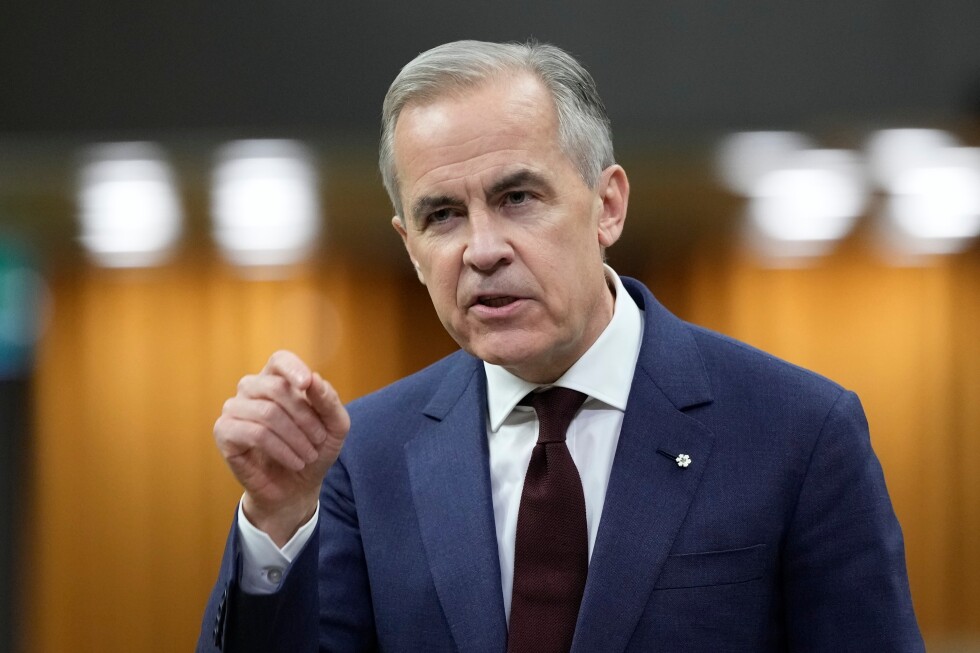
Canadian Prime Minister Mark Carney called for a fundamental shift in Canada’s economic strategy Sunday, declaring that the country’s historically strong ties to the United States have transformed from an asset into a liability that requires urgent correction.
In a 10-minute video address to the nation, Carney outlined his government’s plans to diversify trade relationships and strengthen domestic economic resilience in response to America’s increasingly protectionist stance.
“The world is more dangerous and divided,” Carney stated. “The U.S. has fundamentally changed its approach to trade, raising its tariffs to levels last seen during the Great Depression. Many of our former strengths, based on our close ties to America, have become weaknesses. Weaknesses that we must correct.”
The Prime Minister highlighted how tariffs imposed by U.S. President Donald Trump have directly harmed Canadian workers in vital sectors like automotive manufacturing and steel production. He noted that business investment has stagnated, “restrained by the pall of uncertainty that’s hanging over all of us.”
Carney’s address comes at a pivotal moment in Canada-U.S. relations, with many Canadians expressing outrage over recent comments by Trump suggesting Canada become the 51st state—remarks widely perceived as disrespectful of Canadian sovereignty.
The Prime Minister promised regular updates on his government’s diversification efforts, emphasizing a commitment to transparency. “Security can’t be achieved by ignoring the obvious or downplaying the very real threats that we Canadians face,” he said. “I promise you I will never sugarcoat our challenges.”
This isn’t Carney’s first confrontation with the changing global order. At the World Economic Forum in Davos this January, his speech condemning economic coercion by powerful nations against smaller countries drew international acclaim—and a sharp rebuke from Trump, who responded: “Canada lives because of the United States. Remember that, Mark, the next time you make your statements.”
Carney’s address comes from a position of strengthened political standing, having recently secured a majority government following special election victories. His comments also arrive as the opposition Conservative Party pressures him to deliver on campaign promises regarding U.S. trade relations.
The timing is particularly significant with the scheduled July review of the current North American Free Trade Agreement between Canada, the United States, and Mexico looming on the horizon.
Carney outlined a multi-pronged approach to decrease Canada’s economic dependence on the United States, including attracting new foreign investments, doubling clean energy capacity, and reducing internal trade barriers between Canadian provinces. He also highlighted increased defense spending, tax reductions, and housing affordability initiatives as part of his broader economic strategy.
“We have to take care of ourselves because we can’t rely on one foreign partner,” Carney emphasized. “We can’t control the disruption coming from our neighbors. We can’t control our future on the hope it will suddenly stop. We can control what happens here. We can build a stronger country that can withstand disruptions from abroad.”
The Prime Minister dismissed the notion that Canada could simply wait for American politics to stabilize. “Hope isn’t a plan and nostalgia is not a strategy,” he said pointedly.
Carney also referenced Canada’s historical military alliance with the United States, noting that Canadians have fought alongside Americans in multiple conflicts including both World Wars and Afghanistan. “Canada has been a great neighbor,” he said, before adding firmly: “The U.S. has changed and we must respond. It’s about taking back control of our security, our borders, and our future.”
The White House had not issued a response to Carney’s address as of Sunday evening.
This pivot in Canadian economic policy represents one of the most significant strategic reorientations in decades for a nation that has traditionally viewed its close relationship with the United States as a cornerstone of its prosperity and security.
Fact Checker
Verify the accuracy of this article using The Disinformation Commission analysis and real-time sources.

8 Comments
This is a bold move by the Canadian government. Pivoting away from such a dominant trading partner is no easy feat, but the rising protectionism in the U.S. appears to be leaving Canada little choice. Strengthening domestic economic resilience is a prudent step.
The Canadian Prime Minister’s acknowledgment that former strengths have become weaknesses is a frank assessment of the changing global landscape. Reducing reliance on the U.S. market is a bold but necessary move in these uncertain times.
The Prime Minister’s call for a fundamental shift in Canada’s economic strategy is understandable given the changes in U.S. trade policy. Reducing reliance on the U.S. market and boosting domestic investment seem like sensible goals.
I wonder how this will impact key Canadian industries like automotive and steel production that have historically been intertwined with the U.S. economy.
Canada’s close economic ties to the U.S. have clearly become a vulnerability in the current geopolitical climate. Diversifying trade relationships and boosting domestic economic resilience are sensible strategies, though the execution will be challenging.
I’m curious to see how this shift in economic policy will impact specific industries and regions within Canada. The repercussions could be far-reaching.
This is an interesting development. It makes sense for Canada to seek to diversify its trade relationships given the increasingly protectionist stance of its southern neighbor. Strengthening domestic economic resilience is also a prudent move in these uncertain times.
I’m curious to hear more about the specific steps the Canadian government plans to take. Diversifying trade relationships can be challenging, but could pay dividends in the long run.