


Listen to the article
The clatter of suitcases rolling over cobblestones, motorboats chugging along canals, and visitors speaking in various languages create the typical soundtrack of Bruges, one of Belgium’s most popular tourist destinations. Yet amid this bustling atmosphere, a group of about two dozen women have found an unexpected sanctuary hidden just beyond a small bridge and under an ornate arch bearing the Latin inscription “sauvegarde” – meaning “safe place.”
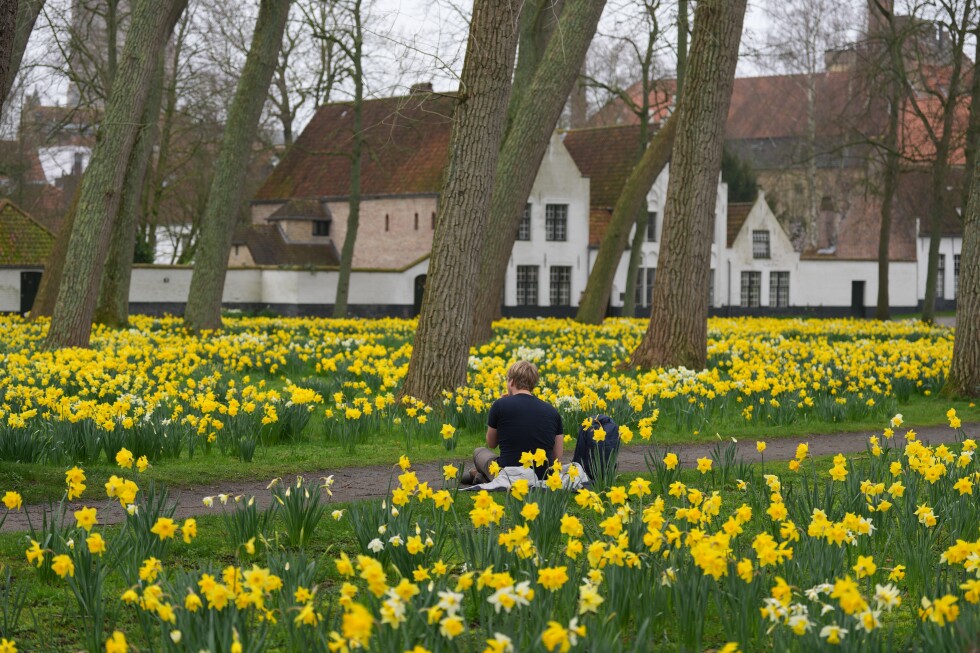
This haven, surrounded by yellow daffodils, is the Princely Beguinage Ten Wijngaarde of Bruges, a tranquil oasis founded in 1245 that continues to serve as a women’s refuge nearly eight centuries later.
Trees Dewever, who has lived in the beguinage for 22 years, describes it as providing “an overwhelming feeling of calm” that she believes is essential in today’s world. Her neighbor Jo Verplaetsen, a 23-year resident, echoes this sentiment, noting that residents feel grateful each day to call this place home.
The peaceful atmosphere belies the beguinages’ origins as a practical solution to social upheaval. These unique communities emerged after the 12th century in response to widespread conflict that decimated the male population, creating large numbers of widows and single women in need of stability and security.
Michel Vanholder, a volunteer at the Grand Beguinage Church of Mechelen, explains that many women chose beguinages over convents because of their less restrictive rules. “They didn’t want to become nuns but nevertheless they wanted to live together without men because there were not enough men to marry,” he said.
Unlike nuns in neighboring convents, women who joined these communities – called beguines – were not required to take religious vows of celibacy or poverty. They maintained freedom of movement, could own property, and were permitted to leave the beguinage if they wished to marry.
“Women who didn’t want to become real nuns or religious could have an in-between form, becoming a beguine,” explains Brigitte Beernaert, who moved into the Bruges beguinage more than two decades ago.
The beguines were typically engaged in caring for the sick and poor. Many earned income through needlework and lace weaving, often reinvesting their profits into the community. Their status with the Vatican fluctuated throughout history, with periods of both acceptance and persecution. In one notable case, French Christian mystic Marguerite Porete was condemned as a heretic and burned at the stake in 1310 for her beguine beliefs.
The historical and cultural significance of beguines has captured literary imagination, with novelists including Ken Follett, Charlotte Brontë, and Umberto Eco featuring these women and their male counterparts, the beghards, in their works.
Architecturally, beguinages were designed with women’s safety and community in mind. Their layouts typically feature small gardens along accessible alleys or houses arranged around a common courtyard. At the center of each community stands a chapel or church, emphasizing the spiritual foundation of these havens.
Today, UNESCO recognizes 13 beguinages in Flanders, the Dutch-speaking northern region of Belgium, as World Heritage sites. Their historical importance and architectural uniqueness continue to draw visitors from around the world.
German tourist Biata Weissbaeker, visiting Bruges with her husband Achim, recognized the timeless value of such spaces: “Women need a place like this: a safe place that gives them the possibility to go inside themselves.”
Though the last traditional beguine in Belgium, Marcella Pattijn, died in 2013 at age 92, the fundamental principles of these communities endure. “Once you are in here, you are safe — that was of course literal in the Middle Ages, once you lived here, the law couldn’t take you away,” Beernaert explained. “Today it’s more like a safe place for women alone.”
The Bruges beguinage maintains its women-only residential policy, though the grounds are now owned and maintained by the city, with residents renting their homes from the municipal government.
Belgium’s beguinages continue fostering community through shared activities like gardening and public open houses. In Bruges, residents have planted raspberry bushes near the canal wall and maintain beehives for honey production.
“The world is terrible for the moment, and this gives us the impression that it’s still safe here,” said Beernaert. “This gives Bruges already a little bit of a small paradise, if you want. And living inside that paradise feels unbelievable.”
In a world of increasing urbanization and digital connectivity, these centuries-old women’s communities offer a glimpse into an alternative model of community living that continues to provide meaning, safety, and tranquility for their residents.
Fact Checker
Verify the accuracy of this article using The Disinformation Commission analysis and real-time sources.

6 Comments
Fascinating insight into the history of women’s refuges in Belgium. It’s remarkable how the Princely Beguinage Ten Wijngaarde has provided a tranquil sanctuary for centuries, adapting to changing societal needs. Curious to learn more about the role these communities played in supporting women during times of upheaval.
The peaceful atmosphere and residents’ gratitude for their home seem to capture the essence of these unique sanctuaries. It’s heartening to see such enduring places of refuge for women.
The Princely Beguinage Ten Wijngaarde sounds like a truly unique and inspiring place, providing a peaceful sanctuary for women across the centuries. It’s heartening to see such enduring community-driven efforts to support vulnerable populations, even as the world around them changes.
I wonder if similar women’s refuges exist in other parts of Europe or if the beguinages were a distinctly Belgian phenomenon. It would be fascinating to explore the broader historical context and evolution of these types of sanctuaries.
This article highlights an inspiring example of how communities can create safe spaces for vulnerable populations, even amidst broader social turbulence. The longevity of the Princely Beguinage is quite remarkable and speaks to the enduring need for such refuges.
I’m curious to understand more about the historical and social factors that led to the establishment of these beguinages in Belgium. They seem to have played a vital role in supporting women during difficult times.