


Listen to the article
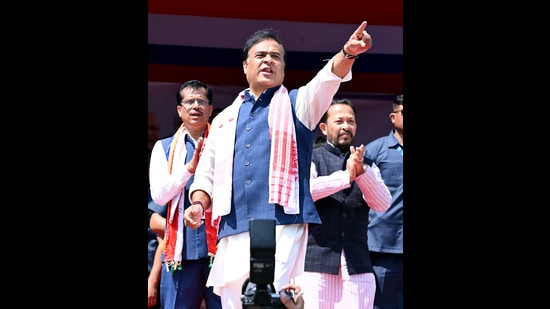
Assam Chief Minister Defends Delimitation Process Against Opposition Claims
Assam Chief Minister Himanta Biswa Sarma has launched a strong defense of the state’s 2023 delimitation exercise, responding to Congress leader Rahul Gandhi’s accusations that it represented a form of “gerrymandering” to benefit the ruling Bharatiya Janata Party (BJP).
The controversy has intensified amid an ongoing dispute between the BJP and Congress over a constitutional amendment bill that sought to expand the Lok Sabha. The opposition recently blocked the bill, setting the stage for heated exchanges between the two parties.
In a Facebook post last week, Leader of the Opposition Rahul Gandhi alleged that the BJP was manipulating constituency boundaries for electoral advantage. “One of the BJP’s dangerous plans is to ‘gerrymander’ all Lok Sabha seats to its advantage for the 2029 elections,” Gandhi wrote, specifically pointing to the 2023 exercises in Assam and Jammu and Kashmir as examples. “We have seen how BJP does this – it hijacked delimitation in Assam and Jammu and Kashmir, where it split up anti-BJP regions and communities for electoral advantage.”
Sarma countered these claims on social media platform X (formerly Twitter), writing: “Gerrymandering — Congress’ ill-informed cabal has been excessively using this term to delegitimise Assam’s delimitation exercise and, in turn, misinform the nation. Don’t fall for their propaganda.”
The Assam Chief Minister characterized the delimitation not as a political maneuver but as a “long-overdue correction after decades of political neglect and vote-bank appeasement.” He described it as a reflection of local aspirations and a necessary measure to protect against the impacts of illegal migration.
Delimitation, the process of redrawing constituency boundaries, is a constitutionally mandated exercise meant to ensure fair representation based on population changes. However, when the process appears to favor a particular political party, it is often criticized as “gerrymandering,” a practice recognized globally as the manipulation of electoral boundaries for partisan advantage.
Sarma specifically addressed concerns about demographic shifts in lower Assam, claiming that “unchecked demographic changes had reshaped constituencies while Congress chose silence because it suited their electoral interests. The real distortion of representation happened then, not now.”
The Chief Minister’s comments highlight the deep tensions surrounding electoral representation in Assam, a state with a complex demographic makeup and history of migration issues. He suggested that the delimitation exercise was designed to “restore balance and safeguard indigenous Assamese representation” by ensuring that “those rooted in the land, its culture, language and identity are not politically sidelined in their own state.”
The delimitation process has been particularly contentious in Assam’s Barak Valley region, which includes Cachar, Sribhumi, and Hailakandi districts. The region lost two assembly seats as part of the redistricting, fueling local concerns about reduced political representation.
Political analysts note that these exchanges reflect broader national tensions about representation and electoral boundaries ahead of future elections. The BJP has presented the delimitation as a necessary correction to historical imbalances, while opposition parties view it as an attempt to consolidate power through boundary manipulation.
This dispute comes at a time when several states across India are anticipating similar boundary adjustments, raising questions about how such exercises might reshape the political landscape in the coming years. Electoral boundary changes can significantly impact party fortunes, especially in regions with diverse voter demographics or where support for parties follows geographic patterns.
As India prepares for its next general election cycle, the controversy surrounding delimitation in Assam underscores the high stakes involved in determining electoral boundaries and the enduring political sensitivities around issues of representation and demographic change in the northeastern state.
Fact Checker
Verify the accuracy of this article using The Disinformation Commission analysis and real-time sources.

4 Comments
Accusations of gerrymandering are always concerning, as they strike at the heart of fair elections. I don’t have a strong opinion on this specific case, but I think it’s crucial that the delimitation process is conducted in an objective and nonpartisan manner, with input from all stakeholders.
Interesting to see the back-and-forth between the Congress and BJP over the delimitation process in Assam. Seems like a politically charged issue with both sides making accusations. Curious to see how this plays out and if any independent observers can weigh in on the fairness of the process.
It’s good to see the Chief Minister defending the delimitation process, but the concerns raised by the opposition also merit serious consideration. I think it would be helpful for both sides to present their evidence and rationale publicly, so citizens can judge for themselves.
I can understand the concerns about gerrymandering, as that’s a serious issue that can undermine the democratic process. At the same time, I think it’s important to look at the facts and not just take political rhetoric at face value. Hopefully there is a transparent and impartial review of the delimitation exercise.